



Solar Mounting Systems
Contact Us
- Building A06, Jimei Software Park, Xiamen, China
- +86-592-6683155
- [email protected]
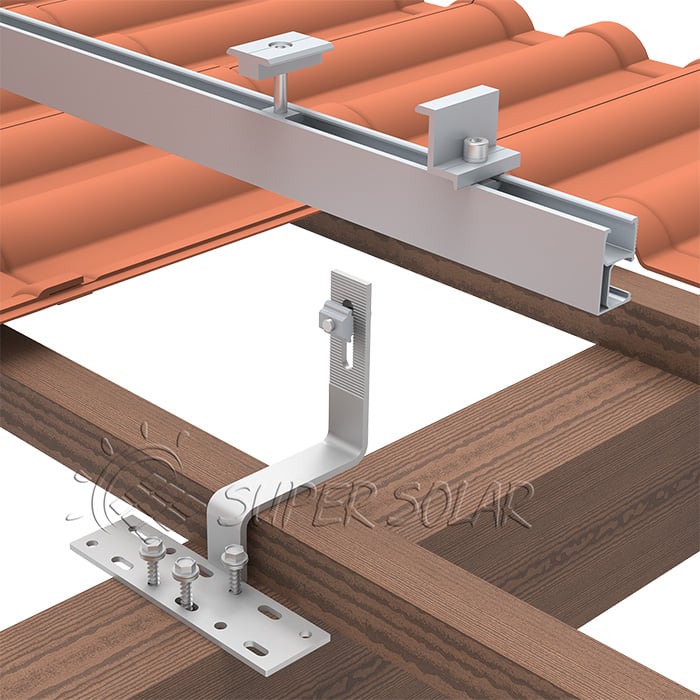
Installing a photovoltaic array on a tiled surface requires a specialized approach to ensure structural stability while maintaining the roof's primary function: shedding water. Unlike asphalt shingles or metal roofs, tiles are fragile and non-load-bearing, which means the entire mounting infrastructure must bypass the tiles themselves. The most reliable method involves a high-quality roof hook solar system, which anchors directly into the wooden rafters beneath the tiles. By utilizing a specific solar roof hook installation technique, installers can create a secure attachment point that hovers above the tile surface, preventing cracks and leaks. Whether you are working with clay, concrete, or slate, understanding the nuances of solar mounting for clay tile roof systems is essential for a long-lasting and weather-tight energy solution.
Before beginning the physical installation, a thorough site assessment is necessary to determine the condition of the existing roof. Tiled roofs are significantly heavier than other roofing materials, and adding a solar array increases the dead load on the building's trusses. When planning how to install solar panels on tile roof surfaces, you must verify that the rafters are capable of supporting the additional weight of the panels, rails, and the roof hook solar system. Furthermore, identifying the specific type of tile—such as Mediterranean S-tiles, flat concrete tiles, or Spanish barrels—will dictate which solar roof hook installation hardware is appropriate for the job.
The geometry of the tile determines the shape of the hook required for the project. For example, solar mounting for clay tile roof applications involving high-profile "S" tiles requires hooks with a deep "neck" to clear the curve of the tile without putting pressure on it. Flat tiles, on the other hand, require lower-profile hooks that sit flush against the underlayment. If the wrong hook is selected, it may cause the overlapping tile to "kick up," creating a gap where wind-driven rain can enter the attic. A successful roof hook solar system relies on this precise geometric compatibility to ensure that the final array sits level and the roof remains aesthetically pleasing and functional.
The integrity of a solar roof hook installation is only as good as the wood it is bolted into. Prior to mounting, installers must inspect the rafters for signs of rot, water damage, or splitting. Because the solar mounting for clay tile roof process involves driving heavy-duty lag bolts into these rafters, the wood must be structurally sound. Additionally, the underlayment—the waterproof membrane beneath the tiles—must be in excellent condition. If the underlayment is brittle or torn, it should be repaired or replaced before the roof hook solar system is installed. This double-layered protection approach ensures that even if a tile breaks in the future, the building remains protected from moisture.
The core of the installation process involves creating a mechanical connection between the building's skeleton and the solar rails. This is achieved by temporarily removing tiles to expose the rafters. Mastering how to install solar panels on tile roof projects requires a balance between heavy construction and delicate handling of fragile materials. Each solar roof hook installation point must be carefully measured and flashed to prevent any chance of water ingress. By following a systematic approach, the solar mounting for clay tile roof setup becomes a seamless extension of the building's architecture.
The first step in a professional roof hook solar system setup is the strategic removal of tiles at each mounting point. Installers use a tile pry bar to gently lift the overlapping tiles, sliding out the tile that covers the target rafter. Once the rafter is located, often using a stud finder or by tapping the roof to find the solid wood, the base of the solar roof hook installation is positioned. It is critical to center the lag bolts in the middle of the rafter to prevent the wood from splitting. In many solar mounting for clay tile roof designs, a pilot hole is drilled first to ensure a smooth and secure fit for the heavy-duty fasteners.
Once the rafter is prepared, the hook is bolted down using stainless steel lag screws. A high-quality roof hook solar system will include integrated flashing or require the use of a "sub-flashing" at the penetration point. This extra layer of protection is vital; it ensures that even if water gets under the tiles, it cannot follow the bolt into the rafter. After the hook is secured, the tile is modified—often by grinding a small notch in the bottom edge using a diamond-blade saw—to allow it to sit flat over the hook's arm. This detailed step in how to install solar panels on tile roof systems ensures that the tile maintains its original position and water-shedding capability, preventing the "hook-lift" phenomenon.
With the hooks firmly in place and the tiles reset, the system transitions from the roof's surface to the solar superstructure. The rails are the backbone of the array, providing a level plane for the photovoltaic modules. In a robust roof hook solar system, these rails are made of anodized aluminum to resist corrosion. The solar roof hook installation process ensures that these rails are elevated enough to allow for airflow, which is critical for cooling the panels and maintaining the health of the solar mounting for clay tile roof components.
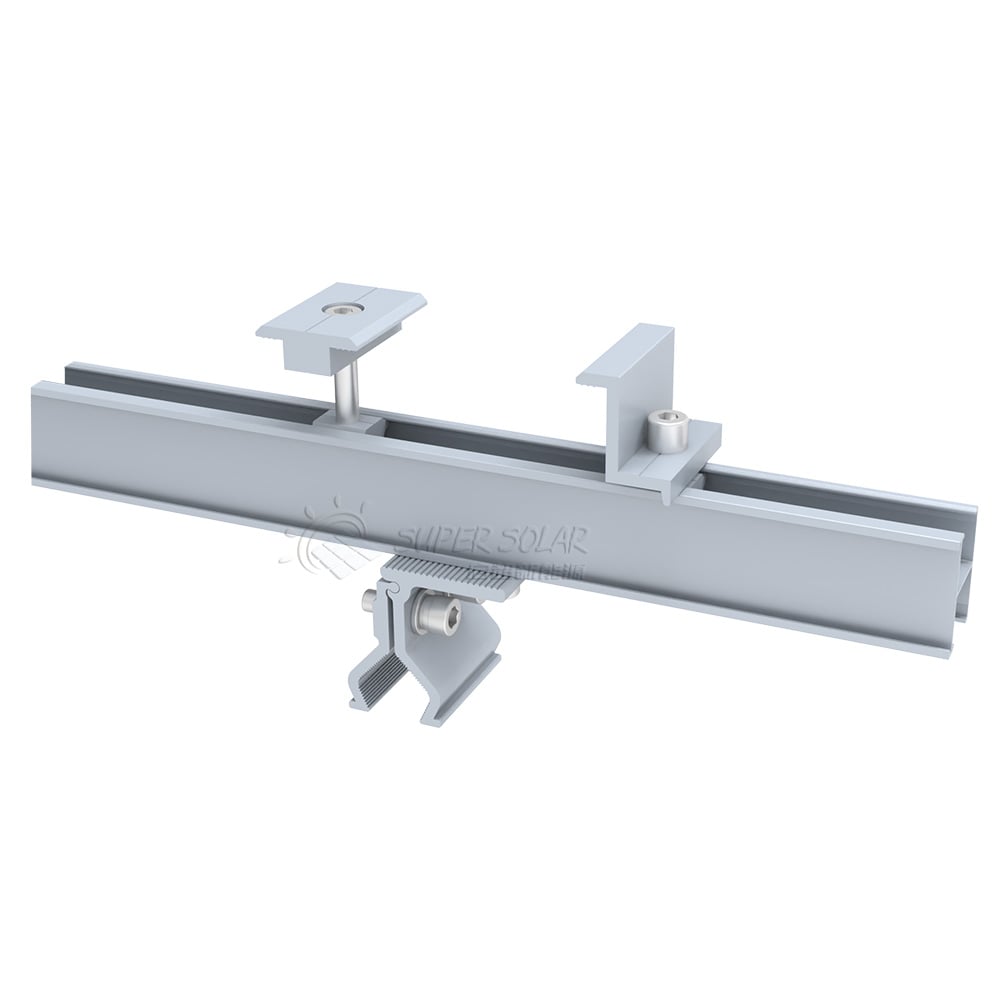
The rails are attached to the hooks using L-feet or specialized mounting bolts. It is essential to use a string line or laser level to ensure the rails are perfectly straight across the roof. When learning how to install solar panels on tile roof layouts, beginners often overlook the importance of rail leveling. If the rails follow the natural dips and curves of an older roof, the solar modules will be stressed and may eventually develop micro-cracks. A well-adjusted roof hook solar system compensates for roof irregularities, providing a flat, professional-looking finish that enhances the curb appeal of the property while maximizing energy production.
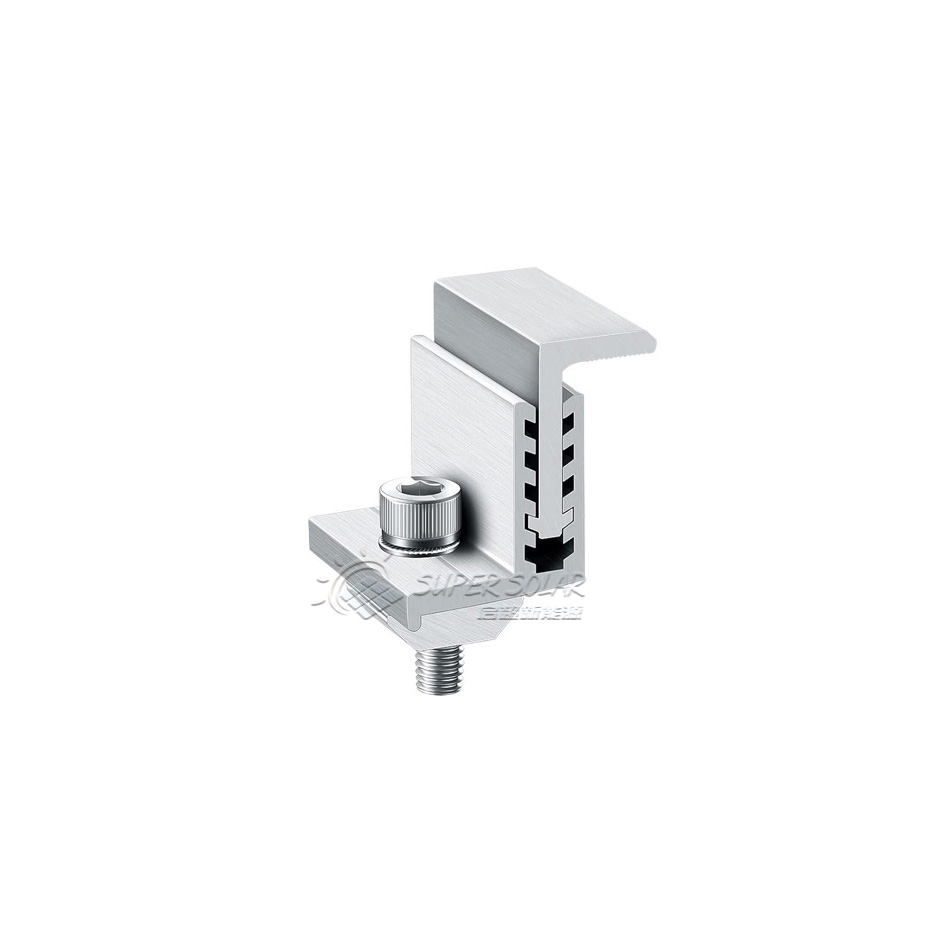
The final stage of the solar mounting for clay tile roof process is the placement of the solar modules. Panels are secured to the rails using mid-clamps and end-clamps. During this stage of the solar roof hook installation, wire management becomes a priority. All DC cabling must be tucked neatly under the panels and secured with UV-rated clips to prevent them from touching the tiles. In a high-end roof hook solar system, the wiring is protected from the elements and from potential damage by pests. Once the electrical connections are made and the system is grounded, the installation provides a clean, high-performance energy source that is as durable as the tile roof itself.
A properly executed installation using a roof hook solar system requires very little maintenance, but regular inspections are recommended to ensure the system's longevity. Because the solar roof hook installation involves mechanical penetrations, checking the integrity of the flashing every few years is a best practice. When considering how to install solar panels on tile roof arrays, one must also account for the environment; for instance, in areas with heavy bird activity or falling leaves, the gap beneath the solar mounting for clay tile roof might need occasional cleaning to prevent debris buildup that could retain moisture.
Despite the best efforts of installers, tiles can occasionally crack due to foot traffic or extreme thermal expansion. A major benefit of a modular roof hook solar system is that individual tiles can be replaced without dismantling the entire array. If a tile beneath a solar roof hook installation breaks, the panel above it can be temporarily lifted, the hook loosened, and a new tile notched and slid into place. This maintainability is why solar mounting for clay tile roof systems remains a popular choice for homeowners who view their roof as a long-term investment.
While the mechanical flashing is the primary defense against leaks, high-grade roofing sealants are often used as a secondary measure during how to install solar panels on tile roof projects. Applying sealant around the base of the solar roof hook installation adds an extra layer of security. However, professional installers avoid over-relying on "caulk" alone. A truly reliable roof hook solar system depends on the physical overlapping of materials and gravity-fed water shedding. By combining structural fasteners, precision-cut tiles, and quality sealants, a solar mounting for clay tile roof setup can easily last for thirty years or more, matching the lifespan of the solar panels themselves.
If the solar roof hook installation is performed correctly by experienced professionals, it should not cause leaks. The key is using a roof hook solar system that utilizes proper flashing and notched tiles. By ensuring that the tiles still overlap correctly and that all penetrations are sealed at the rafter level, the roof's waterproofing integrity is maintained. In fact, many solar mounting for clay tile roof systems are designed to exceed local building codes for water tightness, providing a safer solution than many traditional roofing penetrations like vents or chimneys.
Clay tiles are notoriously brittle and can easily crack under the weight of an installer. When learning how to install solar panels on tile roof arrays, the most important safety and quality rule is to use "walk pads" or to step only on the reinforced lower sections of the tiles where they overlap the battens. Professional installers of a roof hook solar system are trained to distribute their weight or remove tiles to create a path as they work. Cracked tiles are the leading cause of post-installation leaks, so a careful solar roof hook installation process always includes a final walkthrough to replace any tiles damaged during the build.
In most cases, yes. To ensure the tiles lay flat after a solar roof hook installation, a small notch must be ground into the bottom of the tile that sits directly over the hook. This prevents the tile from being propped up, which would otherwise create a gap for rain and pests. High-quality solar mounting for clay tile roof hardware is designed to be as thin as possible to minimize the amount of grinding required, but a precise fit is essential for a professional-grade roof hook solar system.
The best hook depends on the profile of the concrete tile. For flat concrete tiles, a low-profile, wide-base hook is usually the preferred choice for a solar roof hook installation. For curved concrete tiles, an adjustable-height hook is often used in a roof hook solar system to ensure the rail sits at the correct level above the peaks of the tiles. Regardless of the profile, the hardware used for solar mounting for clay tile roof projects should be made of stainless steel or galvanized steel to prevent rust streaks from forming on the roof over time.
Hot News2025-11-03
2025-10-22
2025-01-24
2024-06-12
2024-06-12