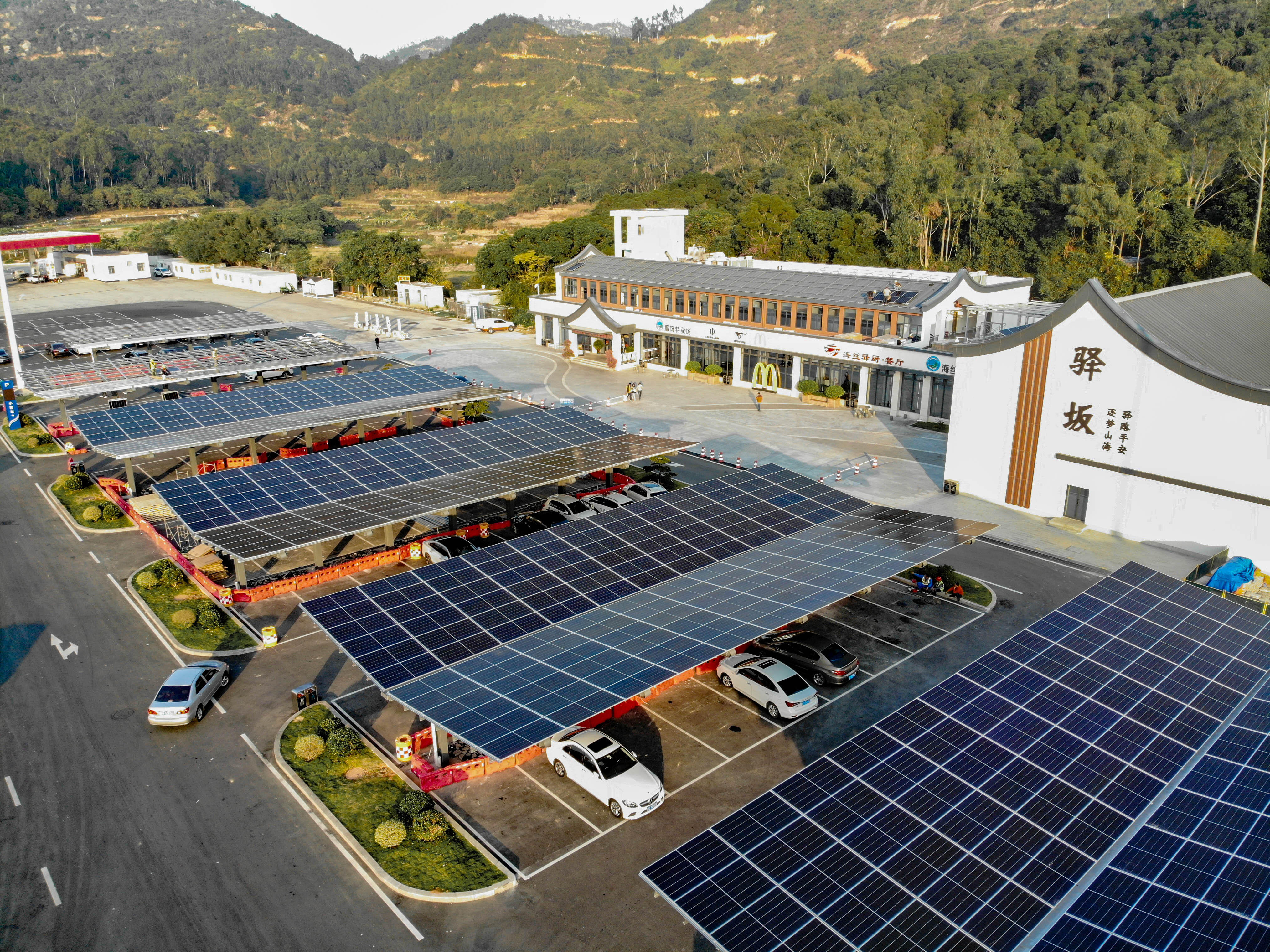
Ballast Mount for Solar Panels: Non-Penetrating Mounting Solutions for Flat Roof Solar Installations

All Categories

ballast mount for solar panels

A ballast mount for solar panels represents a sophisticated mounting solution designed to secure photovoltaic systems on flat rooftops without penetrating the roof membrane. This innovative mounting technology utilizes weighted foundations to create a stable platform that effectively counteracts wind uplift forces while maintaining the structural integrity of the building. The ballast mount for solar panels functions as a non-penetrating alternative that eliminates the need for roof drilling or permanent attachments, making it an ideal choice for commercial buildings, warehouses, and residential flat roof installations. The primary function of a ballast mount for solar panels involves distributing the weight of the solar array evenly across the roof surface through strategically placed concrete blocks, steel weights, or specialized ballast materials. This weight distribution system creates sufficient downward force to resist wind loads and prevent system displacement during severe weather conditions. The technological features of modern ballast mount systems include aerodynamic design elements that minimize wind resistance, adjustable tilt angles for optimal solar exposure, and modular components that facilitate quick installation and future maintenance access. These mounting systems incorporate advanced engineering calculations that account for local wind speeds, snow loads, and seismic requirements to ensure long-term performance and safety. The ballast mount for solar panels finds extensive applications across various building types, including large commercial facilities, industrial warehouses, multi-family residential complexes, and educational institutions. Property owners particularly favor this mounting approach when roof warranties must remain intact or when structural modifications are restricted by building codes or lease agreements. The versatility of ballast mount systems allows for installation on different roof materials including EPDM, TPO, modified bitumen, and built-up roofing systems. Additionally, these mounts accommodate various panel orientations and configurations, enabling installers to optimize energy production while respecting rooftop obstacles such as HVAC equipment, skylights, and access walkways.

Popular Products

The ballast mount for solar panels offers numerous compelling advantages that make it the preferred choice for many solar installations. First and foremost, this mounting system preserves roof integrity by eliminating the need for penetrations or permanent modifications to the building structure. Property owners can install solar panels without voiding existing roof warranties or creating potential leak points that could lead to costly water damage repairs. This non-invasive approach proves particularly valuable for newer roofs where maintaining warranty coverage remains essential for long-term building protection and financial security. Installation speed represents another significant advantage of the ballast mount for solar panels, as certified installers can complete projects faster compared to traditional penetrating mount systems. The simplified installation process reduces labor costs and minimizes disruption to building operations, allowing businesses to begin generating solar energy and realizing cost savings more quickly. The modular design of ballast mounting systems enables efficient transportation and handling, while the absence of complex roof attachments streamlines the installation workflow significantly. Flexibility in system design and future modifications stands out as a key benefit of ballast mount technology. Property owners can easily reconfigure solar arrays to accommodate changing energy needs, roof renovations, or equipment upgrades without extensive structural modifications. This adaptability proves invaluable for businesses experiencing growth or operational changes that might require solar system adjustments. The ballast mount for solar panels also facilitates straightforward system removal if necessary, preserving the building's original condition and maintaining property value. Cost-effectiveness emerges as a major advantage, as ballast mounting systems typically require fewer specialized tools, reduced engineering complexity, and shorter installation timelines compared to penetrating alternatives. These factors combine to lower overall project costs while delivering equivalent energy production performance. The system's compatibility with various roof types and slopes expands installation opportunities, allowing more property owners to benefit from solar energy regardless of their specific rooftop conditions. Additionally, ballast mounts often qualify for expedited permitting processes due to their non-penetrating nature, further reducing project timelines and administrative costs. Maintenance accessibility represents another practical advantage, as the open design of ballast mount systems provides technicians with easy access to panels, wiring, and mounting components for routine inspections, cleaning, and repairs without compromising system stability or requiring extensive disassembly procedures.

Practical Tips

How Commercial Solar Carport Structures Benefit Large Properties

20

Aug

How Commercial Solar Carport Structures Benefit Large Properties

The Growing Demand for Solar Carport Solutions on Large Properties Across commercial landscapes, the solar carport has become one of the most practical and forward-looking investments for businesses, institutions, and property developers. Unlike trad...
View More
The Ultimate Guide to Installing Solar L Feet on Metal Roofs

23

Sep

The Ultimate Guide to Installing Solar L Feet on Metal Roofs

Pre-installation preparation (roof inspection, tools needed) Conducting a roof inspection before installation Before starting any metal roof project, the roof must be carefully inspected. Installers should check for rust, loose panels, or structural ...
View More
Solar Mounting Solutions for Metal Roofs: A Complete Guide for Installers and Distributors

23

Sep

Solar Mounting Solutions for Metal Roofs: A Complete Guide for Installers and Distributors

Introduction Growing demand for solar on metal roofs in commercial & industrial projects The demand for Solar Mounting Solutions for Metal Roofs has increased rapidly across commercial and industrial projects. Metal roofs offer durability, strength,...
View More
How to Install Solar Mounting Systems on Corrugated Metal Roofs?

24

Nov

How to Install Solar Mounting Systems on Corrugated Metal Roofs?

Understanding Solar Panel Installation on Metal Roofing Installing solar mounting systems on corrugated metal roofs requires careful planning, precise execution, and thorough knowledge of both roofing and solar equipment. Metal roofs present unique c...
View More

Leave Message

Our representative will contact you soon.
Email
Name
Company Name
Message
0/1000

ballast mount for solar panels

Superior Wind Resistance Engineering

Superior Wind Resistance Engineering

The ballast mount for solar panels incorporates advanced aerodynamic engineering principles that deliver exceptional wind resistance performance, ensuring system stability even in challenging weather conditions. Modern ballast mounting systems utilize sophisticated computational fluid dynamics modeling to optimize their design for minimal wind uplift while maximizing structural stability. The carefully calculated weight distribution creates a low center of gravity that effectively counteracts wind forces, preventing panel displacement or system damage during high-wind events. This engineering excellence becomes particularly crucial in regions prone to severe weather, where traditional mounting systems might struggle to maintain adequate security. The ballast mount for solar panels features strategically positioned weight blocks that work in conjunction with aerodynamically shaped components to redirect wind flow and reduce uplift forces. These systems undergo rigorous testing to meet or exceed local building codes and industry standards for wind resistance, providing property owners with confidence in their solar investment's long-term durability. The innovative design eliminates the reliance on roof penetrations for structural support, instead utilizing the fundamental physics of gravitational force and strategic weight placement to create an incredibly stable mounting platform. Advanced ballast mount systems incorporate adjustable components that allow installers to fine-tune the weight distribution based on specific site conditions, local wind patterns, and building characteristics. This customization capability ensures optimal performance across diverse installation environments, from coastal areas with salt air exposure to inland regions with extreme temperature variations. The superior wind resistance of ballast mount systems translates directly into reduced insurance premiums, lower maintenance costs, and enhanced system longevity, making them an economically advantageous choice for property owners seeking reliable solar energy solutions. Furthermore, the robust engineering behind these mounting systems provides peace of mind during severe weather events, as the ballast mount for solar panels maintains structural integrity without compromising the building's roof membrane or creating potential failure points that could lead to costly repairs or system downtime.
Rapid Installation and Minimal Disruption

Rapid Installation and Minimal Disruption

The ballast mount for solar panels revolutionizes the installation process through its innovative design that enables rapid deployment with minimal disruption to building operations and occupant activities. Unlike traditional penetrating mount systems that require extensive roof preparation, precise drilling, and complex waterproofing procedures, ballast mounting systems can be installed quickly and efficiently using standard construction equipment and techniques. This streamlined approach significantly reduces project timelines, allowing property owners to begin generating solar energy and realizing cost savings weeks or even months earlier than conventional alternatives. The modular nature of ballast mount components facilitates efficient logistics and site management, as materials can be easily transported to rooftops using standard lifting equipment and arranged according to predetermined layouts without extensive staging areas or specialized tools. Installation crews can work systematically across the roof surface, placing ballast blocks and mounting components in a coordinated sequence that minimizes disruption to ongoing business operations below. The ballast mount for solar panels requires no roof penetrations, eliminating the need for waterproofing inspections, cure times, or weather-dependent installation windows that often delay traditional mounting projects. This weather independence allows installation to proceed under a broader range of conditions, reducing the likelihood of costly project delays due to unfavorable weather patterns. The simplified installation process also reduces the specialized labor requirements, as standard construction crews can quickly learn to install ballast mounting systems without extensive technical training or certification programs. This accessibility to qualified installers helps control project costs while ensuring consistent installation quality across different geographical regions. Additionally, the rapid installation capability of ballast mount systems makes them particularly attractive for large-scale commercial projects where minimizing disruption to business operations remains paramount. Property owners can maintain normal building functions while solar installations proceed overhead, avoiding the productivity losses and operational complications often associated with more invasive mounting approaches. The efficiency gains achieved through ballast mount installation translate directly into reduced labor costs, shorter project timelines, and faster return on solar investment for property owners.
Exceptional Roof Compatibility and Preservation

Exceptional Roof Compatibility and Preservation

The ballast mount for solar panels demonstrates exceptional compatibility across diverse roofing systems while simultaneously preserving the structural and functional integrity of existing roof membranes and warranties. This mounting technology works effectively with virtually all flat and low-slope roofing materials, including EPDM, TPO, PVC, modified bitumen, built-up roofing, and various specialty membrane systems commonly found on commercial and residential buildings. The non-penetrating design ensures that roof warranties remain fully intact, protecting property owners from potential coverage voids that could result in significant financial liability for future roof repairs or replacements. This warranty preservation proves particularly valuable for newer roofing systems where maintaining manufacturer coverage remains essential for long-term building protection and asset value preservation. The ballast mount for solar panels distributes loading forces evenly across the roof surface through carefully engineered weight distribution patterns that prevent point loading or membrane stress concentrations. This uniform load distribution approach protects roof membranes from damage while ensuring compliance with structural load limitations established by building engineers and manufacturers. The mounting system's design accommodates thermal expansion and contraction cycles that naturally occur in roofing materials, preventing stress-related damage that could compromise membrane integrity over time. Advanced ballast mount systems incorporate protective padding and isolation materials that create a barrier between mounting components and roof surfaces, preventing abrasion, punctures, or chemical interactions that might degrade membrane performance. The compatibility extends beyond basic membrane protection to encompass integration with existing roof drainage systems, walkways, and mechanical equipment installations commonly found on commercial rooftops. Installers can easily navigate around roof penetrations, drainage components, and HVAC equipment while maintaining proper ballast mount placement and system performance. This adaptability ensures that solar installations enhance rather than compromise existing roof functionality and building operations. The ballast mount for solar panels also accommodates future roof maintenance and replacement activities, as the system can be temporarily relocated or reconfigured to allow access for roofing contractors without permanent system modifications or reinstallation requirements. This maintenance compatibility provides property owners with long-term flexibility and cost control over both solar and roofing asset management, ensuring that neither system compromises the performance or longevity of the other throughout their respective service lives.

Leave Message

Our representative will contact you soon.
Email
Name
Company Name
Message
0/1000