 EN


 Hot News

Balcony solar is unusual in the solar industry because it sells to people who are not installers. The customer is often a tenant or an apartment owner who wants a small system, will fit it themselves or with minimal help, and buys through a retail or online channel rather than through an EPC. That changes the product requirements fundamentally. A residential rooftop mounting system can assume skilled installation, transport by a contractor and a project-specific design. A balcony solar mounting system has to be sold as a packaged product, installable by a reasonably capable amateur, compact enough to ship through parcel networks, and safe in an environment where the buyer may not fully understand wind loading, structural attachment or local rules.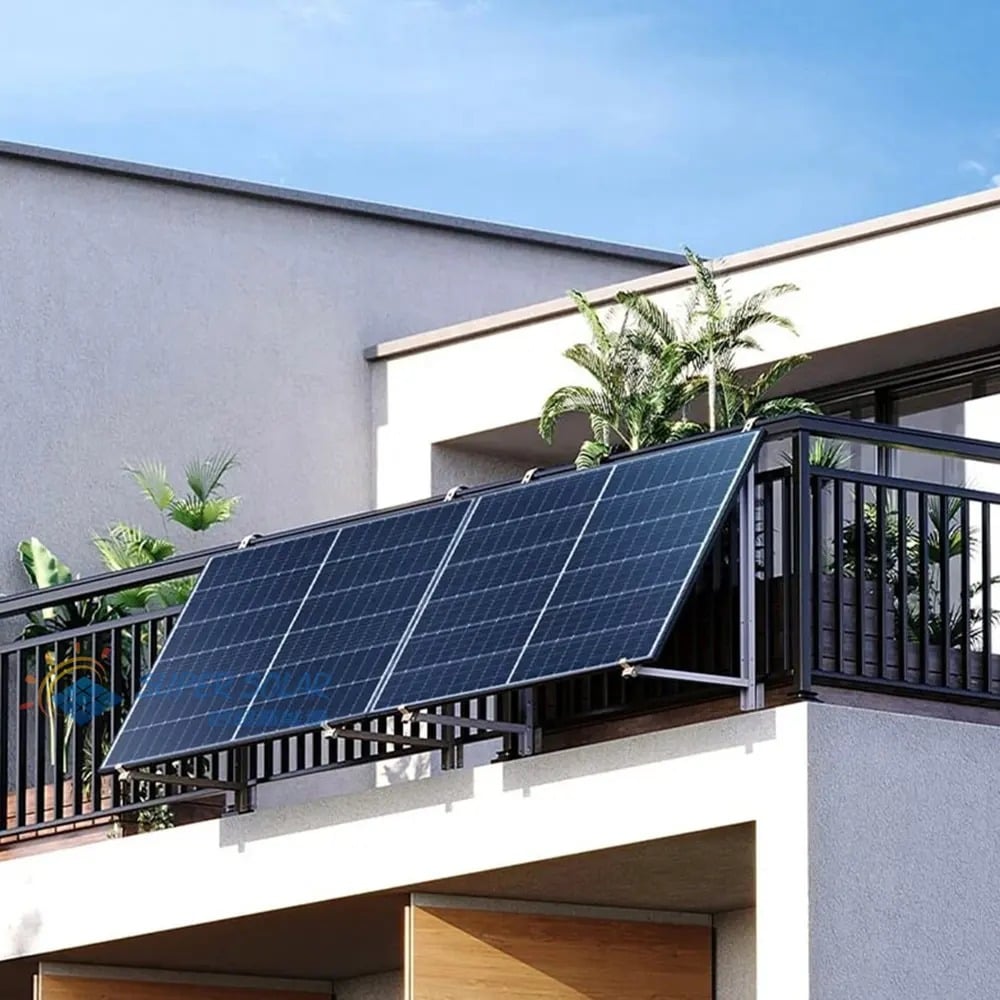
For distributors, this is both the opportunity and the risk. The category has genuine volume and repeat purchase characteristics, particularly in markets where small plug-in systems are well established. It also concentrates a great deal of technical responsibility into a product that is sold without technical support. The way to manage that risk is to understand railing and balcony construction, be clear about what a balcony solar mounting system is and is not rated for, and give installers and resellers documentation that makes correct installation the path of least resistance. The sections below cover railing types, safety, regional rules and the wholesale considerations that matter for a distribution business.
Balcony railings vary widely in construction, and the variation determines which bracket will fit. Common forms include metal tube or post railings with horizontal rails, glass panel railings with a metal frame or posts, and solid parapet walls in masonry or concrete. Some balcony fronts have a combination, such as glass panels held between metal uprights. A bracket designed to hook over a horizontal rail behaves very differently from one designed to clamp a post or to be bolted to a wall, and a product range that covers the market usually includes several attachment families rather than one universal design.
Not all balconies accept a railing-mounted solution. Where the railing is unsuitable, the alternatives are usually wall mounting on the building facade, floor mounting on the balcony slab, or mounting on a parapet. Each has a different structural implication. Wall mounting transfers load into the building structure at a height, producing an overturning moment that the anchorage must resist. Floor mounting keeps the load low but consumes floor area and may obstruct drainage. Parapet mounting is convenient but depends entirely on the parapet's construction and its ability to take a concentrated load, which is frequently unknown to the occupant.
Angle adjustment is a defining feature of balcony brackets, because the ideal tilt varies with latitude and season and because balcony orientation is fixed. Adjustable products commonly offer a range of angles, with some brackets providing adjustment across roughly eighteen to thirty-six degrees and others a slightly narrower band around fifteen to thirty degrees depending on the model. Manufactured from aluminium alloy with stainless steel components, such brackets remain corrosion resistant despite constant outdoor exposure. Adjustment should be possible during installation without specialist tools, because a balcony solar mounting system whose angle cannot practically be changed in service will simply be left at whatever position it was first set to.
Balcony arrays are usually built from one or two modules, and the modules themselves fall within a defined size range. Products intended for this market commonly support modules within approximately one hundred and forty to two hundred and forty centimetres in length and seventy to one hundred and thirty centimetres in width, which accommodates the standard small-format panels used in this application. The bracket footprint and the resulting projection into the balcony also matter, because a tilted panel consumes space and may restrict movement or affect privacy. These dimensional checks are what separate a balcony solar mounting system that installs cleanly from one that technically fits but is awkward to live with. Super Solar's balcony mount range includes hook-type and railing-based brackets as well as a three-way adjustable option, which allows a distributor to cover the common railing and parapet situations with a small number of SKUs.
A balcony panel is unusually exposed. It typically sits high on a building, projecting from a facade, with no sheltering roof above and often with an unobstructed wind path. Uplift and drag forces act on a single, stiff panel with little mass to resist them, and the attachment is often the only thing preventing the panel from becoming a projectile. This is why wind is the governing design case for any balcony solar mounting system, and why products describe their wind performance in terms of a maximum speed rather than a nominal rating. The relevant figure is only meaningful when tied to a defined mounting method and a verified attachment, so the installed condition matters as much as the product specification.
The most common installation error is over-loading a railing that was never designed to carry a panel. Balcony railings are normally specified for guard-rail duty, which is a horizontal and vertical load case applied at handrail height, not a sustained eccentric load from a solar panel. Hooks and clamps do not damage the railing if they are correctly sized and not over-tightened, but even a well-fitted bracket transfers load into the railing, and the railing must be able to take it. Where there is any doubt, the correct advice is to mount to the building structure rather than the railing, and to confirm the building's construction before drilling anything.
Several safety issues arise beyond structural loading. A panel installed above a balustrade can change the effective height of the barrier and may compromise its function, which is a genuine safety concern rather than a technicality. Panels mounted on glass railings must not load the glass panels themselves, because glass is brittle and its fittings are not designed for that load path. Anything projecting from a balcony can fall during installation, so tools and components should be secured and the work should not be done in windy conditions. These points belong in the installation instructions, because the person fitting the product may not have considered them.
In cold markets, snow accumulation on a tilted balcony panel and loading against the railing both need consideration, and products typically quote a snow load limit that should be respected rather than exceeded. Maintenance is minimal but not zero: panels should be cleaned occasionally and the fittings checked for tightness and corrosion at intervals. Because the owner is the maintainer, the initial installation should be visually inspectable, with fasteners accessible and no components buried behind trim or inside enclosures. Where snow is significant, the installation guide should state how the panel is expected to behave under load rather than leaving the owner to discover the limit during the first winter.
The rules governing small balcony and plug-in systems vary considerably from country to country and, within a country, between utilities and building types. Some markets have established dedicated frameworks with registration and simplified permitting; others treat these installations under general electrical and building rules; others restrict them in rented or multi-occupancy buildings. Requirements have also changed over time as the category has grown. Super Solar states the applicable certification and design parameters for its balcony products, but it cannot and does not provide a single compliance conclusion, because the answer depends on where and when the system is installed and on the building in question. Distributors should therefore publish regional guidance with the specific market and the date of the information stated, and direct customers to the responsible local authority for a definitive answer.
Three parties commonly need to be satisfied. The building owner or landlord must accept a modification to a rented property or a shared facade, which is often governed by the lease rather than by any technical standard. The building itself must be able to take the load, particularly where the mounting is attached to a railing, a parapet or a facade. The local grid operator or utility may require notification or registration of a system that feeds into the building's installation, even at small scale. These are not engineering questions, but they determine whether an installation is lawful, and a distributor who addresses them in pre-sales information will see fewer returns and fewer disputes.
The installer should confirm the railing or wall construction and material, confirm that the attachment method matches that construction, check that the bracket is rated for the panel's size and weight, verify the achievable wind and snow exposure against the product's stated limits, confirm that the installed position does not compromise the balustrade's safety function or block escape routes, obtain any landlord consent required, and satisfy the local registration requirement. A short checklist in the carton is one of the cheapest quality improvements a distributor can make, because it converts a support question into a self-service answer.
Because rules differ, the documentation supplied with the product should be regionalised rather than global. That means installation instructions in the destination language, a specification sheet with the product's rated limits, and a short guidance note naming the market, the type of requirement and the date the information was prepared. Keeping this material separate from the technical datasheet allows it to be updated as rules change without reprinting the technical content. Reviewing that material once a year is a small task that prevents a distributor from circulating guidance a market has since changed.
A distributor's balcony range should cover the common situations with as few SKUs as possible. A practical starting set usually includes a hook-type bracket for standard horizontal railings, a railing-adjustable design for variable rail geometry, a wall or parapet mounting option, and a universal adjustable design that accommodates several situations. Adding a complete small-system kit can serve customers who want a single purchase rather than a component selection, particularly in markets where plug-in systems are sold as appliances. Super Solar provides a solar panel balcony railing range that includes railing and universal three-way adjustable brackets as well as a complete balcony energy system, which gives a distributor the flexibility to sell components or a finished balcony solar mounting system as a kit.
Balcony products are typically sold through channels where packaging matters as much as the product. Compact packaging designed for parcel shipping, clear assembly instructions, and labelling that meets marketplace and retail requirements are all part of the product. Distributors should confirm the standard pack format, whether custom logo boxes are available, whether barcode or marketplace labels can be applied at the factory, and how multilingual instructions are handled. Super Solar offers customised packing for balcony brackets and supports private label and bulk orders, which is directly relevant to building a branded range rather than reselling a generic one.
Because the end customer is not a professional installer, resellers absorb technical questions. The supplier's documentation therefore becomes a commercial asset. Useful content includes a clear specification sheet with rated limits, an installation guide with the checklist described above, guidance on which bracket suits which railing type, and a responsive technical contact for the questions the documentation cannot answer. Super Solar's balcony products carry ISO 9001 and CE certification, a twelve-year warranty and a service life beyond twenty years, and the company provides drawings, samples and technical support that a reseller can rely on when a customer's situation does not quite match the standard case.
Finally, plan for the return. Balcony products are frequently returned because the railing did not match the bracket, not because the product failed. A returns process that captures the reason for return turns those cases into better pre-sales guidance and better SKU selection. Spare fasteners and small replacement parts are inexpensive to stock and resolve many complaints that would otherwise become full returns, and they signal to the customer that the product is supported rather than disposable. Listing the reason for each return in a shared log turns individual complaints into a pattern that can be designed out of the next product or the next instruction sheet.
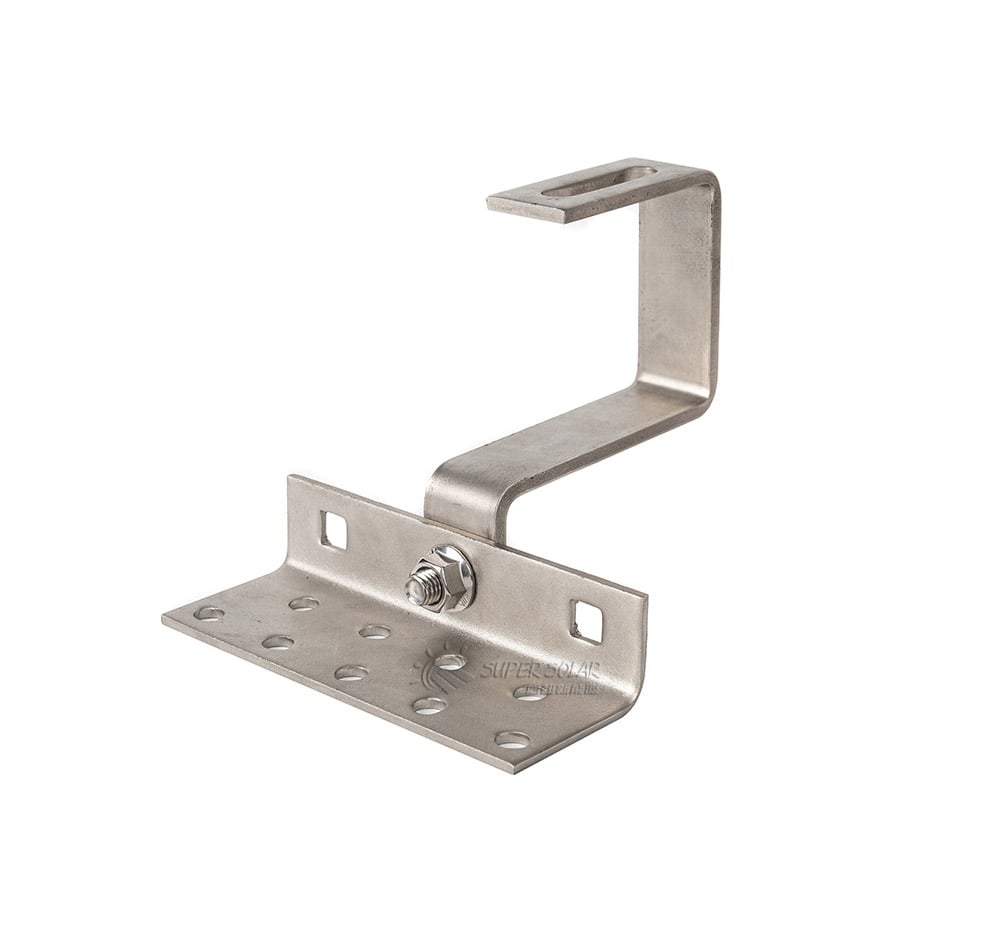
Hook-type brackets suit railings with a horizontal rail the bracket can hook over, provided the rail's construction and strength can take the load. Adjustable railing brackets handle variations in rail spacing and geometry and are more forgiving on older or non-uniform railings. Post-clamp and wall-mounting designs suit railings that cannot be loaded, or balconies where the railing is glass or otherwise unsuitable. Because railing construction varies so much, the reliable method with any balcony solar mounting system is to identify the railing type first, then select the bracket, rather than starting from the bracket and hoping it fits.
No. Two independent limits must both be satisfied: the bracket must physically match the railing or wall, and the railing or wall must be able to carry the load the panel imposes. A railing designed as a guard rail may not be able to take a sustained eccentric load from a tilted panel, and attaching to glass panels or their fittings is generally inappropriate. Where the railing's capacity is uncertain, mounting to the building structure is the safer route. The product's rated wind and snow limits then apply to the installed condition rather than to the product in isolation.
No, and there is no single answer, because requirements differ by country, by utility and by building type, and they change over time. Some markets have specific frameworks for small plug-in systems, others apply general electrical and building rules, and many restrict installation in rented or multi-occupancy buildings through lease terms rather than through technical regulation. Distributors should provide guidance that names the market and the date, and customers should confirm the position with their local authority, their landlord and their grid operator before installing. A distributor that states this plainly, rather than implying universal approval, protects both the customer and its own returns rate.
Verify the rated wind and snow limits and the conditions they assume, the supported module size range and weight, the material and finish of the structural components and fasteners, the attachment methods a balcony solar mounting system range covers, and the certification and warranty terms. Check the packaging format against your sales channel and confirm whether private label and marketplace labelling are available. Then order a sample and install it on a representative railing, because the product's usability for a non-professional installer is something only physical testing reveals.