1. What is a flat roof solar mounting system?
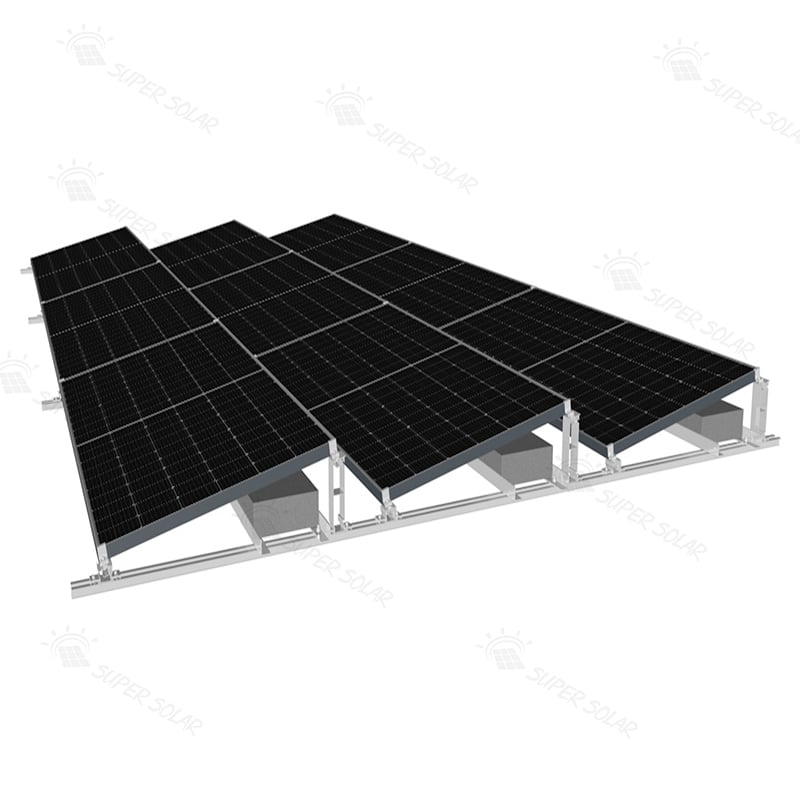
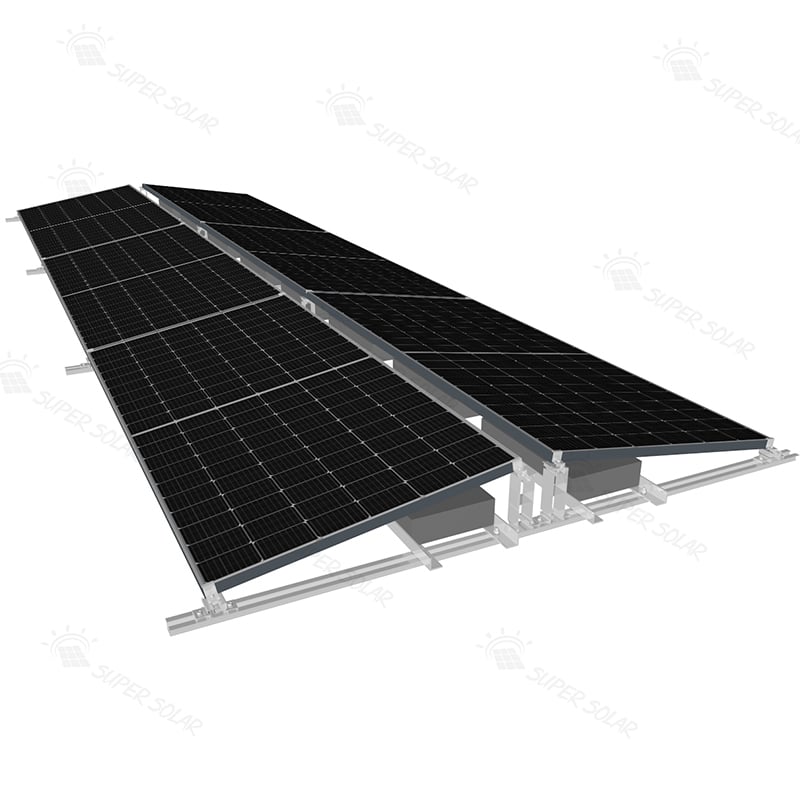
A flat roof solar mounting system is a structure designed to install photovoltaic panels on flat or low-slope rooftops using ballasted or mechanically fixed supports.
2. What types of buildings are suitable for flat roof solar mounting?
Flat roof solar mounting systems are commonly used on commercial, industrial, and residential buildings with concrete or membrane roofs.
3. Can flat roof solar mounting be used on residential buildings?
Yes, flat roof solar mounting is suitable for residential buildings with sufficient roof space and structural capacity.
4. What roof types are compatible with flat roof solar mounting systems?
Common compatible roof types include concrete roofs, TPO, PVC, EPDM, and bitumen membrane roofs.
5. What is the difference between ballasted and penetrative flat roof systems?
Ballasted systems rely on weight to secure the structure without roof penetration, while penetrative systems use anchors fixed to the roof structure.
6. When should a ballasted flat roof solar system be used?
Ballasted systems are preferred when roof penetration is restricted and the roof has sufficient load-bearing capacity.
7. Can flat roof solar mounting systems be installed without roof penetration?
Yes, non-penetrating ballasted flat roof solar mounting systems are widely used to protect roof waterproofing layers.
8. What tilt angles are commonly used for flat roof solar mounting?
Typical tilt angles range from 5° to 15°, optimized based on roof layout, wind load, and shading considerations.
9. Is flat roof solar mounting suitable for high wind areas?
Yes, flat roof solar mounting systems are engineered with wind deflectors, optimized tilt angles, and ballast calculations for high wind zones.
10. How is wind load calculated for flat roof solar mounting systems?
Wind load is calculated based on local building codes, roof height, exposure category, and system layout.
11. Can flat roof solar mounting withstand snow loads?
Yes, systems can be designed to meet local snow load requirements through proper structural design and material selection.
12. What materials are used in flat roof solar mounting structures?
Most flat roof solar mounting systems use aluminum alloy rails and stainless steel fasteners for durability and corrosion resistance.
13. How is a flat roof solar mounting system installed?
Installation involves layout planning, placing mounting structures, adding ballast or anchors, and fixing solar modules onto the system.
14. Is flat roof solar mounting compatible with standard solar panels?
Yes, it supports most standard framed photovoltaic modules commonly used in commercial and residential projects.
15. Can flat roof solar mounting systems be installed on lightweight roofs?
Lightweight roofs require structural assessment to determine whether ballasted or penetrative solutions are appropriate.
16. Can flat roof solar mounting be combined with rooftop equipment?
Yes, systems can be designed around HVAC units, skylights, and roof access paths.
17. Do flat roof solar mounting systems comply with international standards?
Flat roof solar mounting systems can be designed to comply with standards such as IEC, Eurocode, and regional building codes.
18. Are structural calculations provided for flat roof solar projects?
Yes, load calculations and layout drawings can be provided to support engineering approval.
19. Is flat roof solar mounting suitable for commercial EPC projects?
Yes, flat roof solar mounting systems are widely used in commercial and industrial EPC solar projects.
20. How much does a flat roof solar mounting system cost?
Cost depends on system type, roof conditions, wind and snow loads, and project scale rather than a fixed unit price.
21. What factors affect the price of flat roof solar mounting?
Key factors include roof size, ballast requirements, tilt angle, material specifications, and installation complexity.
22. Is flat roof solar mounting more expensive than pitched roof mounting?
Flat roof systems may have higher structural material costs but often offer simpler installation and better layout flexibility.
23. How long does a flat roof solar mounting system last?
Flat roof solar mounting systems are typically designed for a service life of 25 years or more.
24. Does flat roof solar mounting require regular maintenance?
The mounting structure itself requires minimal maintenance, aside from routine inspections.
25. Will flat roof solar mounting damage roof waterproofing?
Properly designed ballasted systems protect roof membranes, and penetrative systems include sealed waterproof solutions.
26. Flat roof solar mounting vs tilted ground mounting: what’s the difference?
Flat roof mounting is installed on existing buildings, while ground mounting requires available land and additional foundations.
27. When is flat roof solar mounting the best choice?
Flat roof solar mounting is ideal when rooftop space is available and ground installation is limited or not permitted.
28. Can flat roof solar mounting support ESG and energy-saving goals?
Yes, it enables businesses and building owners to generate clean energy on-site and reduce operational carbon emissions.
 EN
EN