 EN
EN

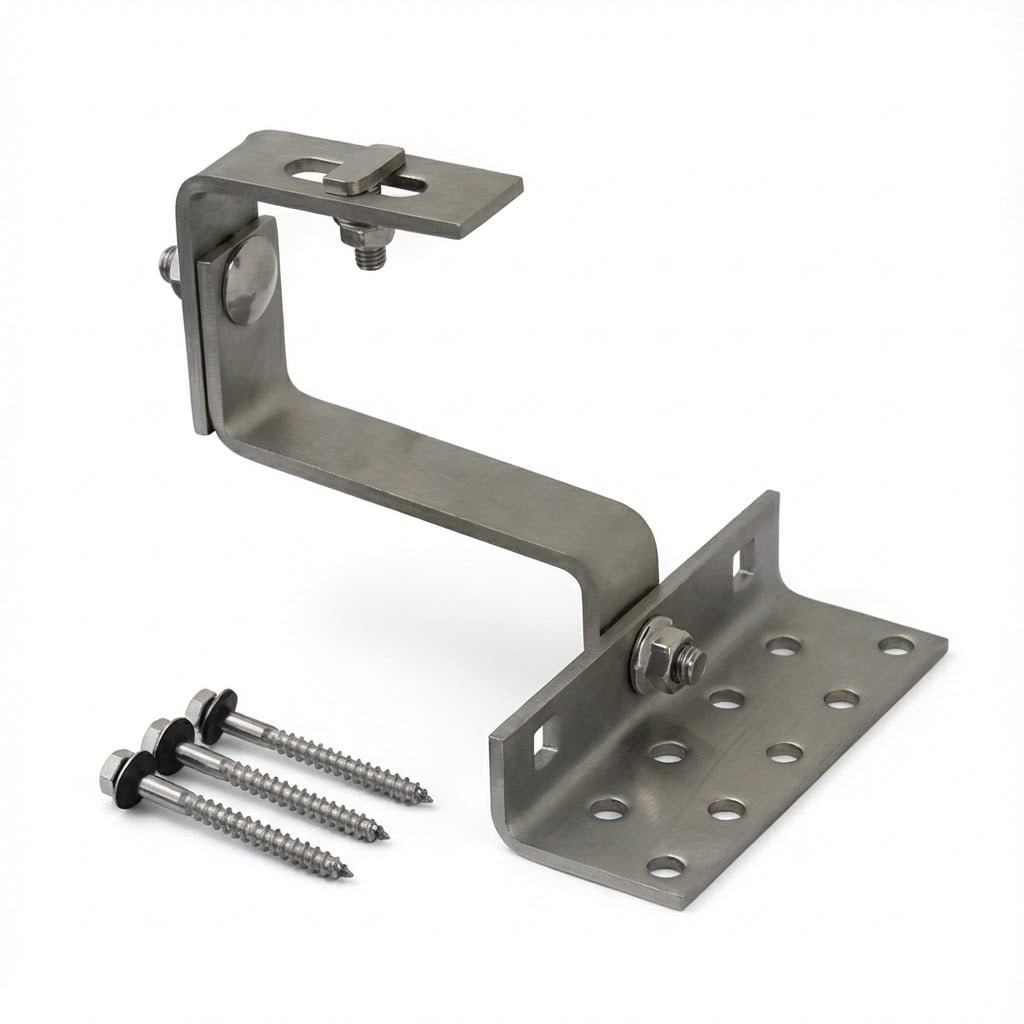
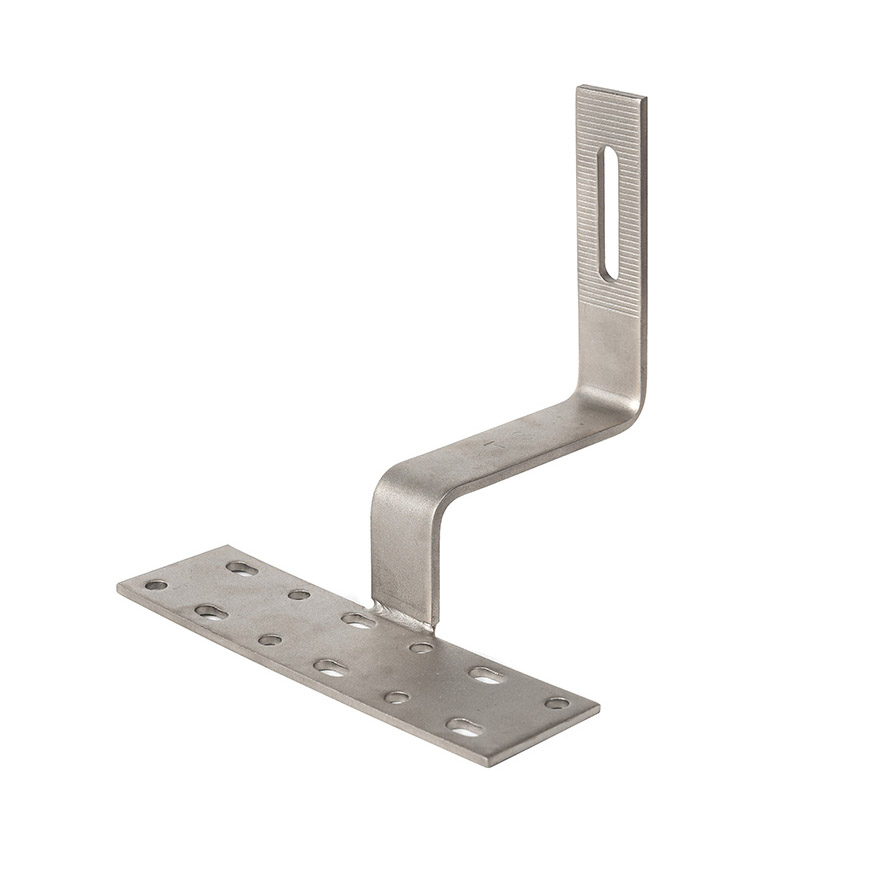

Not every solar installation needs a rail system, a full clamp set and an engineered ballast frame. A single panel on a shed roof, a pair of modules on a campervan, a small array on a boat cabin or a low-capacity off-grid setup on a garage often needs one thing: a way to hold a framed module a short distance above a flat surface, securely, with a modest amount of hardware. That is the problem solar panel Z brackets were designed to solve, and it is why they remain one of the most widely used small-scale mounting components in the industry.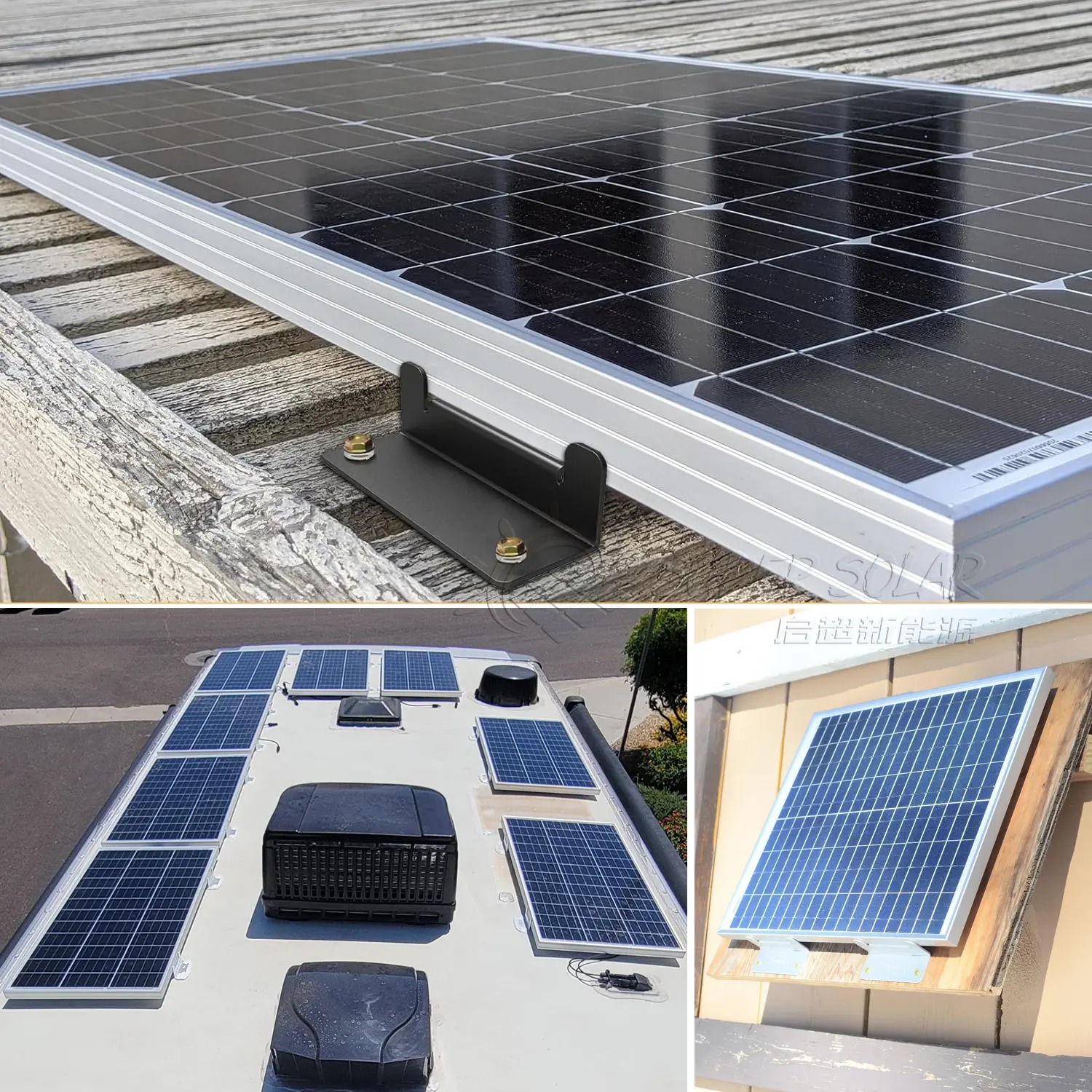
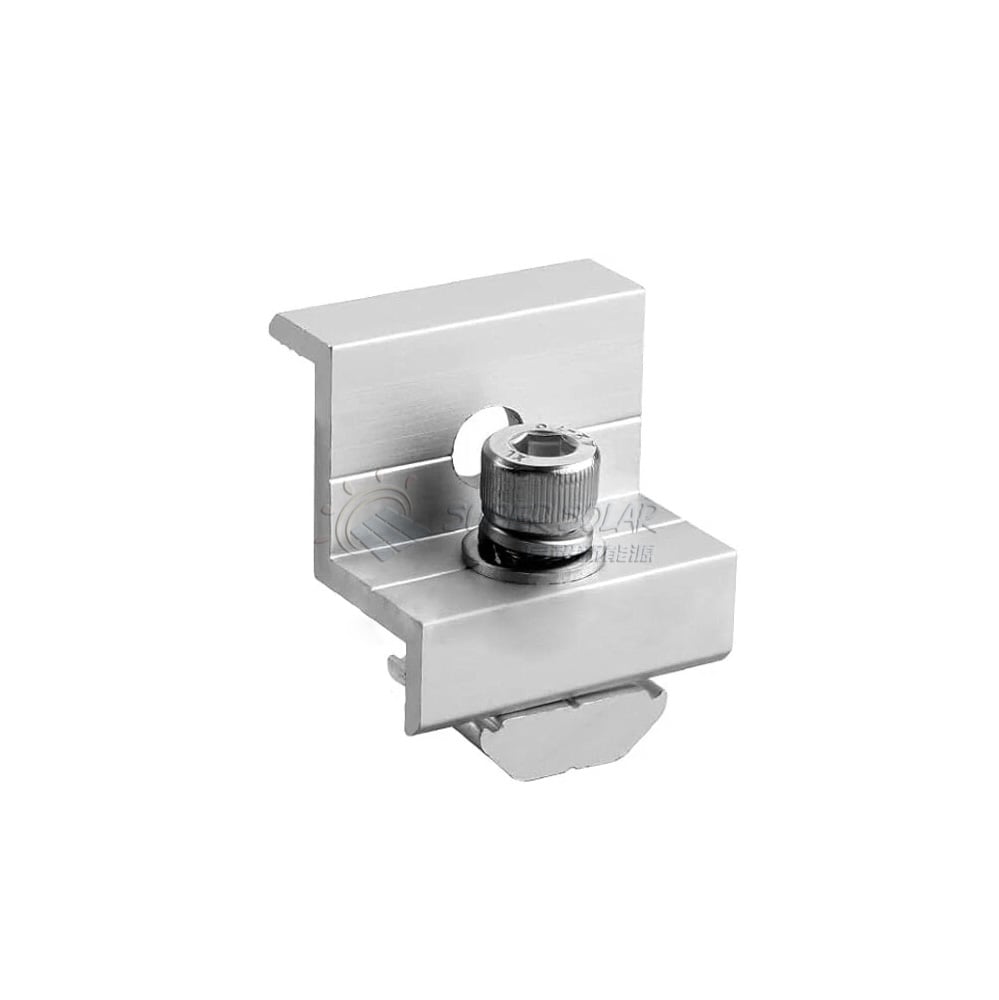
The characteristic Z shape is what gives the bracket its name and its function. One flange fixes down to the mounting surface, the vertical web creates the stand-off, and the second flange supports the module frame. Because the two flanges are offset, the bracket resists a degree of lateral movement as well as vertical load, which is why a set of four placed at the module corners produces a stable four-point mount. The load path is short and direct, so the usable capacity of a solar panel Z bracket depends more on what it is fixed into than on its own span.
A Z bracket is normally sold as a kit rather than as a loose part. A complete Z bracket mounting kit contains the brackets themselves, the bolts that secure the module to the bracket, washers, and the screws that fix the bracket to the surface, so the installer does not have to source hardware separately and risk mismatched grades. Pre-drilled holes are standard, and they simplify the work considerably because the drilling positions are set by the component rather than by the fitter. When comparing kits, the useful questions are whether hardware is included at all, whether the fastener type suits the intended surface, and whether the bolts and screws are of a corrosion-resistant grade consistent with the bracket.
It is equally important to be clear about what the component is not. A Z bracket is not a substitute for a rail system, and it should not be treated as one. Z brackets for solar panels are intended for small to medium framed modules, and their geometry assumes a short stand-off on a surface that is already structurally sufficient. They are not the right solution for large-format utility modules, for a surface that cannot take point loads without spreading them, for spanning gaps between structural members, or for setting a module at a significant tilt without an additional frame. Where any of those conditions applies, the answer is a different mounting family, and choosing it early is cheaper than rectifying a design afterwards.
There is also a small performance dimension worth knowing. Because the Z profile raises the module off the surface, air can circulate beneath it, which improves cooling and reduces the efficiency loss that high cell temperatures cause. The stand-off is small, so it is not a substitute for a properly ventilated mounting system, but it is a genuine advantage over any arrangement in which the module sits directly against the substrate.
The applications are wider than the bracket looks, but they share a common condition: the surface beneath already carries the load, and the bracket simply holds the module above it.
Flat surfaces are the natural application. Z brackets are commonly used on flat rooftops, garage roofs, shed roofs and other low-slope surfaces where a module can sit above the substrate on a short stand-off. The critical check on a roof is whether the fixing reaches structure. A bracket screwed into a thin covering with nothing beneath it has no reliable capacity, however good the bracket is, so the fixing should always engage a rafter, a purlin, a deck or a solid substrate. Where the covering is thin or brittle, an additional spreader or a different mounting approach is needed rather than a longer screw. On a sheet roof, solar panel Z brackets should only be used where the fixing can reach a rafter, a purlin or a solid deck beneath the covering.
The portable and mobile applications are where Z brackets are most familiar: RVs, campervans, boats and yachts, trailers, cabins and sheds, and small off-grid installations. Here the mounting surface is usually a solid panel or a structural frame, so the bracket's short load path is appropriate, and the low-profile design keeps the module from catching on branches, ropes or low structures. The loading environment is different from a building, however, because a vehicle or vessel experiences vibration, twisting and, in a marine setting, constant salt exposure. That makes fastener grade and the tightness of every connection more important than on a static roof. In these applications solar panel Z brackets are usually the simplest adequate solution, provided the fasteners and the surface are treated with the care a mobile installation demands.
Garages, outbuildings and balconies are common locations for one or two modules mounted with Z brackets, usually in DIY installations where a compact, pre-drilled, low-cost kit is the point. On a balcony, the surface and the fixing method need particular care, because balconies are often bounded by elements that were never designed to take additional load, and because anything projecting from a balcony has to be secure against wind. Where the mounting is on a wall or a parapet rather than on a floor, the bracket is no longer working in its intended orientation, and a wall-mounting design should be used instead. It is also worth confirming who owns the structure before drilling into a shared or rented building.
Z brackets are designed for small to medium modules, with a working range of roughly ten to two hundred watts, and compatibility limited to rigid framed panels. Frameless modules, flexible panels and thin-film laminates present no frame for the bracket to grip and should be mounted by a method designed for them. Within the framed range, the relevant checks are the frame depth against the bracket's flange, the module's own permitted fixing points, and the number of brackets needed to carry the module's weight and area. The module manufacturer's instructions take precedence over any general convention about bracket count, and Z brackets for solar panels are typically supplied pre-drilled to suit standard frame fixings, which removes most of the guesswork from the installation.
Installation is short and repetitive rather than difficult, and almost all of the risk sits in the preparation and the sealing rather than in the assembly.
A successful installation starts with layout. Position the brackets so they align with the module's fixing points and with the structure beneath, then mark the fixing positions and confirm that each one lands on a member that can carry the load before any hole is drilled. Drill to suit the fastener rather than to the nearest available bit, and check the screw length against the substrate thickness so the fixing achieves full engagement without protruding through the underside. The usual sequence is to fix the brackets to the surface first, then lift and secure the module, tightening the module bolts in an order that keeps the frame square instead of pulling one corner tight and distorting it. Where several Z brackets for solar panels are going onto the same surface, a template or a measured line keeps the modules parallel and the finished array looking deliberate.
Every fixing that penetrates a weatherproof surface creates a path for water. On a roof or a vehicle roof, that means sealing each penetration with a washer, gasket or sealing compound appropriate to the surface material, and tightening the fastener enough to compress the seal without deforming it. Positions should respect the direction of water flow, so water reaching the bracket cannot track under the fixing. On a roof with a fall, brackets placed in a low area where water ponds should be reconsidered, because standing water defeats most sealing arrangements over time. Where the surface must remain completely unpenetrated, a solar panel Z bracket is the wrong component, and a non-penetrating mounting approach should be used instead.
Once the module is in place, the important checks are quick and visual: every bracket present and tightened, no distortion in the module frame, no gap between the bracket and the surface, sealing elements compressed and correctly seated, and no movement when the module edge is pressed firmly. On a mobile installation the same checks matter more, and the connections should be re-checked after the first trip or the first passage of rough water. Where the array will be inspected by an insurer or an authority, photographs taken at this stage are the most useful record, and they also make any later complaint easier to resolve on evidence. A repeat visit after the first month of service is worth considering on a mobile installation, since vibration reveals loose connections that a static inspection will not.
Material choice comes up constantly in this category, and the honest answer is that the two are not competing equals for the same job: one is a practical default, the other a specialised alternative.
Aluminium alloy is the standard material for solar panel Z brackets, and it is what wholesalers generally stock for this application. It is light, which reduces the added load on a roof or a vehicle, and it resists corrosion without surface treatment, which matters on boats and in coastal locations. It is also easy to form into the Z profile with the dimensional consistency that pre-drilled brackets require, and it will not develop the surface rust that affects untreated steel in wet or saline conditions. Where a project needs a heavier section or a different material, that requirement should be raised at enquiry stage rather than assumed to be available from stock.
A stainless steel Z bracket offers higher strength in a thinner section and, in the right grade, excellent corrosion resistance. It is also heavier, more expensive and harder to form, and those characteristics generally make it unnecessary for the small framed modules this bracket serves. There is also a practical pairing question: a stainless bracket fixed to a dissimilar metal surface can create a galvanic couple in standing water, which has to be managed rather than ignored. The sensible position is that stainless steel is a specification to be justified by a documented load, environment or durability requirement, not a general upgrade applied by default. Where a stainless body is genuinely required, the grade and the isolation detail should both be specified, because the material alone does not answer the interface question.
The bracket is only half the assembly; the hardware determines how the installation performs over time. Matching the bolts and screws to the same corrosion standard as the bracket is what prevents a good mounting from failing at an interface. In practice this means corrosion-resistant fasteners throughout, and it means checking that the bolt material and the surface being drilled do not create a strong galvanic couple. On marine and coastal installations that check should be explicit rather than assumed, because the local environment will find any weak point. Specifying the fastener grade in writing is the simplest way to stop an otherwise sound bracket from becoming the weakest point in the assembly.
Finish matters more than it seems in small installations, because the bracket is often visible. Surface condition should be checked on receipt for handling marks, scratches or deformation, since a deformed base flange will not sit flat and will transfer load unevenly. Where the bracket will be visible against a coloured roof or a painted vehicle, finish consistency across a batch is worth confirming before a large order, because reselecting a matching batch later is harder than specifying it once. Super Solar manufactures its solar Z brackets from aluminium alloy for exactly this duty, and supplies matching hardware and multilingual packaging for export markets. The practical check is to compare the delivered batch against the approved sample in daylight, because indoor inspection hides differences in sheen and tone.
Where a project needs higher capacity, longer spans or mounting at a significant tilt, the answer is not a thicker or stainless Z bracket but a different product family: a rail and clamp system, a tilt frame, or an engineered ballast structure depending on the surface. Some installations genuinely do call for a material with higher strength than aluminium, and that is where other product ranges come in. When a customer asks for a Z bracket in a different material or a heavier section, the useful response is to establish the load and the environment that drive the request, then confirm what is genuinely available for that duty rather than assume a substitution will behave the same way.
Selection comes down to three questions asked in order: does the kit fit the module, does the surface take the load, and does the documentation support the claim?
The first question is whether the kit suits the module. Check the module's frame depth against the bracket's flange, confirm the bracket's holes align with the module's permitted fixing points, and check that the fastener diameter suits the frame's mounting slot. Then check the module's weight and area against the number of brackets supplied, because a kit designed for a heavy frame may be excessive for a small panel and, more importantly, a kit sized for a light panel will be inadequate for a heavy one. Where the module's instructions specify a fixing pattern, they govern. It is generally quicker to confirm these three points from the module datasheet than to discover a mismatch during installation.
The second question is whether the surface can take the load at the proposed points. Four brackets at the corners of a small module concentrate load into four small areas, and the surface beneath has to accept that. On a thin metal sheet, a timber deck or a composite panel, the capacity at each point depends on what lies beneath and on how much material the fastener can engage. Where the surface is marginal, spreading the load with an additional plate or moving the fixing onto a structural member is the correct response. Where neither is possible, the bracket family is wrong for the surface, however convenient a solar panel Z bracket would have been.
For installers buying repeatedly, the practical goal is standardisation: one kit specification that covers most of the small panel work, with a clear statement of the surfaces it suits and the module range it supports. That makes training, stocking and quoting simpler, and it makes it possible to tell a customer honestly when a job falls outside the standard case. Super Solar supplies Z brackets in complete kit form with pre-drilled holes, which shortens installation and removes the risk of mismatched hardware, and provides samples and drawings so the interfaces can be verified before a bulk order is placed. A single documented specification for solar panel Z brackets, with its supported module range stated plainly, is more useful to an installer than a catalogue full of almost identical parts.
Compare quotations on content rather than on price per bracket. Confirm whether bolts, washers and screws are included and at what grade, whether the bracket is pre-drilled, what the surface finish is, and how many brackets a kit contains. Confirm the packing configuration, because a retail pack and a bulk carton serve different channels, and check the lead time for both stock items and custom runs. Finally, confirm the documentation that accompanies the shipment, since a specification that cannot be evidenced is difficult to defend if a customer reports a problem. Where a specification is unclear, requesting the packed component list is a fast way to check that nothing essential has been omitted.
Buying Z brackets in volume is a packaging and channel question as much as a product question, and the specification that matters most is the one you can reproduce on the next order.
Z brackets are a volume product, and the order pattern should follow the sales channel. A distributor supplying retail or e-commerce customers usually needs a small, well-presented pack with clear instructions, while an installer working on commercial projects may prefer bulk cartons of loose brackets and hardware. Demand for this component is seasonal in many markets, following the installation season, so a rolling forecast shared with the supplier is more useful than a single large speculative order. Where the same Z brackets for solar panels serve several channels, an order can usually be split between retail packs and bulk cartons in a single shipment. Whatever the mix, the pack specification should be recorded, since a change in pack quantity between orders disrupts both pricing and warehouse handling.
Packaging protects the product and carries the brand, and in this category it also carries much of the instruction the customer relies on. Useful requirements to settle at order stage are the pack quantity, the presence of a barcode or marketplace label, whether instructions are included and in which languages, and whether the carton is sized for parcel networks or for palletised distribution. Because these products are widely used across Europe, the United States and Asia, multilingual packaging is a common requirement, and it is cheaper to specify it with the order than to add it locally afterwards. The available options, including custom logo boxes and labelling, are worth confirming in writing for the specific order.
Beyond packaging, the customisation that matters for Z brackets is usually dimensional: a bracket shaped for a particular module frame, a specific hole pattern, a chosen thickness, or a finish that matches a customer's existing range. Custom work generally affects both cost and lead time, so it should be scoped at enquiry stage with drawings and a sample. For brands building their own range, this is also where private labelling and OEM manufacturing become relevant, and it is worth confirming who owns the tooling and the artwork, how the approval cycle runs, and how a repeat order will be matched to the original specification. Typical custom work on solar panel Z brackets covers hole pattern, thickness and finish, all of which should follow from the module and the surface rather than from preference.
The checks that prevent field problems are consistent and simple. Verify hole positions and bracket dimensions against the approved drawing, inspect the base flange for flatness, confirm the material and finish, check the fastener grade and quantity in each kit, and compare the packing and labelling against the specification. Then compare the shipment against the retained sample from the first approved order, because consistency against a known reference is the most effective quality control a buyer can apply. Recording batch identification on the carton makes any later complaint traceable to a specific production run, and keeping a documented reference sample on site turns every subsequent delivery into a short check rather than an argument.
The number is set by the module manufacturer's fixing instructions and by the surface beneath, not by a universal rule. A small panel is normally supported on four brackets at its corners, with additional brackets where the module is longer, heavier or exposed to higher wind. The critical check is whether each fixing point reaches a structural member that can carry its share of the load. Where the module's instructions specify a pattern, that pattern governs, and adding brackets without adding structure does not necessarily improve the installation. Where the surface is soft or thin, adding Z brackets for solar panels does not help unless the load they introduce has somewhere to go.
They are not the right answer there. On a pitched tiled roof, load normally transfers to the rafters through roof hooks, because the tiles are not structural and cannot take point loads, and because a module needs to sit above the covering rather than on it. A Z bracket fixed through a tile creates a penetration in a brittle material with no reliable structural engagement beneath it. Where the roof is a flat or low-slope surface with a solid substrate, the bracket's short load path is appropriate; where it is pitched and covered, a different mounting family should be used. The same reasoning applies to slate and to any covering where the material is not structural, since the fixing has no dependable load path beneath it.
A properly specified kit does, and it should. Complete kits normally include the brackets, the bolts for the module connection, washers and the screws for the surface fixing, which removes the risk of an installer using hardware of the wrong grade or length. When comparing suppliers, confirm the contents explicitly rather than assuming, and check the fastener grade, because a corrosion-resistant bracket paired with untreated fasteners will still fail in a coastal or marine application. If hardware is not included, the order should specify it separately and match it to the bracket's material and finish. Matching the hardware to the bracket is not a formality, because a bolt of the wrong length can bottom out in the frame slot or leave the bracket loose.
Z brackets are designed for small to medium rigid framed modules, in the range of roughly ten to two hundred watts, and compatibility extends to most standard framed panels within that band. Above that size the module's weight, area and wind loading typically call for a rail and clamp system rather than a short bracket, and solar panel Z brackets become the wrong tool for the project. Frameless, flexible and thin-film modules are outside the scope entirely, because there is no frame for the bracket to grip. Where a project sits at the edge of the range, the module instructions and the surface conditions should decide.
 Hot News
2025-11-03
2025-10-22
2025-01-24
2024-06-12
2024-06-12