 EN
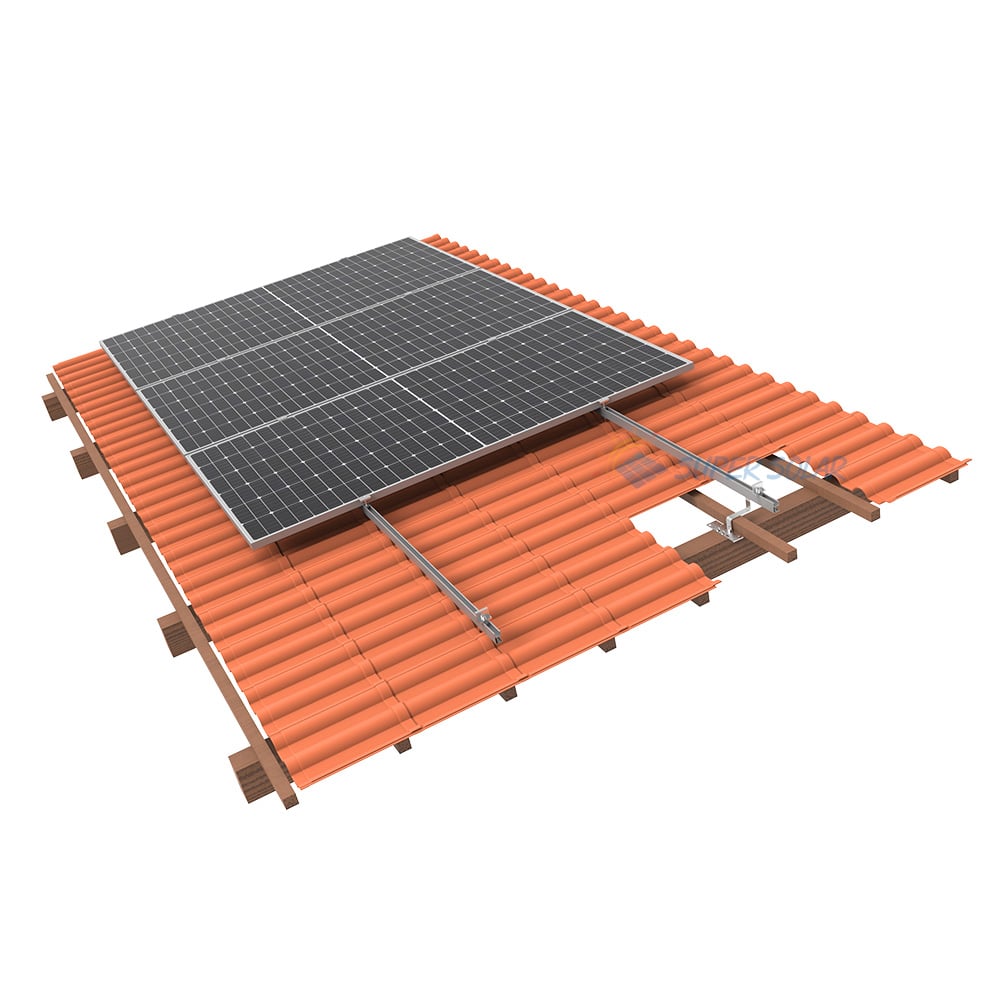

Most solar mounting products exist to hold a module still. A motorized solar panel tilt mount exists to move it. That difference in purpose changes everything downstream: the structure has to be designed around a moving load, the drive has to be reliable for decades in an outdoor environment, the controls have to behave sensibly when the weather turns, and the maintenance regime has to be realistic for whoever ends up owning the site. Motorised tilt is not a universal improvement over a fixed frame. A motorized solar panel tilt mount is a specific answer to a specific set of project conditions, and it earns its place only where those conditions genuinely apply.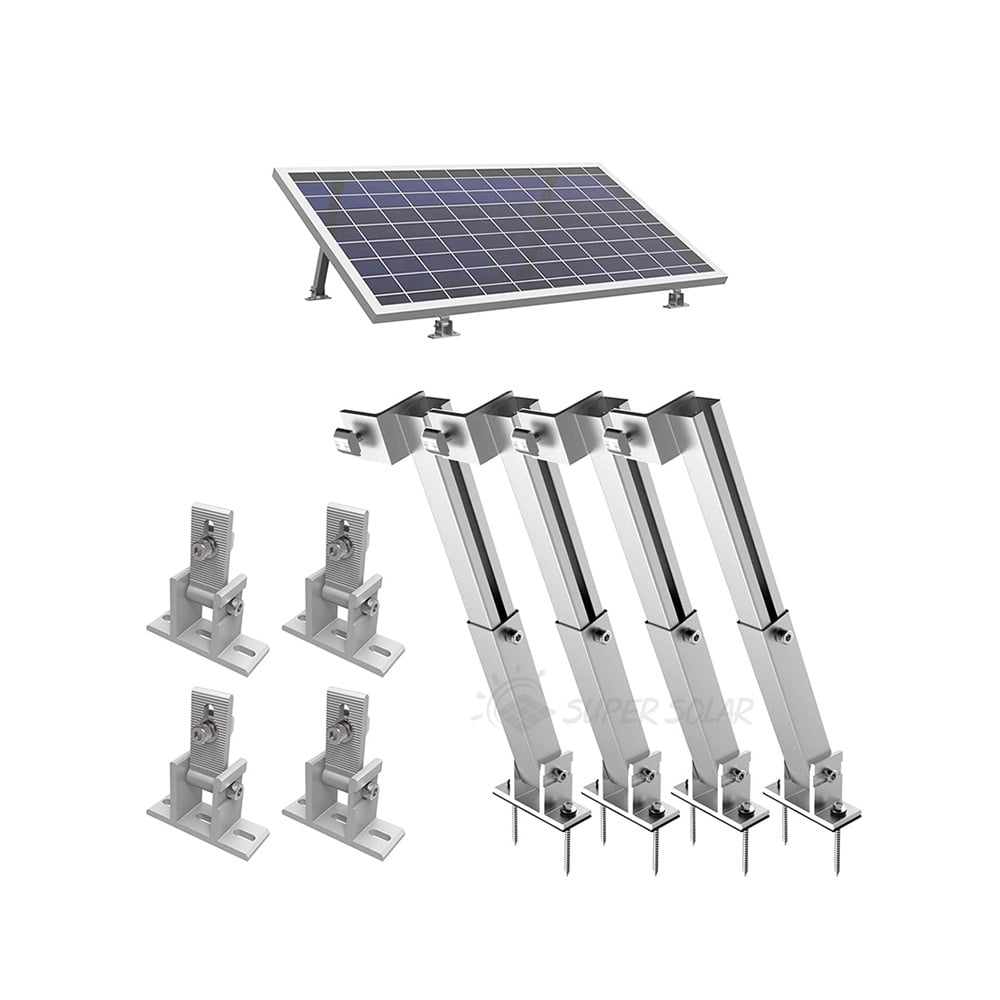
The clearest way to evaluate it is to compare it honestly with the alternatives on the same project. A fixed mount has no moving parts and therefore almost nothing to fail. A manually adjustable tilt bracket captures part of the seasonal benefit at very low cost and complexity, provided someone is actually willing to adjust it twice a year, which in practice they often are not. A motorised tilt mount captures the benefit automatically and continuously, at the price of a drive system, a controller and a maintenance obligation. The sections below set out the comparison, the drive and control options, the applications where motorised tilt is genuinely justified, and the structural and procurement questions that determine whether the installation succeeds.
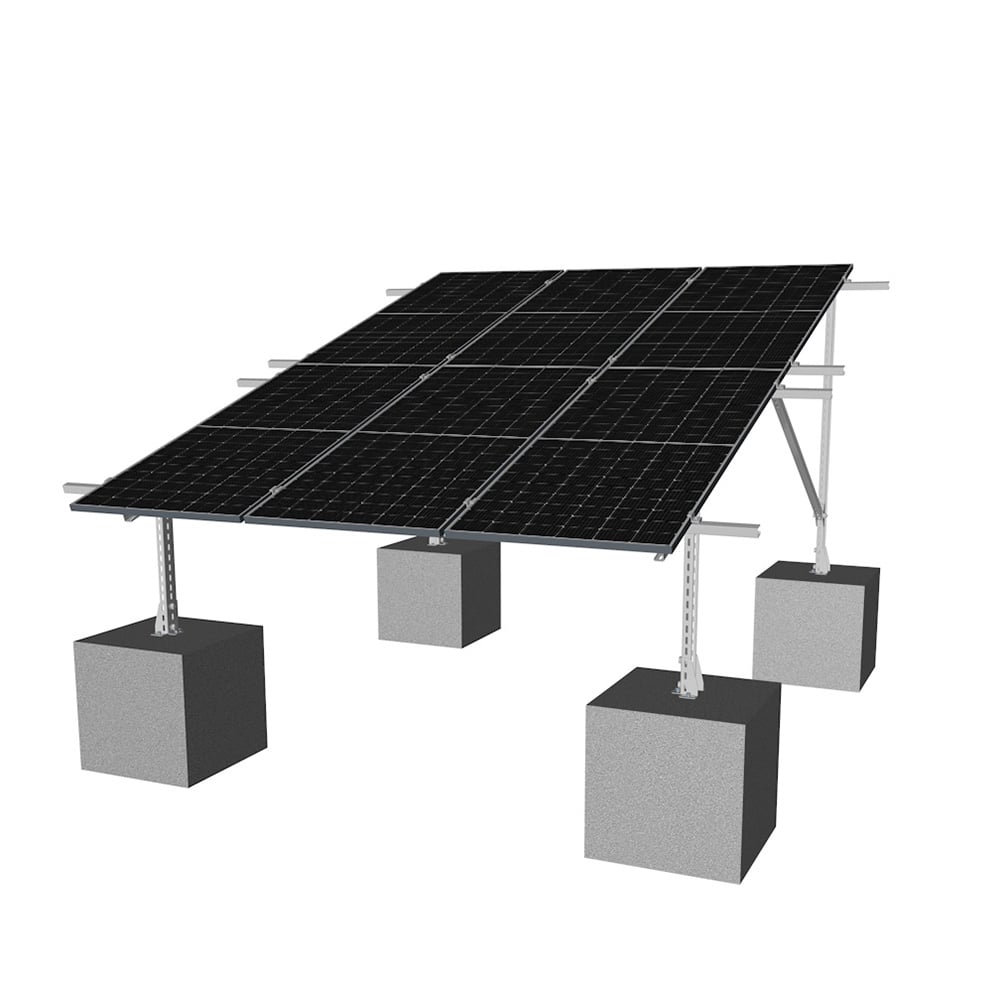
A fixed tilt mount sets the array at one angle for its entire life, usually chosen to optimise annual yield for the site latitude and the local irradiation profile. It has no mechanism, no power supply beyond the modules themselves, and no operational dependency. Its limitation is that it cannot respond to the seasonal shift in the sun's elevation, so it compromises between summer and winter positions, and on sites with limited space it also fixes the row-to-row spacing for the worst case rather than changing it through the year.
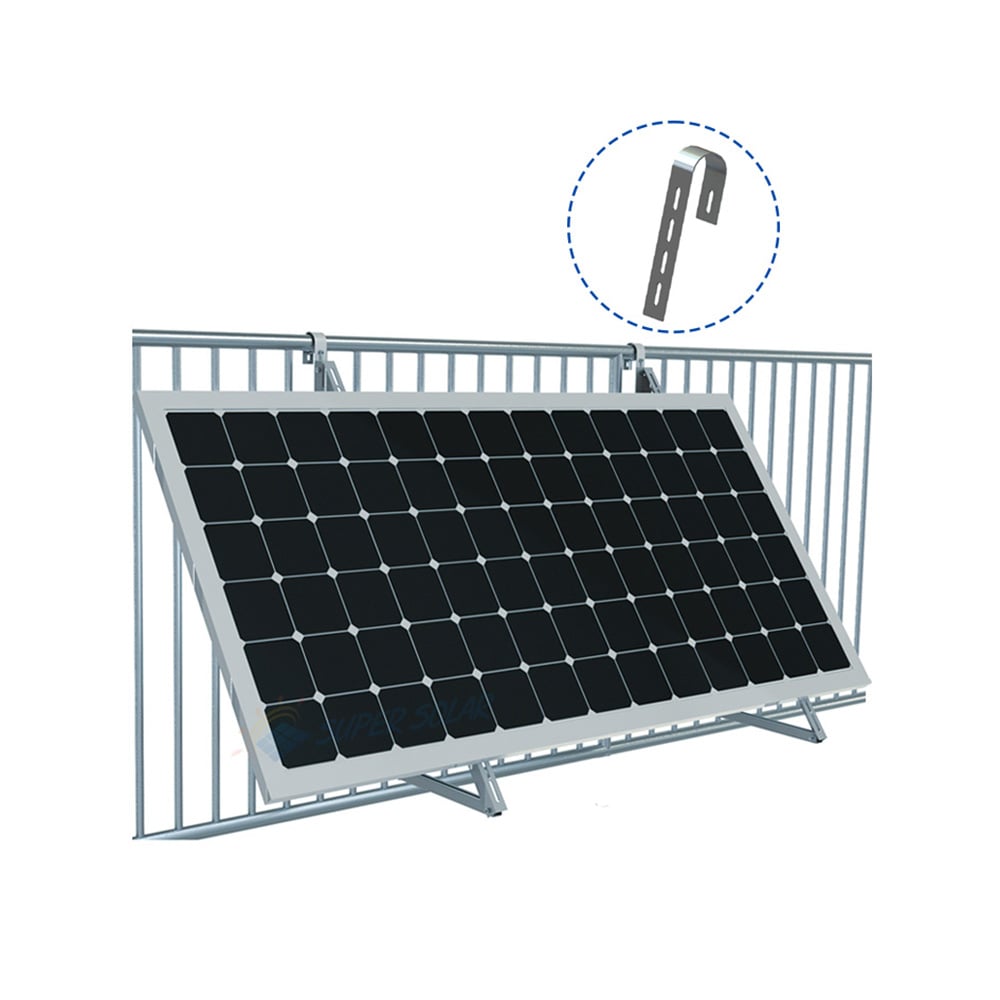
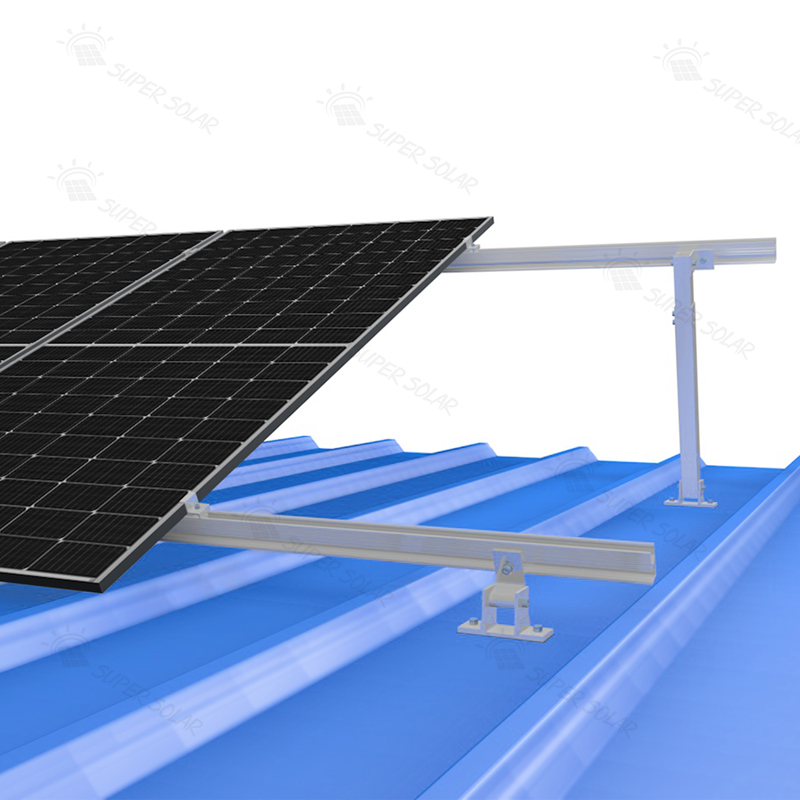
An adjustable tilt bracket, of the kind used in ground arrays and rooftop frames, allows the angle to be reset by hand at one or two points in the year. The structure is still static in service, so it needs no drive and no control, and the cost premium over a fixed frame is modest. The practical weakness is behavioural rather than technical: seasonal adjustment is an operational task that is easy to defer and easy to forget, and on large arrays the labour involved can be significant. Manually adjustable brackets work best where a small, accessible array is maintained by someone who will actually carry out the adjustment.
A motorised tilt mount removes the manual task by driving the array to a commanded angle using an actuator or a gear motor under the control of a controller. This allows a seasonal schedule, a daily schedule, or a response to measured conditions, and it makes the array's position a controllable variable rather than a fixed design decision. The consequences are structural, electrical and operational. The structure must be designed for the whole range of positions and for the loads that occur at each of them. The drive needs a power supply and a control path. And the owner inherits equipment that will eventually need servicing, which means service access has to be designed in from the start rather than improvised later. Those consequences are the practical definition of a motorized solar panel tilt mount, and they are what distinguish it from a bracket that simply happens to be adjustable.
The choice tends to follow the project's purpose. A large utility-scale array usually evaluates single-axis tracking rather than tilt actuation, for reasons discussed later. A small ground array, a compact rooftop, an off-grid installation or a demonstration project may find motorised tilt genuinely advantageous. A cost-driven distributed rooftop portfolio generally stays with fixed or manually adjustable frames, because the incremental energy gain per unit of added cost and complexity does not justify the operational burden. The decision becomes easier when the brief states which constraint the project is solving, because that identifies the option that addresses it directly.
The most common drive for a tilt application is a linear actuator, which extends and retracts to change the array angle. Actuators are available in a range of stroke lengths and load capacities, and the selection is driven by the required angle range, the weight of the moving assembly and the wind loads that must be resisted while moving. Gear motors with a rotary output are used in other configurations where the motion is rotational. In either case the drive should have a defined duty rating, an environmental protection rating suitable for the site, and a holding capability so the array does not creep when unpowered. Because the drive is the single point of failure in a moving system, its duty cycle and protection class deserve more attention than its nominal force rating.
Control systems range from simple timers that step the array through a seasonal schedule, to closed-loop systems that use irradiance sensors to seek the position of maximum output, to schedule-based controllers that calculate the sun's position from time and location. Each has different failure modes. Timers are robust but blind to weather and to power interruptions. Sensor-based systems respond to real conditions but can be confused by partial shading, cloud edges or dirty sensors, which produces hunting and unnecessary drive cycles. Scheduled systems avoid sensor problems but need a reliable clock. A well-specified controller should handle all three sensibly, with limits on how often the drive may operate and a clear failure strategy.
A motorised mount needs electricity where the array is, which is not always convenient. Options include drawing power from the modules themselves through a suitable supply, taking power from the site's own system, or using a separate supply with battery backup where availability matters. Backup matters because an array stuck at an extreme angle during a storm can be more heavily loaded than one in a neutral position, and because an array stuck at a winter angle in summer loses the very benefit the drive was installed for. A manual override is a practical necessity, both for commissioning and for the day the actuator fails, and it should be accessible without dismantling the array.
Motorised tilt mounts are most persuasive on small ground arrays where the module count is low and the cost of the drive is a manageable fraction of the project. They are also useful on constrained sites where the array cannot be enlarged to compensate for a suboptimal fixed angle, and in off-grid installations where a modest increase in daily generation can reduce battery capacity or diesel consumption. In each case the justification is a specific constraint rather than a general expectation of higher output, and it should be quantified against the project's own irradiation and load profile.
A moving array must be checked at every position it can occupy, not only at the design tilt. Loads change with angle, the centre of gravity shifts, and the attachment between the moving frame and the drive sees forces that a static frame never experiences. The supporting structure, the pivot or hinge detail, the actuator mountings and the foundation all need to be adequate for the worst combination, which is sometimes a partial position during a gust rather than the stowed position. Deflection limits matter as much as strength, because a frame that flexes excessively will fatigue connections and can damage module frames. A motorized solar panel tilt mount therefore needs a structural review at every position in its range, not only at the angle the array happens to occupy most of the time.
Weather behaviour should be defined before purchase. The controller should have a stow strategy for high wind, and the stowed position should be one that genuinely reduces loading rather than one that was convenient to implement. Snow should be considered, since an array at a shallow angle may hold snow where a steeper angle would shed it. On the maintenance side, the drive and controller should be reachable without removing modules, and the design should allow an actuator to be replaced individually. Service access is where many motorised installations ultimately disappoint, because a mechanism that is difficult to reach does not get maintained.
Motorised tilt mounts and utility-scale single-axis trackers both move modules, and the two are frequently conflated in specifications. They are different products serving different scales. A tracker is a project-engineered structure for utility-scale plants, typically built around steel piles and a torque tube with a central drive and a networked control system. A motorised tilt mount is a product-scale assembly suited to smaller arrays, rooftops and distributed applications. Super Solar's automatic tilting solar panel mount belongs to the product family aimed at tilt actuation, while the company's utility-scale offer is the separate single-axis tracking system. Specifying one when the project needs the other leads to mismatched foundations, controls and commercial terms.
Ask for the achievable angle range and how it is set, the actuator or motor specification including duty rating and environmental protection, the controller's tracking method and its behaviour in cloud and wind, the power supply requirement, the stow strategy, the manual override provision, the design load cases the structure was checked against, and the maintenance interval for the drive. Ask also for the expected service life of the moving components specifically, since these will not match the life of the static structure. Responses should be in writing and specific to the proposed configuration, because generic ratings rarely survive contact with a real installation.
Request a general arrangement drawing showing the mount in its extreme positions, the interface drawings for the foundation and the module, the electrical schematic for the controller and supply, and the installation and maintenance instructions. For a first order, a sample or a review unit allows the mechanism to be cycled and inspected before commitment. Super Solar supports this kind of review with technical drawings, project-specific structural calculation and sample supply, and its adjustable solar panel tilt mount brackets provide the fixed-alternative reference point against which a motorised design is usually assessed. Its engineering support for tilt applications keeps the moving structure, the drive and the module interface specified together rather than assembled from unrelated parts, which is the point at which most first-order problems for a motorized solar panel tilt mount are prevented.
When evaluating a motorised tilt mount against a fixed frame, compare the whole life rather than the capital cost. Include the drive and controller, the power supply, the commissioning effort, the expected maintenance and replacement of moving components, and the downtime risk. Against that, set the incremental energy generated, quantified for the specific site rather than assumed, and adjusted for row spacing effects. Only a comparison on that basis shows whether the added complexity is justified for the particular project. Where the incremental output is uncertain, modelling the site rather than quoting an industry average is the only way to make the comparison honest.
No, and the distinction matters commercially and technically. A tracker is engineered for utility-scale plants, typically using piles, a torque tube and a networked drive and control architecture, and it is designed project by project. A motorised tilt mount is a product-level assembly intended for smaller arrays, rooftops and distributed installations, with its own actuator, controller and foundation interface. They use different components, follow different procurement paths and suit different project sizes, so the specification should name the correct product family from the outset. Asking for a motorized solar panel tilt mount when the project needs a utility-scale tracker changes the foundation design, the control architecture and the commercial basis all at once.
It depends on the site, and any figure quoted without site data should be treated with caution. The benefit comes from the array being able to sit at a better angle than a fixed compromise, so it is largest where the seasonal variation in the sun's elevation is greatest and where a fixed angle is significantly suboptimal. It also depends on how the array is operated: continuous tracking delivers more than a twice-yearly seasonal step. The honest approach is to model the specific site's irradiation and the array's fixed-angle alternative, then compare on annual yield and on the incremental value of that yield.
A properly specified controller has a stow strategy for high wind and a defined behaviour for power loss. The stowed position should reduce loading rather than concentrate it, which is a design decision made at specification stage rather than a control setting chosen on site. On power loss the drive should hold position or move to a safe position, depending on the design, and a manual override allows the array to be repositioned if the drive fails. Because the worst loading case may occur at a partial angle, the structure should be checked for that condition as well as for the stowed one.
The moving parts, which means the actuator or drive, the pivot and hinge points, and the control and power connections. Static structure and modules need the same periodic inspection as any array, but the drive adds a mechanism with a finite life that should be checked against its duty rating and replaced according to the supplier's schedule. Service access therefore belongs in the design brief, because a mechanism that can be reached and replaced individually will last far longer in practice than one that requires dismantling the array to service.
 Hot News
2025-11-03
2025-10-22
2025-01-24
2024-06-12
2024-06-12