 EN

 Hot News


Solar panel mid and end clamps are essential fastening components in photovoltaic mounting systems. They secure solar modules to aluminum mounting rails, maintain proper panel spacing and help ensure a stable PV array.
Although both components are used to fix solar panels, they serve different purposes. Mid clamps are installed between adjacent modules, while end clamps secure the outer edges of the solar panel array.
For solar installers, EPC contractors and mounting system distributors, selecting the right clamps is important for installation efficiency, structural reliability and compatibility with different solar modules and mounting rails.
In this guide, we explain how solar panel mid and end clamps work, explore different clamp designs and discuss the key factors to consider when selecting mounting clamps for your solar projects.
Solar panel clamps are mechanical fastening components used to secure PV modules to mounting rails. They are generally made from aluminum alloy and stainless steel fasteners to provide reliable outdoor performance.
A solar mid clamp is installed between two adjacent solar panels. Its main function is to hold the inner edges of neighboring modules against the mounting rail while maintaining a specified gap between them.
The clamp normally has a central fastening bolt that connects it to the mounting rail. When tightened according to the manufacturer's instructions, the clamp applies pressure to the module frame edges and helps prevent movement.
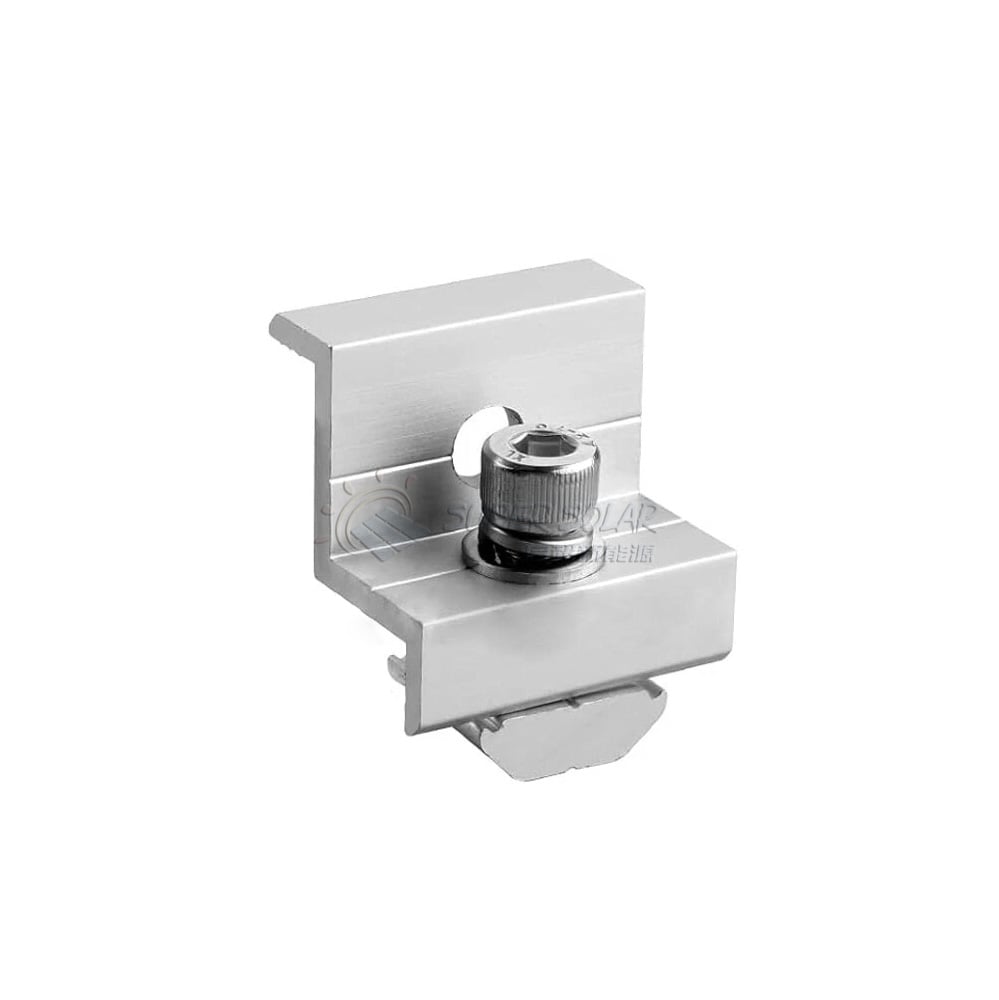
A solar end clamp is installed at the outer edge of a solar panel array. Unlike a mid clamp, which secures two neighboring modules, an end clamp holds the exposed edge of an individual module against the mounting rail.
End clamps are available in different heights and configurations to match solar module frame thicknesses and rail profiles.
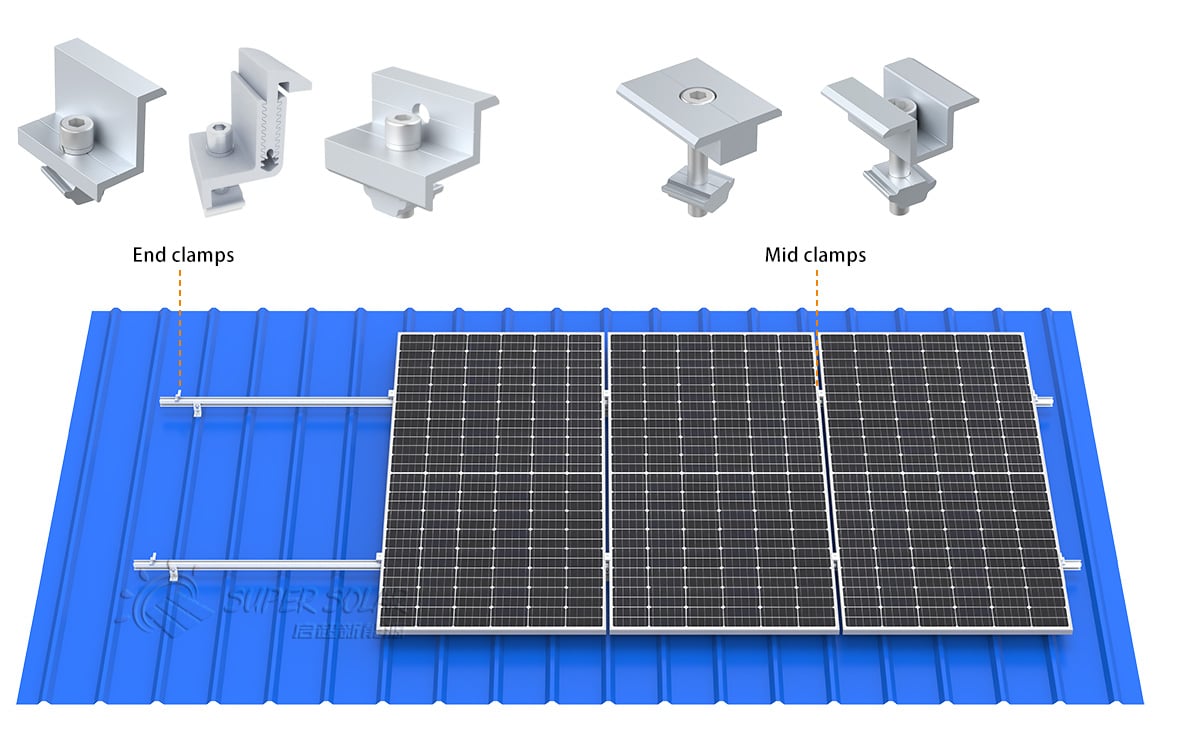
Mid clamps and end clamps work together to secure solar panels along the mounting rails. Their installation positions determine how the modules are fixed within the PV array.
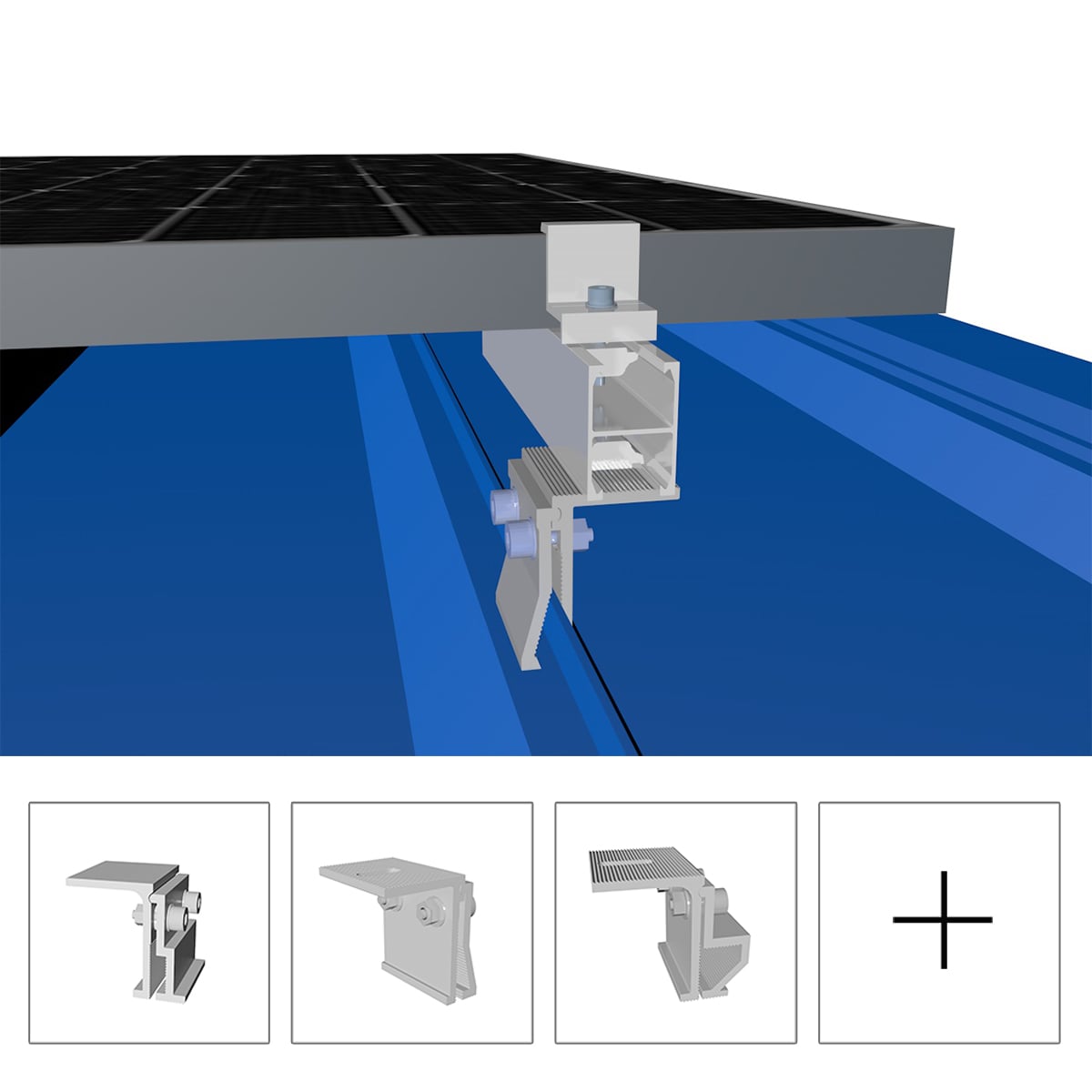
Mid clamps are positioned between two adjacent solar modules. The upper clamping surfaces engage with the inner edges of both module frames, while the lower fastening mechanism connects to the mounting rail.
After tightening, the clamp holds both neighboring module edges in position and maintains the designed spacing between panels.
End clamps are installed at the perimeter of the solar array. They engage with the outer edge of a solar module and connect it to the mounting rail.
The clamp height must match the module frame thickness, and the clamping position must follow the PV module manufacturer's installation requirements.
In a conventional rail-based mounting system, a row of framed solar modules is typically secured using mid clamps between neighboring panels and end clamps at the outer edges.
For a typical continuous row of framed modules, two mid clamps and two end clamps are commonly used per module when shared between adjacent panels. The actual quantity and positions must follow the module manufacturer's approved clamping zones and the mounting system design.
Clamp positioning is important for the structural performance of a PV array. The permitted clamping zones, tightening torque and module support conditions must follow the solar module manufacturer's instructions and the mounting system's structural design.
Different solar projects require different clamp configurations. Factors such as module frame thickness, mounting rail profile, installation method and module design all influence clamp selection.
Super Solar offers a range of aluminum solar panel clamps, including conventional clamps, quick-fix designs, universal end clamps and specialized mounting solutions.

One Supplier. Multiple Solar Clamping Solutions.
Aluminum solar panel clamps are commonly used in conventional rail-based PV mounting systems. They are available in different profiles and configurations for mid-clamp and end-clamp applications.
Aluminum alloy clamp bodies combined with stainless steel fasteners provide a lightweight and corrosion-resistant fastening solution for rooftop and ground-mounted PV installations.
Quick-fix solar clamps are designed to simplify module installation and reduce on-site assembly time. Their locking mechanism allows installers to position the clamps more efficiently than conventional multi-step fastening arrangements.
Depending on the design, quick-fix clamps may feature pre-assembled components or a press-to-lock mechanism. Compatibility with the mounting rail and module frame must be confirmed before use.
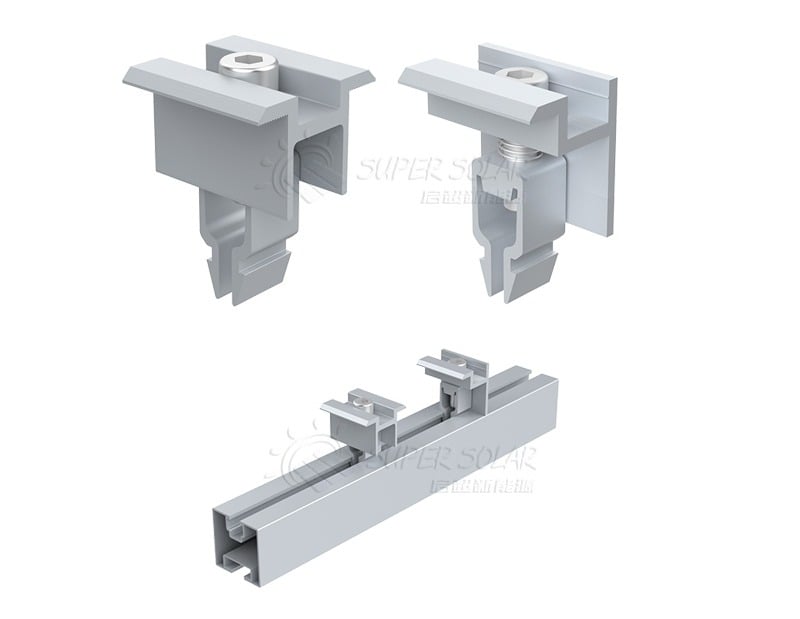
Universal end clamps are designed to accommodate different solar module frame thicknesses through an adjustable or flexible clamping structure.
They are useful for distributors and installers who work with multiple solar module brands and specifications. Instead of stocking many fixed-height end clamps, a suitable universal design may cover several module frame sizes.
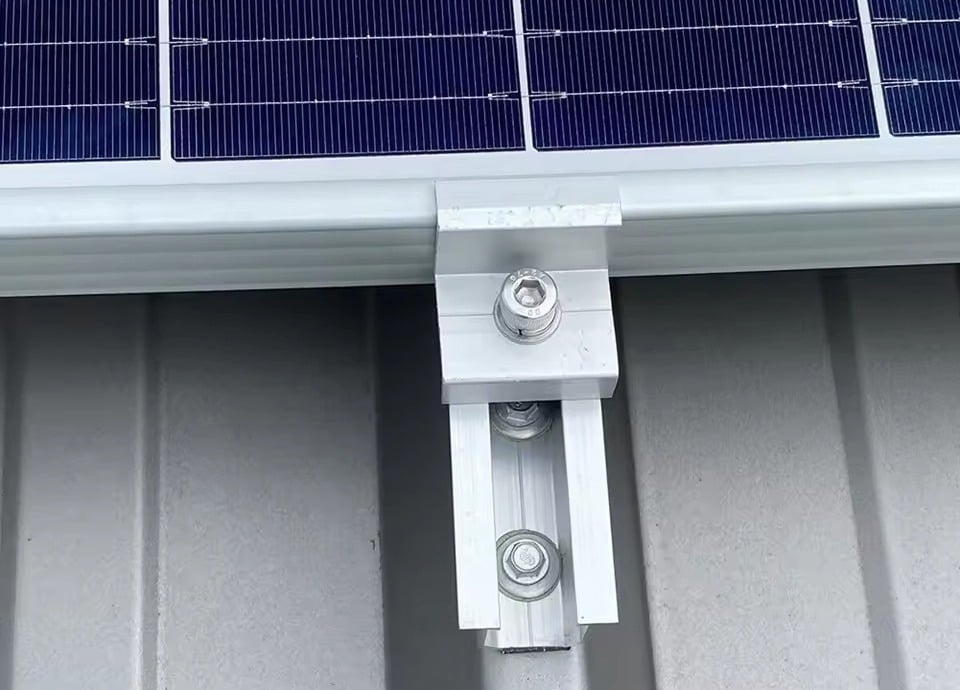
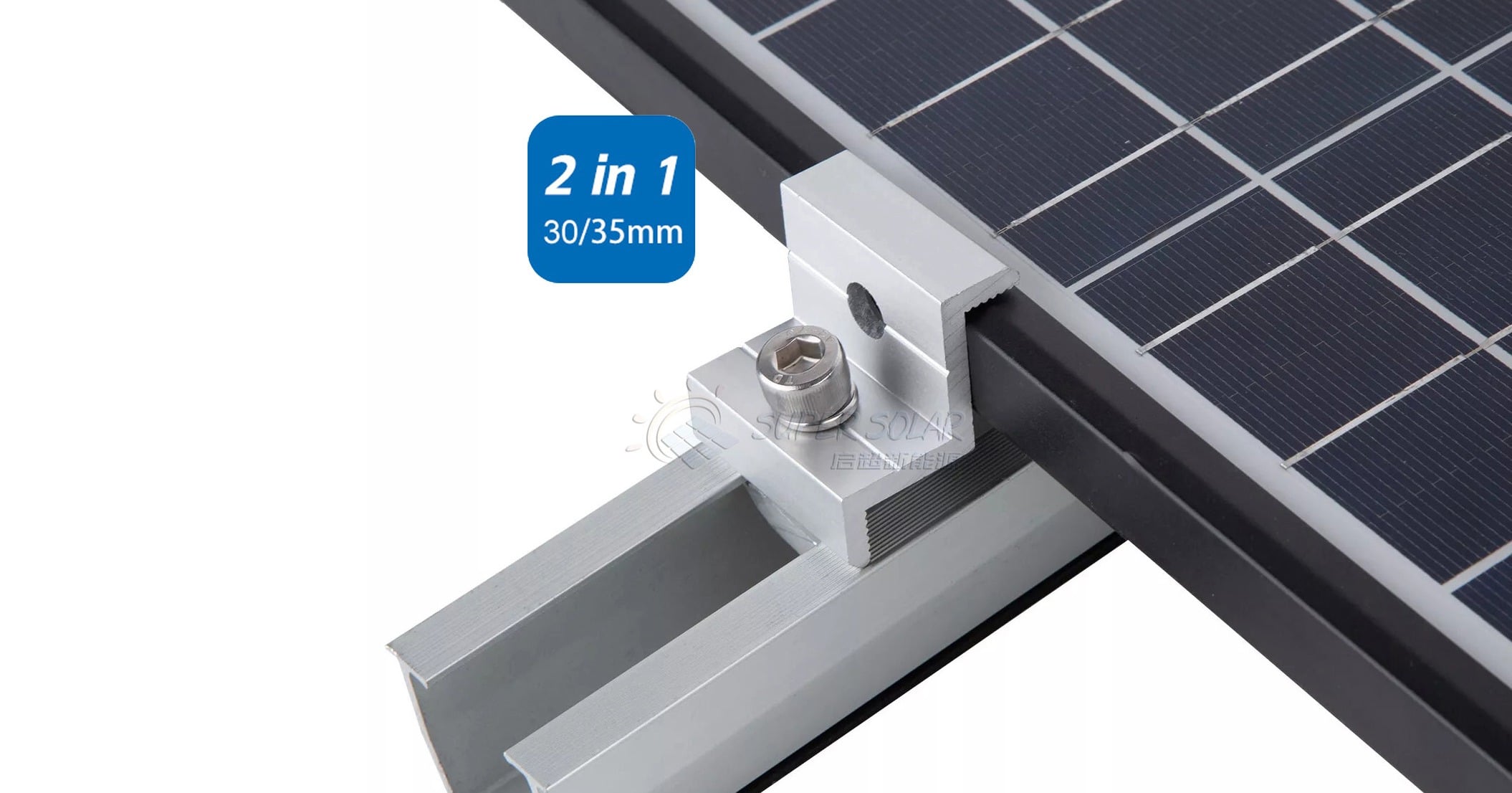
Two-in-one end clamps combine multiple fastening functions into a compact component. Their design can simplify the mounting arrangement and reduce the number of separate parts required for certain rail configurations.
They are suitable for specific mounting system designs where the clamp profile, rail connection and module frame dimensions are compatible.
Diamond nut solar clamps use a diamond-shaped nut or fastening element to connect the clamp assembly to compatible steel mounting rails.
The diamond nut is inserted into the matching rail channel and positioned before tightening. This connection design allows the clamp to be secured along the rail at the required installation position.
Frameless solar panels do not have the conventional aluminum frame found on standard framed modules. Therefore, they require specialized clamping solutions designed for the module's approved edge-support and fastening requirements.
Frameless solar panel clamps are designed for compatible frameless module systems. Their contact surfaces and fastening positions must be suitable for the specific module construction.
The six product categories above demonstrate the range of clamp configurations available from Super Solar. Actual specifications and compatibility depend on the selected model and mounting system.
Explore our solar mid clamps and solar end clamps for more product details.
Although mid clamps and end clamps are both used to secure solar modules, they have different installation positions and clamping structures.
| Comparison | Mid Clamp | End Clamp |
|---|---|---|
| Installation Position | Between adjacent panels | At the outer edge of the array |
| Main Function | Secures two neighboring module edges | Secures one outer module edge |
| Contact Surface | Contacts two module frames | Contacts one module frame |
| Common Design | Central clamping profile | Edge-supporting profile |
| Typical Quantity | Depends on array layout | Depends on array perimeter |
Both types work together to form a complete module fixing system. Using the correct combination helps maintain module alignment and provides the required mechanical connection to the mounting rails.
Choosing the right solar panel clamps requires checking the module specifications and mounting system design. The following factors should be considered before purchasing.
Module frame thickness is one of the most important factors when selecting clamps. Common configurations include 30 mm, 32 mm, 35 mm and 40 mm.
The clamp height must match the module frame and comply with the manufacturer's permitted clamping requirements.
Different aluminum and steel rails may have different channel dimensions and fastening structures. Check the bolt, T-nut, diamond nut or locking mechanism to ensure a proper connection.
Aluminum alloy is commonly used for solar clamp bodies because of its lightweight properties and outdoor corrosion resistance. Stainless steel fasteners are used to provide reliable mechanical connections.
For coastal and high-humidity environments, the material grade and compatibility between connected metals should receive particular attention.
For projects with large installation volumes, quick-fix or pre-assembled clamp designs may help reduce assembly steps. Conventional clamps may be suitable for standard mounting arrangements and specific project requirements.
Solar module manufacturers specify permitted clamping zones and installation requirements. Clamp selection and positioning must also account for project-specific wind loads, snow loads and structural calculations.
Correct clamp installation is essential for securing solar modules and maintaining the structural integrity of the mounting system.
Install mid clamps between adjacent modules and ensure both module frames are properly engaged. Maintain the specified gap between neighboring modules.
Position end clamps at the outer edges of the module array. Confirm that the clamp height and contact surface match the module frame.
Use the torque specification provided by the clamp and module manufacturers. Excessive tightening may damage the module frame, while insufficient tightening may reduce connection reliability.
Before installation, verify that the clamp fasteners fit the rail channel correctly. Ensure that T-bolts, T-nuts or diamond nuts are positioned and engaged as specified.
Check clamp positions, module alignment and fastener tightness before completing the installation. Verify that the modules are supported within the approved clamping zones.
Do not assume that different brands of clamps and rails are automatically interchangeable. Confirm dimensions, mechanical compatibility and module installation requirements before combining components from different manufacturers.
Super Solar supplies solar mounting components for rooftop and ground-mounted photovoltaic projects, serving installers, EPC contractors, wholesalers and solar mounting system distributors.
Our solar panel mid and end clamps are available in different designs to meet the requirements of various module frames and mounting rail configurations.

Whether you need standard clamps for regular rooftop installations or customized solutions for bulk distribution, Super Solar can help match the right components to your mounting system.
Explore our Solar Mid Clamp and Solar End Clamp product pages for specifications and available options.
A mid clamp is installed between two adjacent solar panels to secure both inner frame edges. An end clamp is installed at the outer edge of a solar panel array to secure the exposed module frame.
For a typical continuous row of framed solar modules, two mid clamps and two end clamps are commonly allocated per module. The actual quantity depends on array layout, module orientation, rail configuration and the approved installation design.
Common options include 30 mm, 32 mm, 35 mm and 40 mm module frame heights. Customized sizes may also be available depending on the product design.
Solar clamp bodies are commonly made from aluminum alloy, while bolts and other fasteners are typically made from stainless steel. The exact materials depend on the product specification.
Not necessarily. Clamp compatibility depends on the rail channel dimensions, fastening mechanism and module frame specifications. Always confirm compatibility before installation.
Quick-fix solar clamps are designed to simplify module attachment and reduce installation steps. Depending on the design, they may use pre-assembled or quick-lock mechanisms.
Yes. Selected Super Solar clamp models are available in natural aluminum and black finishes. Customized finishes may be discussed according to product requirements.
Yes. OEM services may include customized dimensions, product configurations, private labeling and packaging solutions for distributors and wholesalers.
Dedicated frameless module clamps are available for compatible PV module designs. Their use must follow the module manufacturer's approved installation and edge-support requirements.
Tell us your solar module frame thickness, mounting rail profile and required clamp quantity. Super Solar can help you find a suitable clamp solution for your rooftop or ground-mounted PV project.
Super Solar | Professional Solar Mounting Solutions