 EN


Engineering for High Snow Loads, Strong Winds and Complex Project Conditions
South Korea’s solar market requires mounting systems that respond to local site conditions rather than relying on standard configurations alone. Ground-mounted solar farms may need to accommodate uneven terrain and demanding snow conditions, while industrial rooftop projects must address roof load capacity, wind resistance, mounting compatibility and waterproofing.
For EPC contractors, solar installers and project developers, the mounting structure is a critical part of project safety, constructability and long-term performance.
Super Solar’s experience includes megawatt-scale ground-mounted and rooftop solar projects in South Korea. Two representative projects—a 2 MW ground-mounted system in Pyeongchang and a 2 MW industrial rooftop system in Changwon—illustrate different engineering challenges and the importance of project-specific mounting solutions.
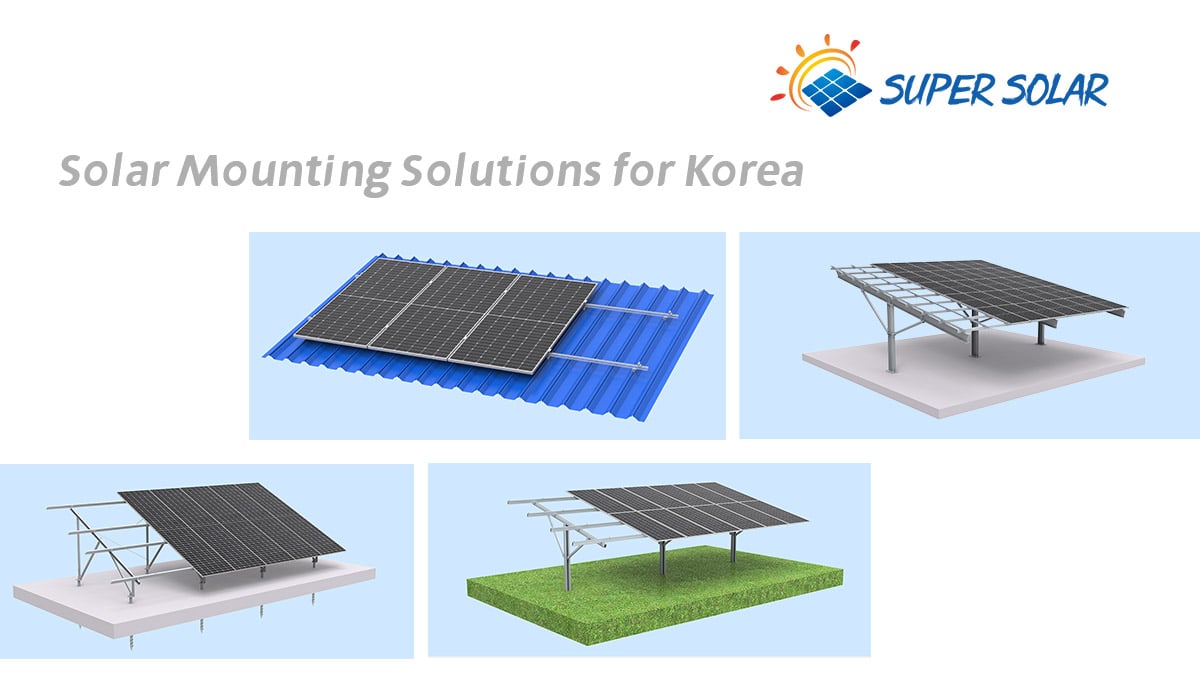
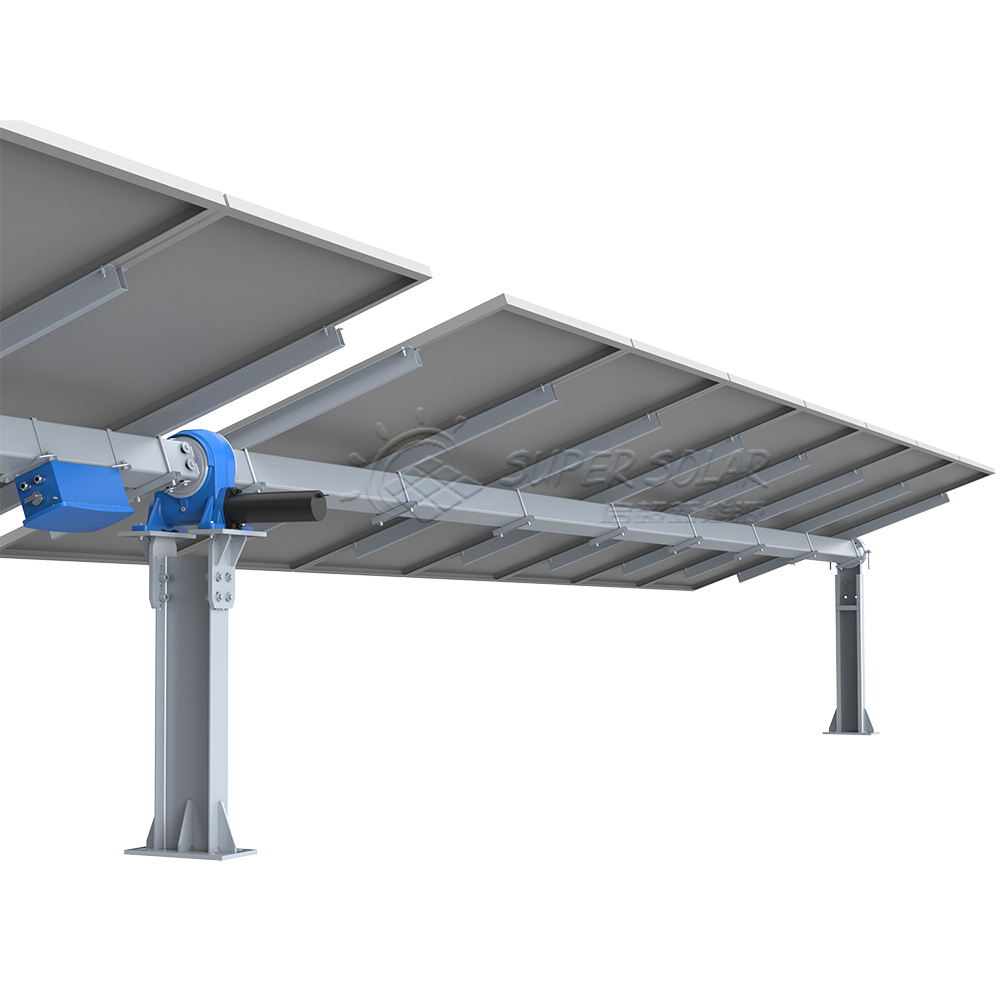
Module orientation and tilt angle influence annual energy yield, row spacing, shading and overall land-use efficiency. These factors should be assessed together with the project’s structural and site constraints.
A 2018 study published in New & Renewable Energy simulated photovoltaic systems at 80 locations in South Korea using the System Advisor Model (SAM). Under the study’s assumptions, the simulated optimal azimuth angles ranged from 176° to 184°, while optimal tilt angles ranged from 30° to 36°.
These results provide a useful research reference, not a universal installation specification. Actual design parameters should be determined for each project according to location, roof or terrain geometry, shading, wind and snow loads, energy-yield objectives and applicable requirements.
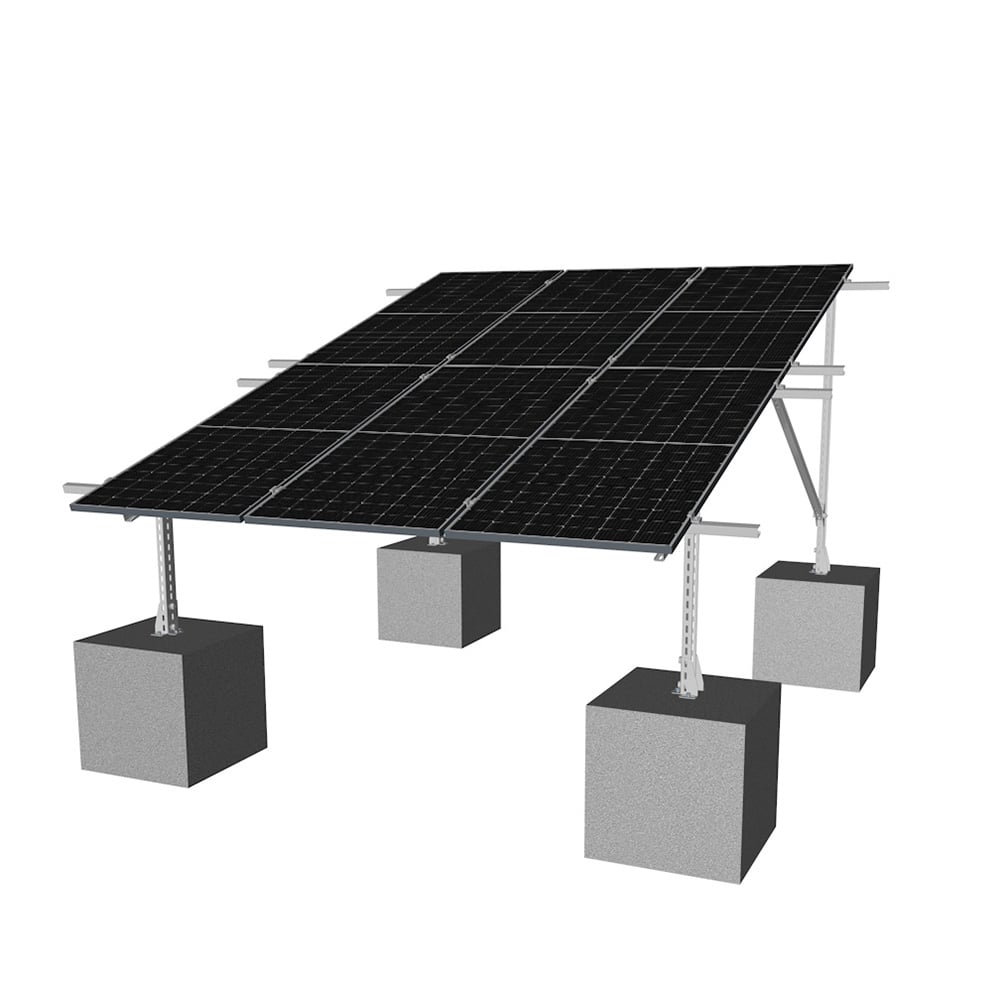
A solar mounting structure must transfer loads from the modules through rails, clamps, supports and connections to the roof structure or ground foundation.
For ground-mounted projects, design considerations may include:
For industrial rooftops, the engineering assessment should also consider the existing building’s structural capacity, roof profile, fixing method, waterproofing details and maintenance access.
The applicable Korean structural standards and project-specific design assumptions should be confirmed by the responsible engineer. Wind speed, snow depth and structural design load are different parameters and should not be treated as interchangeable.
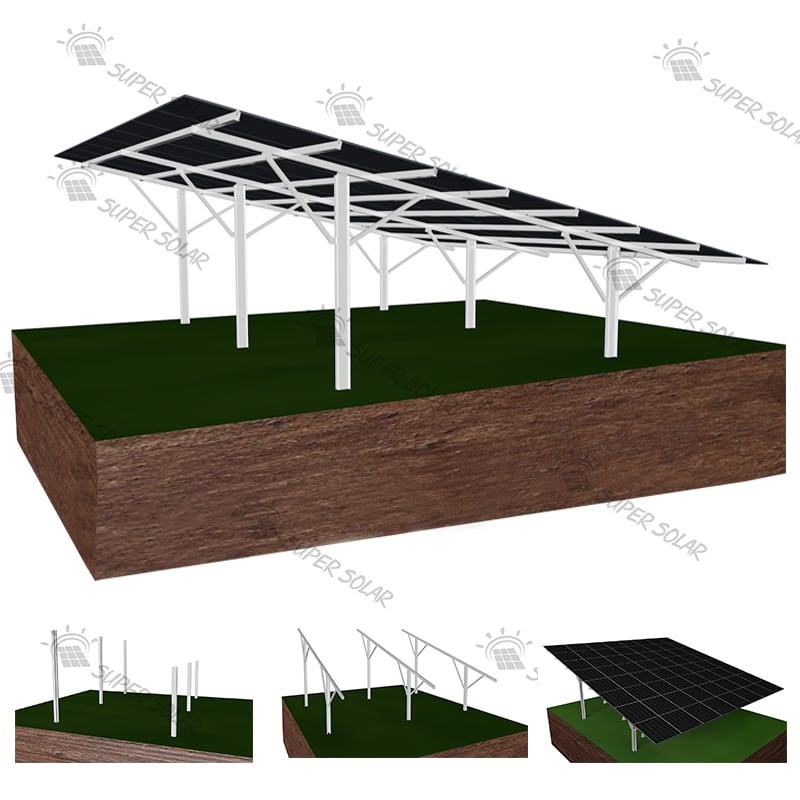
The Pyeongchang project demonstrates the need to coordinate structural design, foundation selection and module layout in a ground-mounted solar installation with challenging site conditions.
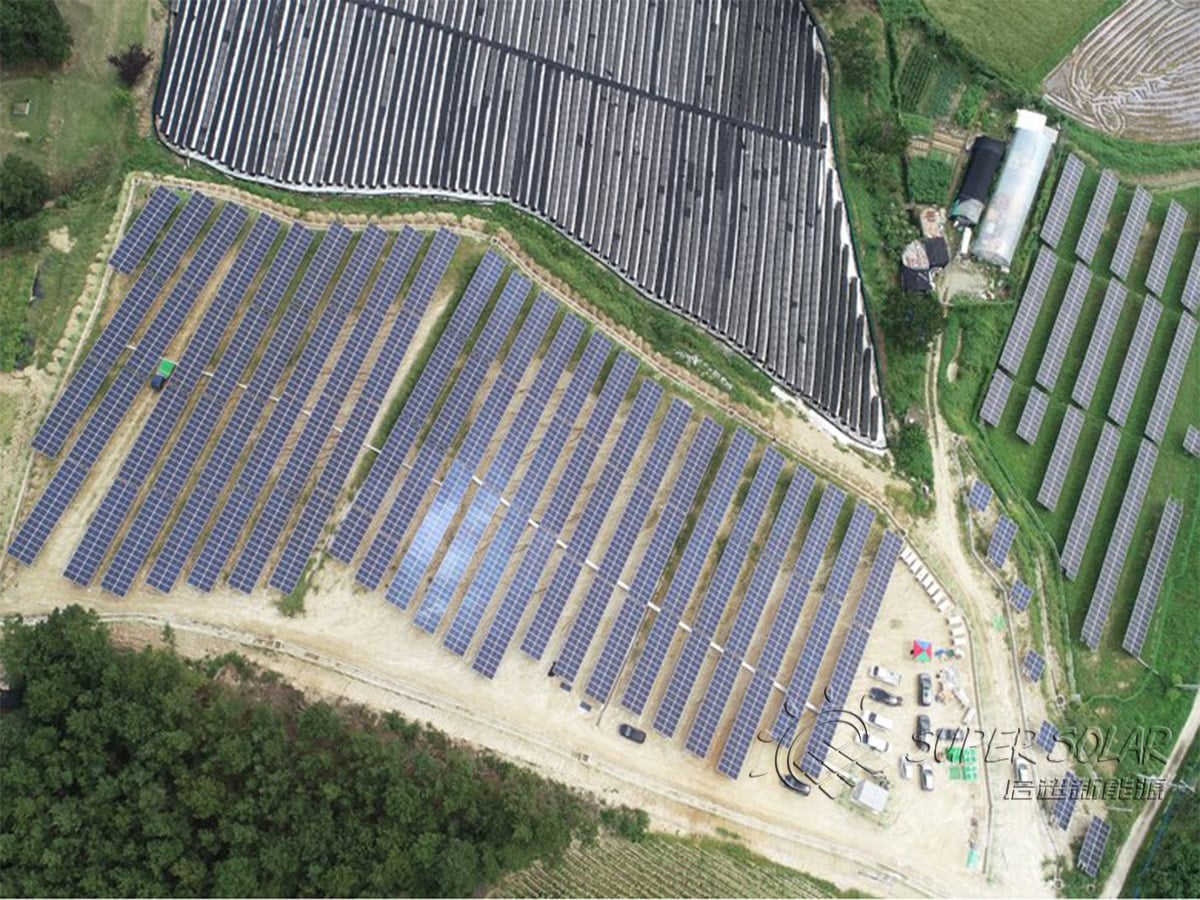
Uneven terrain can affect pile positioning, support heights, rail alignment and the installation sequence. A layout designed without sufficient consideration of site topography may require extensive adjustments during construction.
For this project, a steel pile foundation approach was adopted to accommodate the site’s terrain conditions. The mounting layout also used a “missing-module” arrangement in selected areas to better follow terrain variations.
Rather than forcing every row into a uniform layout, this approach allows the array arrangement to respond to local site geometry. Its suitability must be assessed against land-use efficiency, electrical design, structural continuity, construction access and project economics.
Pyeongchang is located in Gangwon Province, where snow conditions are an important consideration for project design. Snow accumulation can increase loads on modules, rails, supports, connections and foundations.
The project approach incorporated site-specific consideration of snow conditions, module inclination and structural strength. Module tilt may influence snow shedding, but natural snow shedding should not be treated as a substitute for structural snow-load verification. Snow can remain on modules or accumulate unevenly depending on temperature, wind, array geometry and surrounding obstacles.
For a project in a demanding snow environment, the design review should therefore examine the complete load path, member capacity, connection strength, foundation performance and the assumptions used in structural calculations.
Project information identifies high-strength steel with high yield and tensile performance as a key feature of the mounting structure. The project was also reported to have undergone third-party testing in South Korea.
The applicable test scope, material grades and acceptance criteria should be referenced in the supporting technical documentation when presenting these details in formal engineering submissions.
The Pyeongchang case illustrates how a megawatt-scale ground-mounted solar system can require coordinated decisions on foundation selection, terrain-adaptive layout and snow-related structural design.
For developers and EPC contractors working on uneven sites or in areas with demanding winter conditions, the key lesson is that mounting design should be based on the actual site and verified structural requirements—not on a standard layout alone.
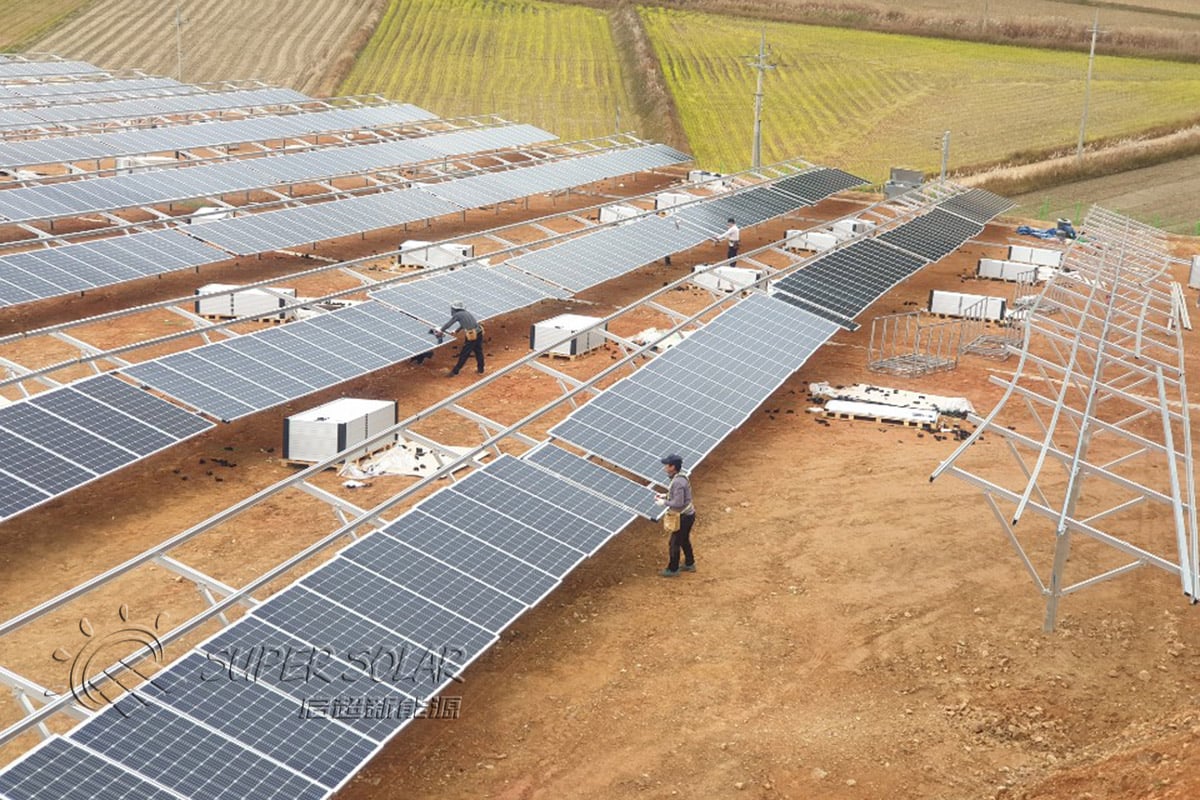
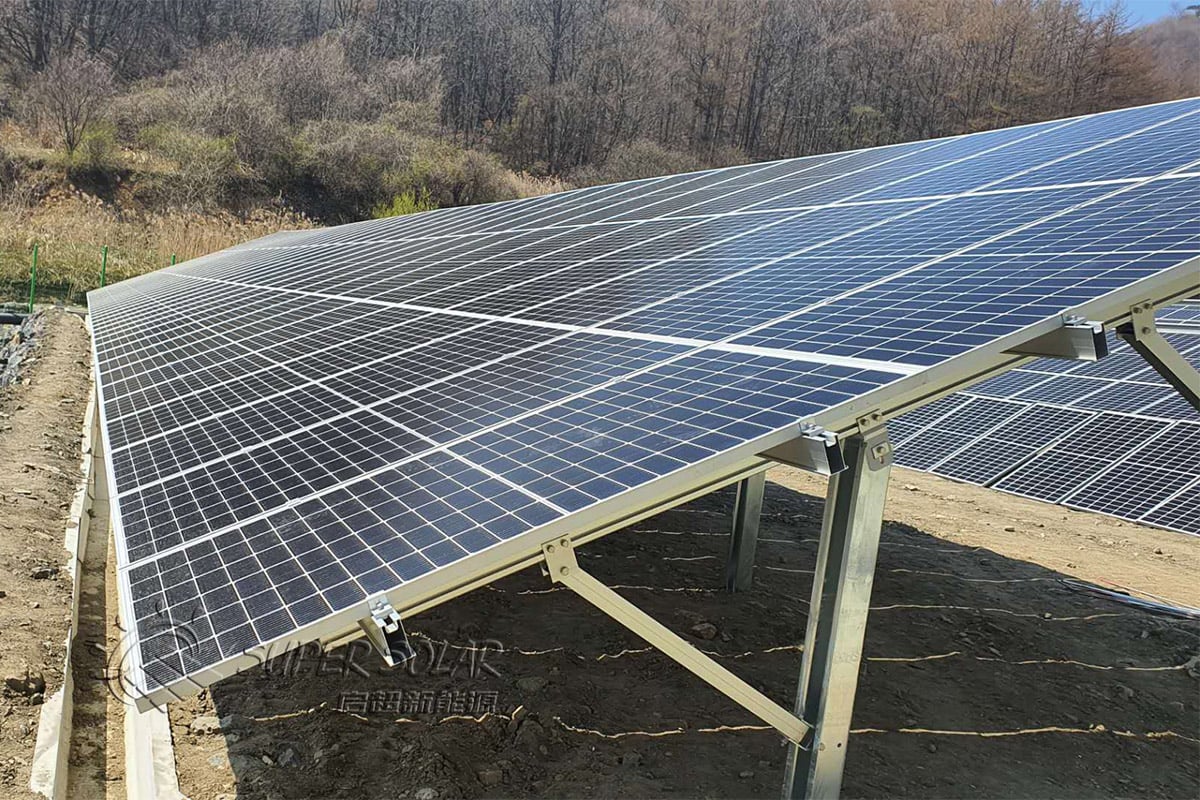
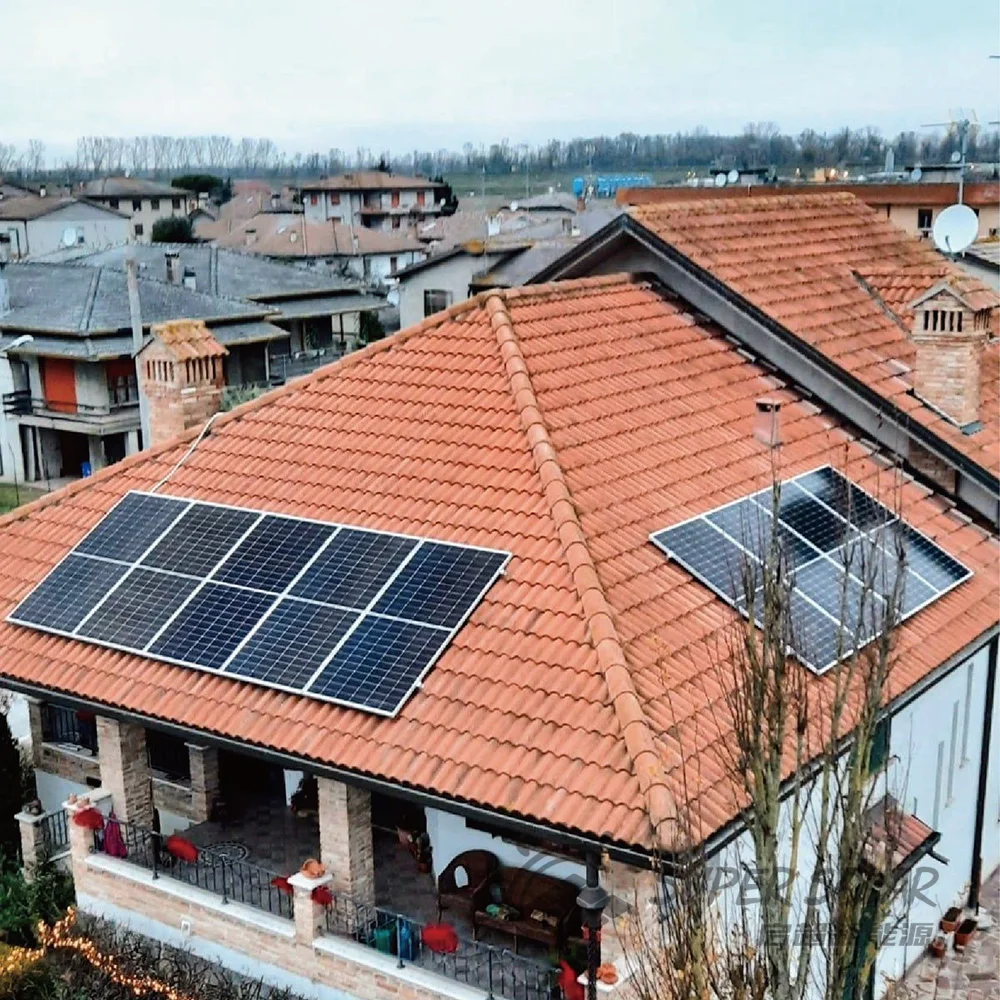
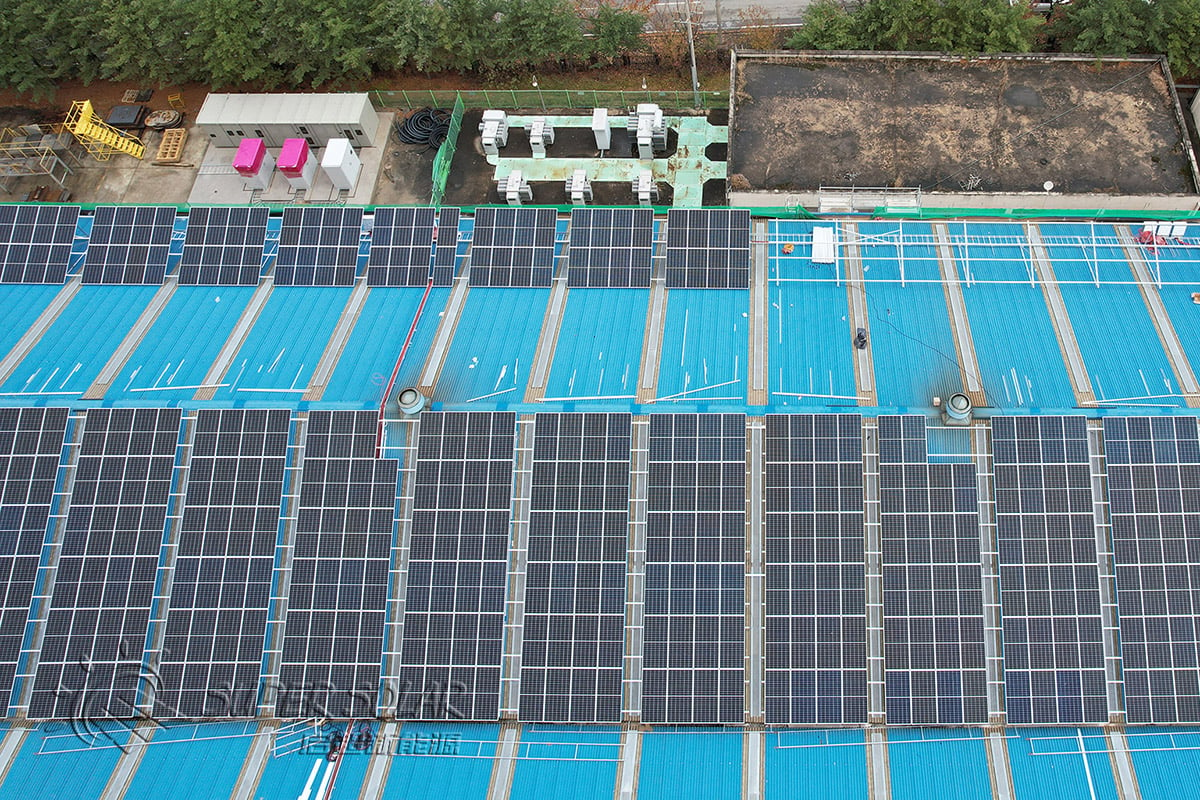
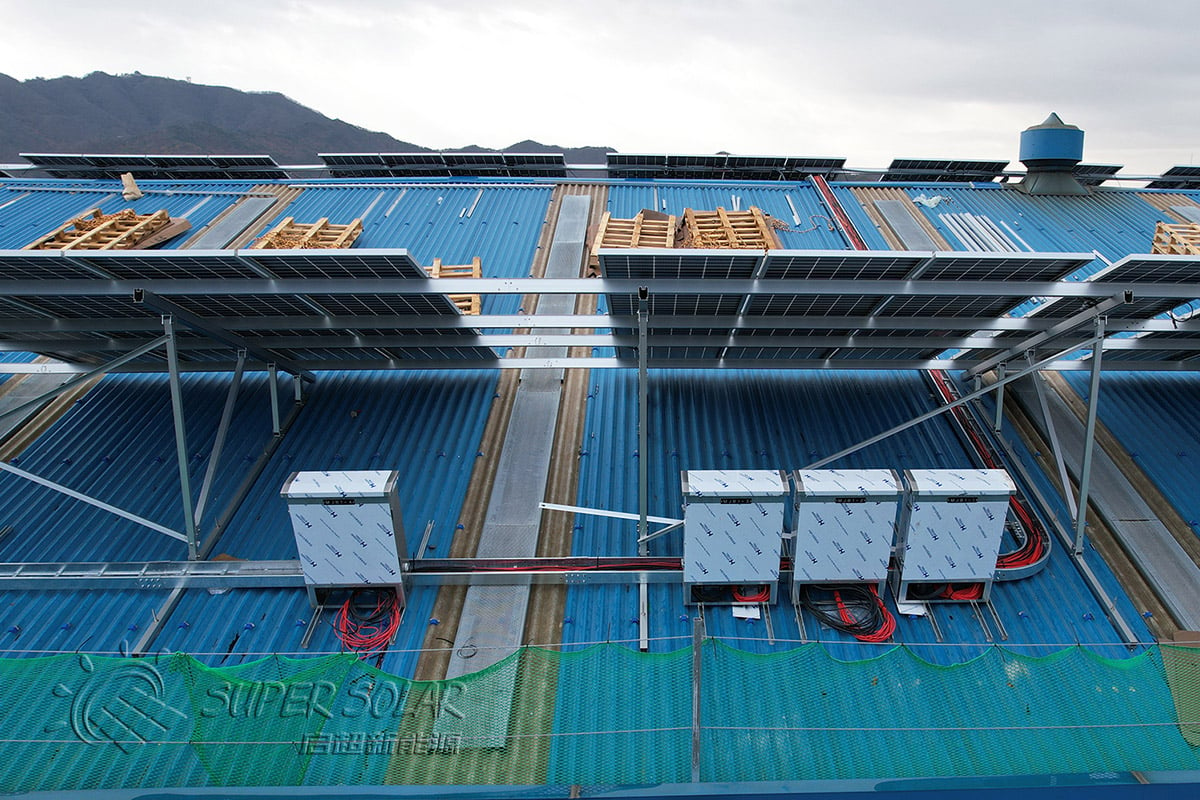
The Changwon project demonstrates a different set of requirements: installing a utility-scale PV array on an existing industrial building while coordinating roof compatibility, structural loading and weather protection.
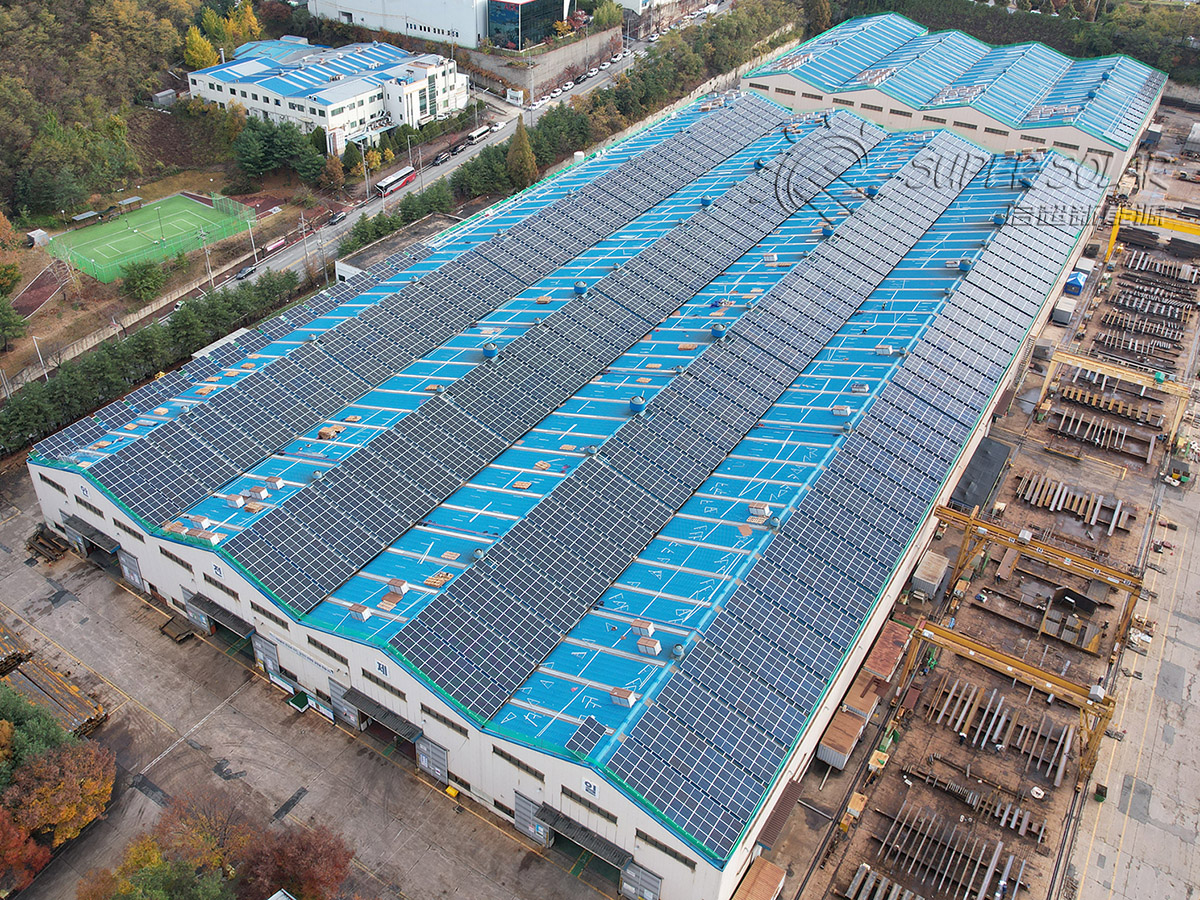
Industrial metal roofs can vary in profile, sheet geometry, purlin spacing, fixing details and condition. A mounting component that fits one roof profile may not be suitable for another.
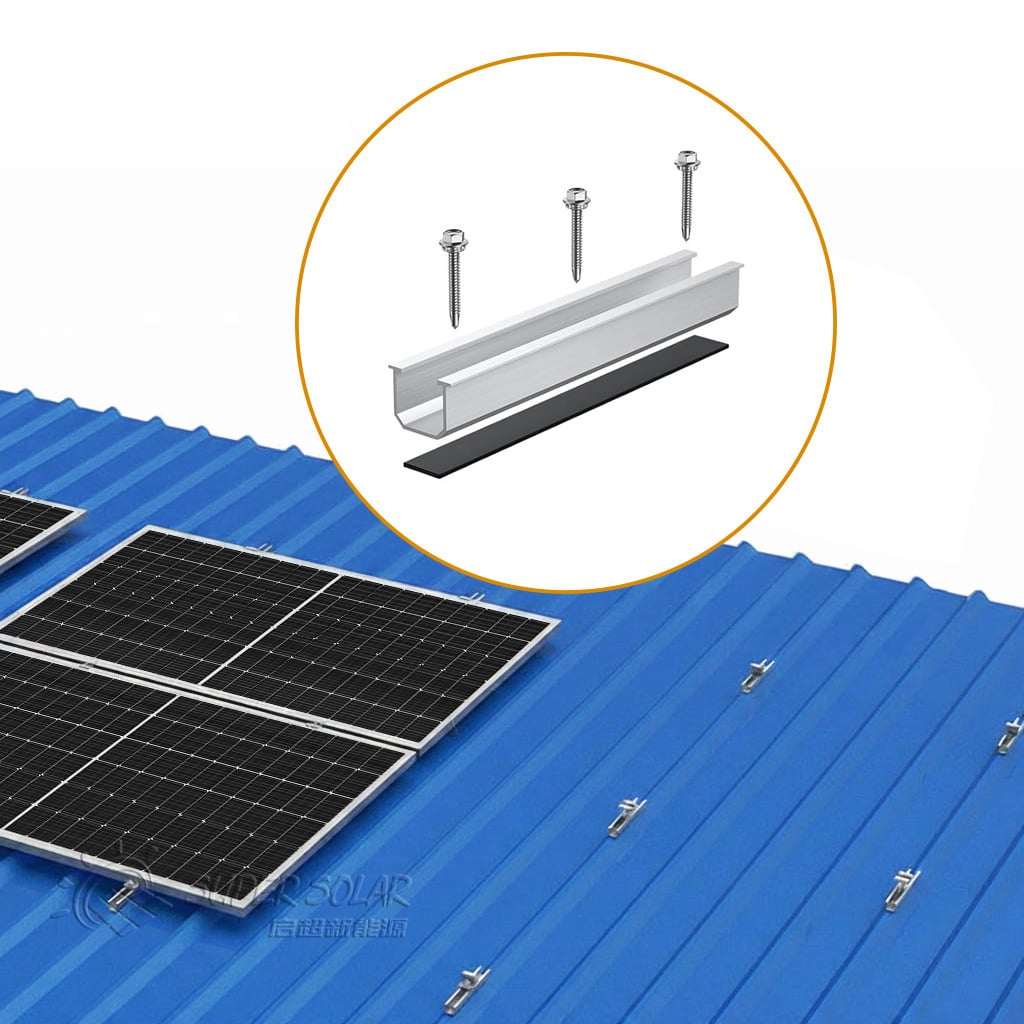
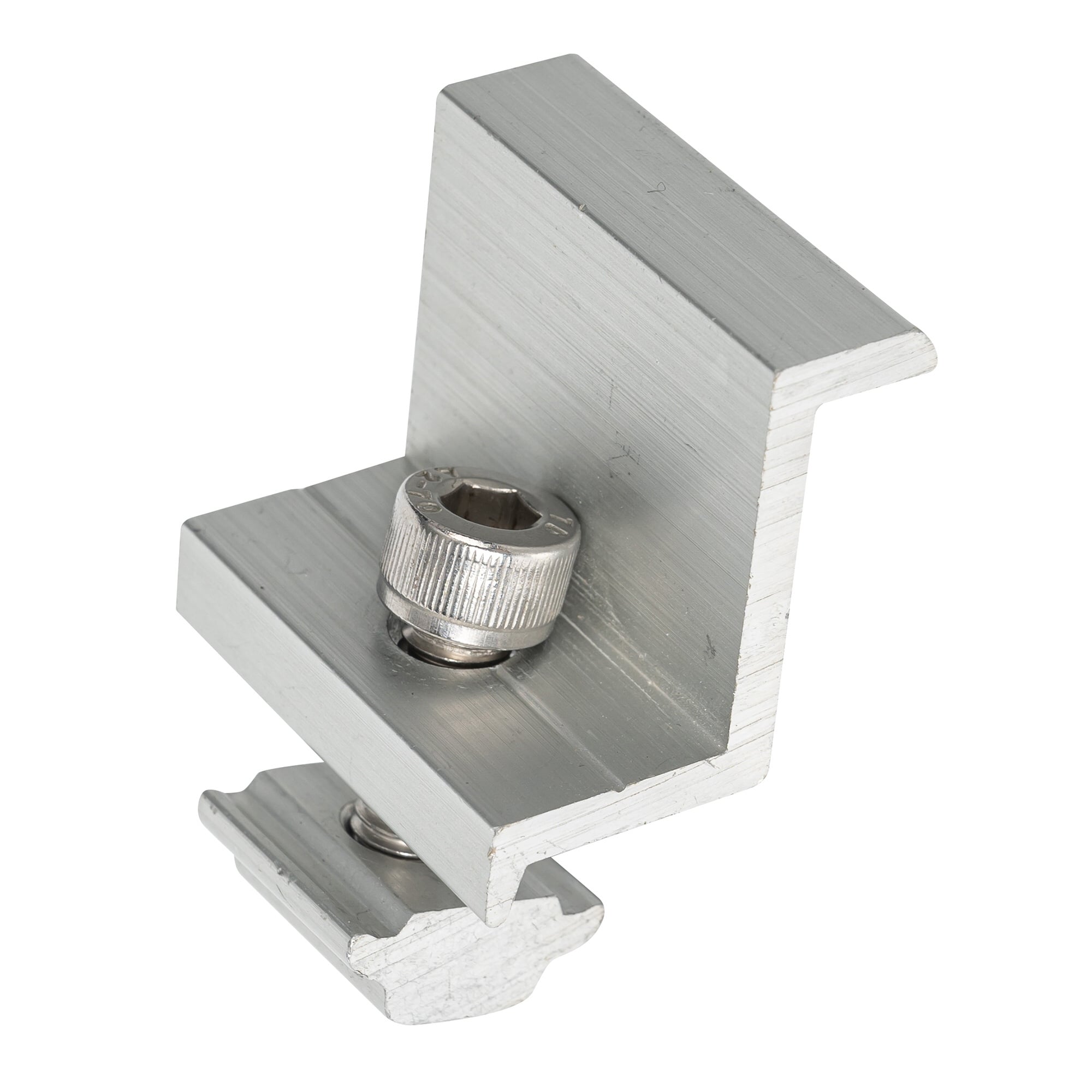
The Changwon project used customized clamps adapted to the existing roof profile. The reported solution combined non-penetrating and penetrating fixing approaches according to the installation requirements.
The choice of fixing method should be evaluated against the actual roof assembly, load-transfer path, substrate and purlin capacity, clamp compatibility, installation quality and waterproofing details. A non-penetrating connection is not automatically suitable for every roof, and a penetrating connection requires appropriate sealing and detailing.
Before installing a large PV array on an existing industrial building, the building’s ability to support the additional loads must be assessed. This includes the PV modules and mounting system, as well as relevant environmental loads and load combinations required by the project design basis.
The project information identifies a basic wind speed of 36 m/s. This figure should be understood as the reported project location parameter, not automatically as the final wind speed or pressure applied in every structural calculation. The responsible engineer must confirm the applicable wind provisions, exposure conditions, building geometry, roof zones, pressure coefficients, load combinations and fixing requirements.
For the mounting system, the design review should consider:
The final arrangement should be checked as a complete system rather than as isolated mounting components.
The project used 3,360 modules rated at 595 Wp, giving a calculated DC capacity of 1,999.2 kWp, or approximately 2 MWp.
Dividing the reported 11,000 m² roof area by 3,360 modules gives an average of approximately 3.27 m² of roof area per module. This is an overall area ratio—not the physical footprint of an individual module. It includes the effects of layout, spacing and other roof-area considerations.
Final module placement must also account for structural support locations, roof drainage, access routes, maintenance requirements, shading and applicable safety clearances.
Roof leakage can create operational and maintenance problems for industrial building owners. Mounting design should therefore consider the interaction between clamps or fasteners, roof sheets, seams, drainage paths and existing waterproofing details.
For penetrative fixing, appropriate sealing and installation controls are essential. For non-penetrating fixing, the engineer still needs to confirm that the connection provides the required structural performance without damaging the roof assembly.
Inspection access, drainage clearance and the ability to maintain the roof and PV system should be considered during layout development, not left until after installation.
The project information reports a delivery period from May to October 2024 and annual energy generation of approximately 2,410 MWh.
The reported annual generation is a useful project performance indicator, but it should not be attributed to the mounting structure alone. Energy yield depends on the PV modules, inverters, system design, solar resource, shading, operating conditions, availability and other project-specific factors.
The Changwon case illustrates the engineering coordination required when installing a 2 MW-class PV system on an existing industrial metal roof. Roof compatibility, structural capacity, wind-load design, fixing details and waterproofing must be considered together.
For industrial building owners and EPC contractors, the objective is not simply to install modules on available roof space. It is to develop a mounting solution that meets the project’s structural requirements while supporting safe installation, maintainability and reliable long-term operation.
| Engineering dimension | Pyeongchang ground-mounted project | Changwon industrial rooftop project |
|---|---|---|
| Project capacity | 2 MW | Approximately 2 MWp |
| Location | Pyeongchang-gun, Gangwon Province | Jinbuk Industrial Complex, Changwon |
| Primary challenge | Snow conditions and uneven terrain | Existing metal roof and reported 36 m/s basic wind speed |
| Mounting approach | Steel pile foundation and terrain-adaptive layout | Customized roof clamps with reported non-penetrating and penetrating fixing approaches |
| Key structural focus | Foundation suitability, steel structure strength and snow-related design | Roof capacity, fixing connections, wind-load verification and waterproofing |
| Distinctive feature | “Missing-module” layout to accommodate terrain variations | Customized mounting for an existing industrial roof |
| Additional project data | Approximately 3.5 months of active mounting installation, as reported | 3,360 × 595 Wp modules; approximately 11,000 m² roof area; reported annual generation of approximately 2,410 MWh |
| Main takeaway | Adapt the foundation and array layout to actual terrain and snow conditions | Coordinate mounting, building structure, wind resistance and waterproofing |
Together, the projects demonstrate experience across two important solar installation environments in South Korea: ground-mounted arrays on uneven terrain and industrial rooftop systems on existing metal-roof buildings.
Super Solar supplies solar mounting solutions for ground-mounted and rooftop PV projects, including mounting structures and components selected according to project requirements.
The company’s South Korean project experience includes both ground-mounted and rooftop installations at the megawatt scale. Through its local subsidiary, JS ENC CO., LTD., and Korean-language business support, Super Solar can communicate with local customers on project requirements, product selection and coordination.
Review the site location, installation type, module specifications, roof profile or ground conditions, and project design requirements.
Identify a suitable mounting configuration, including the relevant rails, clamps, supports, foundations or fixing components.
Coordinate the information required for structural verification, including project-specific wind and snow conditions, connection details and installation constraints. Final structural calculations and approvals should be completed by the qualified professionals responsible for the project.
Coordinate product specifications, manufacturing and delivery requirements with the project schedule and installation team.
Use Korean-language support through JS ENC CO., LTD. to facilitate communication with local customers and project stakeholders.
Key considerations include site-specific wind and snow loads, terrain or roof conditions, foundation or fixing suitability, structural calculations, corrosion protection, drainage and maintenance access. The final configuration should be verified against the applicable project requirements.
Yes, where site investigation and engineering confirm a suitable solution. Foundation selection, support heights, row layout, construction access and structural alignment need to be coordinated. A terrain-adaptive layout, including selected gaps in the module arrangement, may be appropriate for some sites.
The existing building’s structural capacity, roof profile, support locations, clamp compatibility, wind loads and waterproofing details should be assessed. The fixing method must be suitable for the specific roof assembly and verified for the project’s loads.
No. A basic wind speed is one input to wind-load assessment. The final design depends on the applicable standard, exposure, building geometry, roof zones, pressure coefficients, load combinations and connection details.
Super Solar has a local subsidiary, JS ENC CO., LTD., with Korean-language business support. Customers can contact the team to discuss project requirements and mounting-system options.
Whether you are developing a ground-mounted solar farm or installing PV on an existing industrial roof, the mounting solution should be selected around the actual site conditions, structural requirements and installation plan.
Contact Super Solar and JS ENC CO., LTD. to discuss your project location, installation type, module specifications and mounting requirements.
Super Solar supports project teams with solar mounting products and engineering coordination for ground-mounted and rooftop PV applications in South Korea.
Kim, J. C., & Kim, K. (2018). “Study on the Regional Differences of Optimal Orientation and Tilt Angle for Photovoltaic Systems: Simulations by a System Advisor Model.” New & Renewable Energy, 14(2), 9–20. https://doi.org/10.7849/ksnre.2018.6.14.2.009
Project-specific figures in this article are based on the project information supplied for this case study. Detailed structural claims, test scope, applicable standard editions and reported performance figures should be checked against the original project documentation before formal technical or regulatory submission.
 Hot News
2025-11-03
2025-10-22
2025-01-24
2024-06-12
2024-06-12