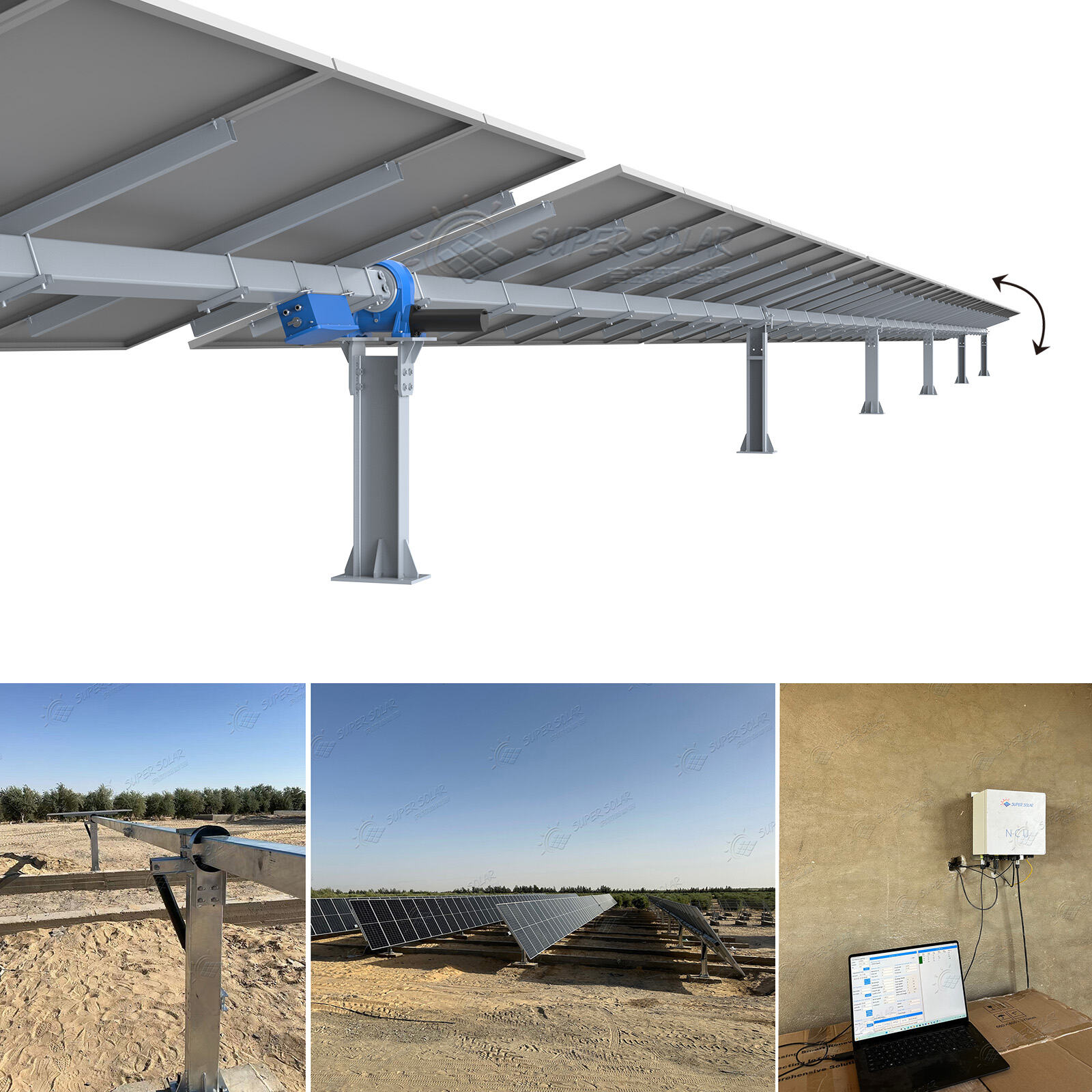
single axis tracker solar power tracking system
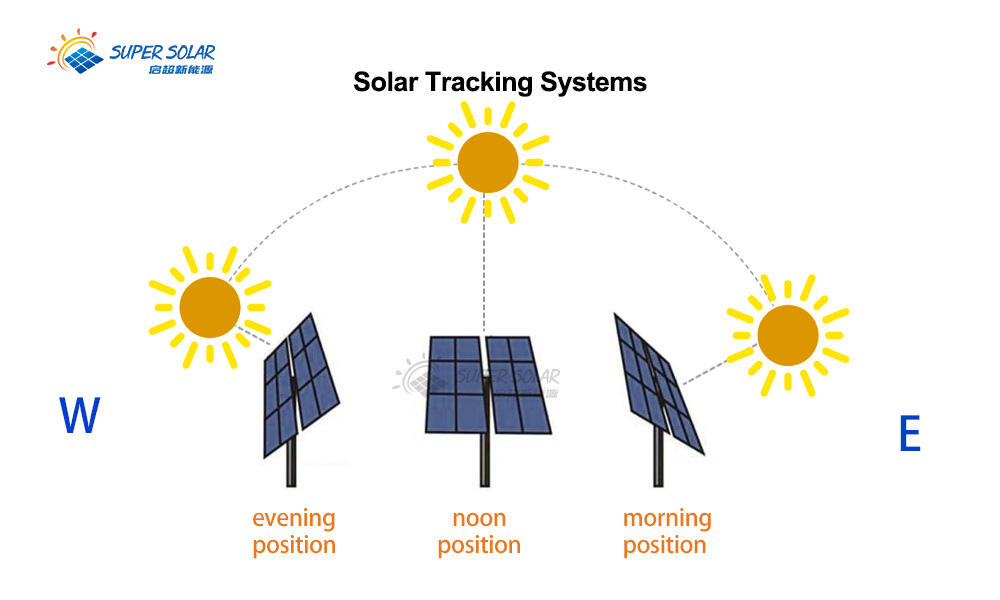
The single axis tracker solar power tracking system represents a significant advancement in photovoltaic technology, designed to maximize solar energy capture throughout the day. This sophisticated system operates by rotating solar panels along one axis, typically from east to west, following the sun's path across the sky. Unlike fixed-mount solar installations, the single axis tracker solar power tracking system dynamically adjusts panel orientation to maintain optimal angles for sunlight exposure. The primary function of this system involves precise mechanical movement controlled by advanced algorithms that calculate the sun's position based on time, date, and geographical location. The technological framework incorporates durable drive mechanisms, weather-resistant materials, and intelligent control systems that ensure reliable operation across diverse environmental conditions. Key components include robust foundation structures, precision motors, gear assemblies, and sophisticated tracking controllers that work seamlessly together. The single axis tracker solar power tracking system utilizes GPS coordinates and astronomical data to determine optimal positioning, resulting in enhanced energy generation compared to stationary panels. Applications span residential installations, commercial rooftops, utility-scale solar farms, and industrial facilities seeking improved energy efficiency. The system accommodates various panel sizes and configurations, making it versatile for different project requirements. Weather monitoring capabilities enable the system to automatically adjust for wind conditions, securing panels in safe positions during adverse weather. Modern iterations incorporate remote monitoring features, allowing operators to track performance metrics, identify maintenance needs, and optimize energy production. The single axis tracker solar power tracking system demonstrates exceptional durability through rigorous testing protocols, ensuring long-term reliability in challenging environments. Installation processes have been streamlined through modular designs, reducing deployment time and associated costs while maintaining structural integrity and operational precision.
 EN
EN