EN

What Are Standing Seam Solar Roof Clamps? Types, Applications and How to Choose
Standing seam metal roofs are widely used on factories, warehouses, commercial buildings, and industrial facilities. When installing solar panels on these roofs, one important consideration is how to connect the PV mounting system without drilling through the metal roof panels.
Standing seam solar clamps provide a non-penetrating mounting solution by mechanically attaching to the raised seams of compatible metal roof panels. They create connection points for solar mounting rails without requiring screws to penetrate the roof sheet.
However, not every standing seam clamp fits every metal roof. Different roof profiles have different seam shapes, dimensions, and mechanical characteristics. Selecting the correct clamp requires checking the actual roof profile, material, structural conditions, and project loads.
In this guide, we explain how standing seam solar clamps work, compare common metal roof seam profiles, and discuss the key factors installers, EPC contractors, and project developers should consider when selecting a mounting solution.
Table of Contents
- 1. What Are Standing Seam Solar Clamps?
- 2. How Do Standing Seam Solar Clamps Work?
- 3. Different Types of Standing Seam Metal Roof Profiles
- 4. Types of Solar Clamps for Standing Seam Roofs
- 5. Why Use Non-Penetrating Solar Clamps?
- 6. How to Choose the Right Standing Seam Solar Clamps
- 7. Installation and Engineering Considerations
- 8. Super Solar Standing Seam Solar Mounting Solutions
- 9. Frequently Asked Questions
- 10. Request a Standing Seam Solar Clamp Solution
1. What Are Standing Seam Solar Clamps?
Standing seam solar clamps are specialized mounting components used to attach photovoltaic mounting systems to raised seams on standing seam metal roofs.
A standing seam roof consists of metal panels joined by raised seams. These seams form the connection lines between adjacent roof panels. A compatible solar clamp is installed around or onto the seam and secured according to its specific mechanical design.
The clamp then provides a mounting point for an aluminum solar rail or another approved mounting component. Solar modules are fixed to the rails using standard mid clamps and end clamps.
The main purpose of this system is to install solar panels without drilling through the roof sheet.
- No Roof-Sheet Penetration: The clamp attaches to the raised seam rather than using screws through the roof panel.
- Mechanical Attachment: The clamp transfers mounting forces through its connection with the roof seam.
- Rail Integration: The clamp connects to compatible rails or mounting brackets.
- Roof-Specific Compatibility: The clamp must match the actual seam profile and dimensions.
2. How Do Standing Seam Solar Clamps Work?
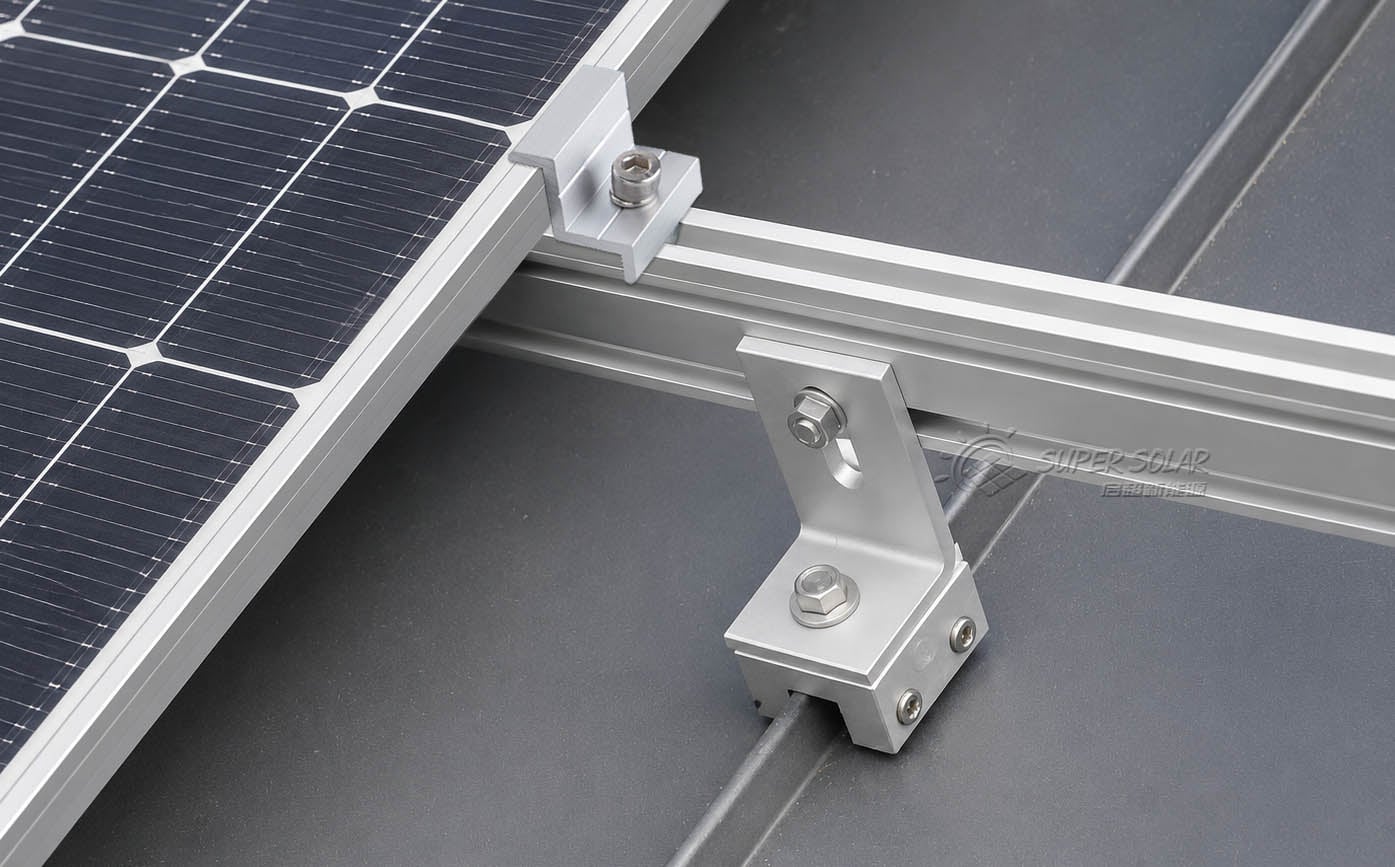
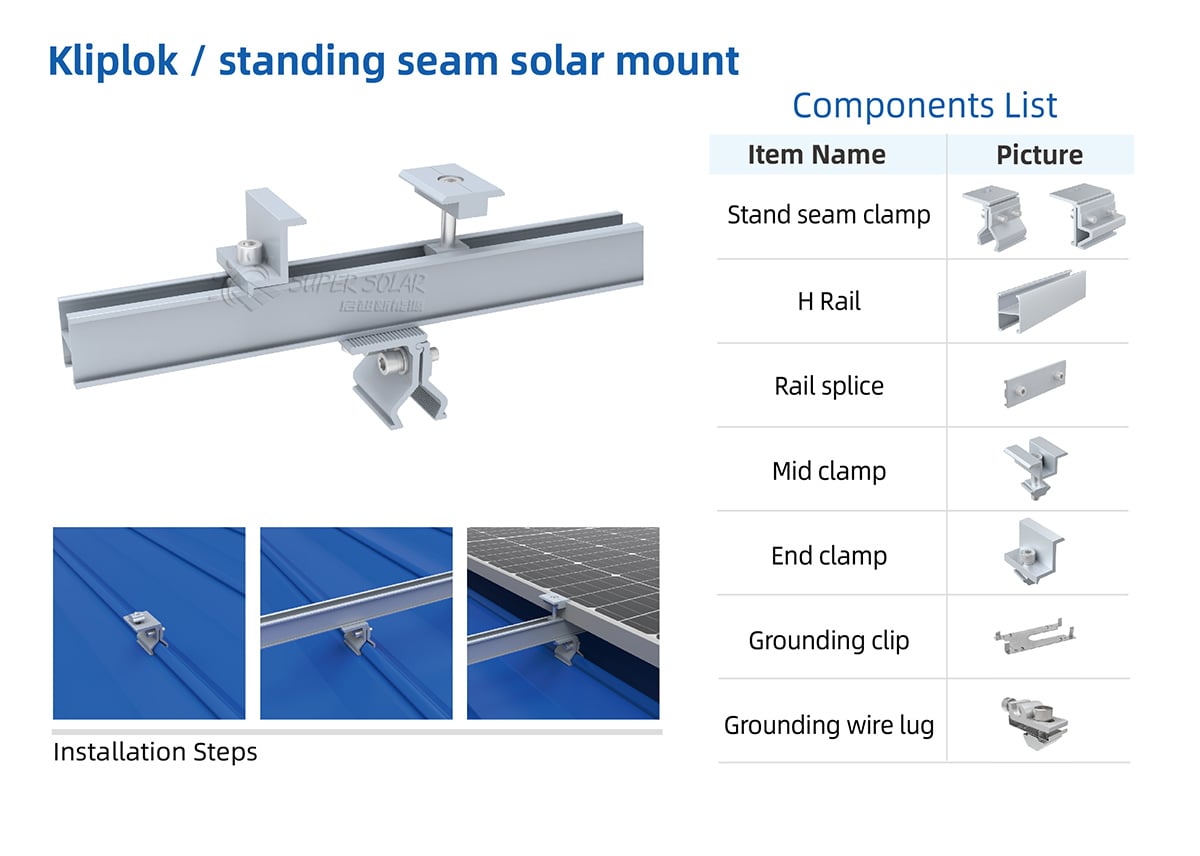
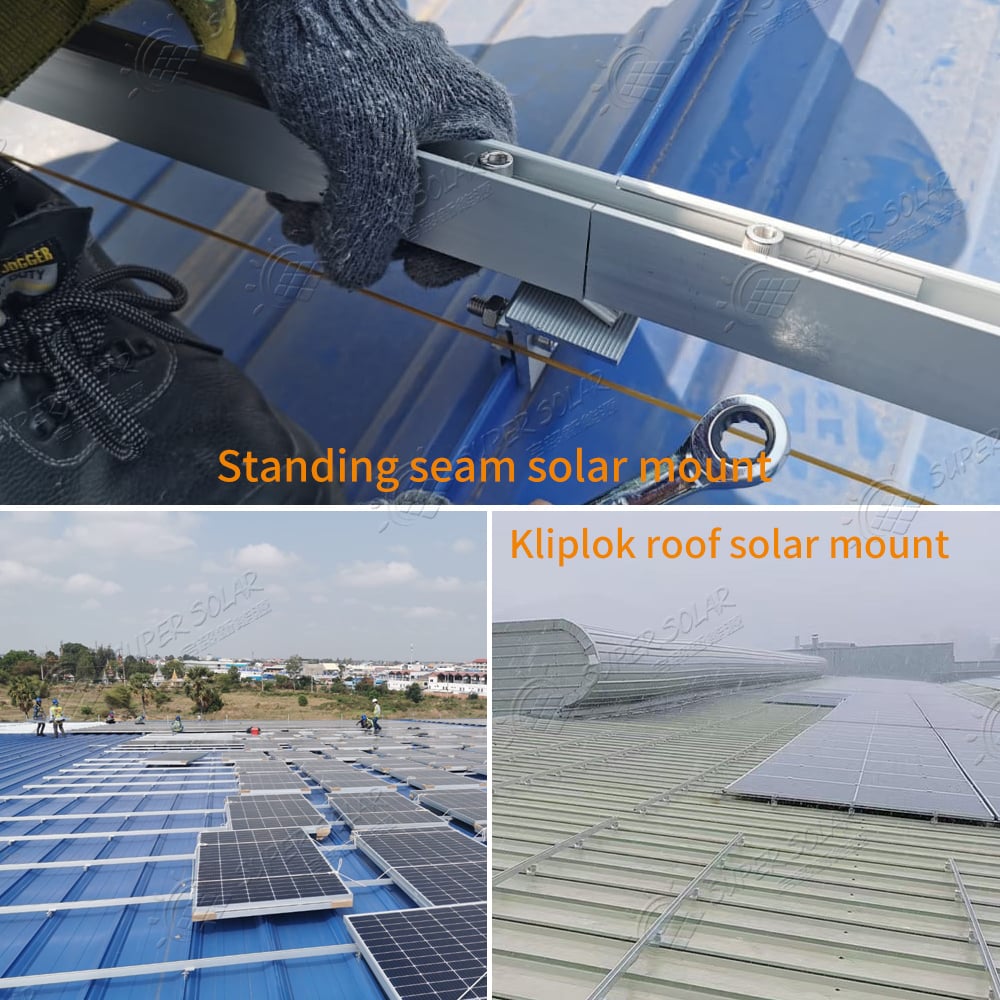
A standing seam solar mounting system creates a mechanical connection between the roof seam, the clamp, the mounting rail, and the solar modules.
Step 1: Attach the Clamp to the Roof Seam
The clamp is positioned on the raised seam of the metal roof. Depending on the clamp design, it may use one or more bolts or dedicated clamping components to secure the connection.
The contact surfaces and tightening method must follow the clamp manufacturer's installation instructions. The clamp should fit the seam correctly without damaging or excessively deforming the roof profile.
Step 2: Connect the Solar Mounting Rail
After the clamp is secured, an aluminum mounting rail or compatible rail connection is installed. The rail provides a continuous support structure for the PV modules.
Rail direction, span, clamp spacing, and connection details should be determined according to the project design and structural calculations.
Step 3: Install the Solar Modules
Solar modules are mounted onto the rails using mid clamps and end clamps. The module clamps must match the panel frame thickness and the rail profile.
This creates a complete mounting structure from the roof seam to the solar module.
Important: A non-penetrating connection does not automatically mean that a roof is suitable for solar installation. The roof panels, seams, clips, purlins, and supporting structure must still be evaluated for the additional loads from the PV system.
3. Different Types of Standing Seam Metal Roof Profiles
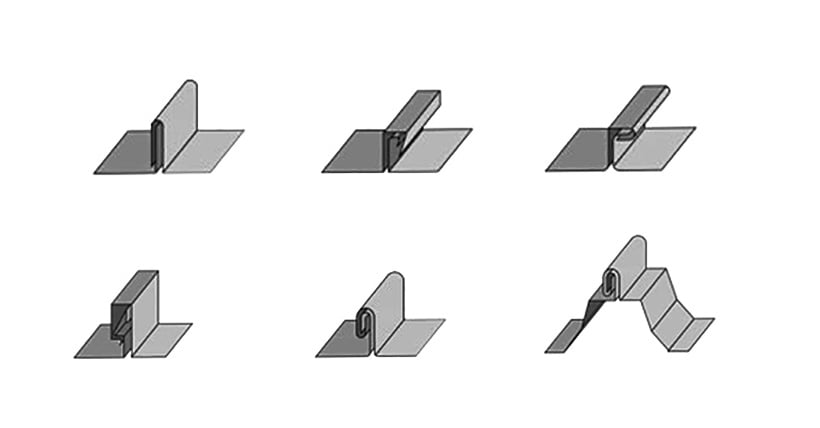
Standing seam roofs are manufactured in different profiles. Their seam geometry determines which solar clamp can be used.
3.1 Single-Lock Standing Seam
Single-lock seams use a folded connection between adjacent metal roof panels. The seam has a specific shape and width that must be considered when selecting a solar clamp.
The clamp must be designed for the actual seam dimensions and connection geometry. A clamp made for another seam type should not be assumed to fit.
3.2 Double-Lock Standing Seam
Double-lock seams use an additional folding operation to create a mechanically closed seam. They are commonly used in metal roofing systems where a defined seam connection is required.
Because the seam geometry differs from single-lock designs, the clamp profile and clamping method must be checked before installation.
3.3 Snap-Lock Standing Seam
Snap-lock roofs use panels designed to connect through a snap-fit seam structure. These profiles can vary between manufacturers and product series.
Before choosing a clamp, installers should confirm the seam width, height, shape, and the manufacturer's requirements for additional attachments.
3.4 Other and Custom Seam Profiles
Some metal roofing systems use special seam shapes, including bulb-shaped or other proprietary profiles. Their dimensions and mechanical characteristics may differ significantly from standard standing seam designs.
For these roofs, compatibility should be confirmed using roof drawings, technical data, or physical samples.
Standing Seam Roof Profile Comparison
| Roof Profile | Seam Characteristics | Clamp Selection Considerations |
|---|---|---|
| Single-Lock | Folded connection between adjacent roof panels | Check seam width, height, and folding geometry |
| Double-Lock | Additional folding creates a mechanically closed seam | Verify clamp contact surfaces and locking profile |
| Snap-Lock | Panels connect through a snap-fit seam structure | Confirm the exact panel profile and manufacturer's requirements |
| Custom Profiles | Special or proprietary seam shapes | Use technical drawings, measurements, or physical samples for verification |
Selection Principle: Identify the roof profile first, then select a compatible clamp. Do not select a clamp based only on the general description "standing seam roof."
4. Types of Solar Clamps for Standing Seam Roofs
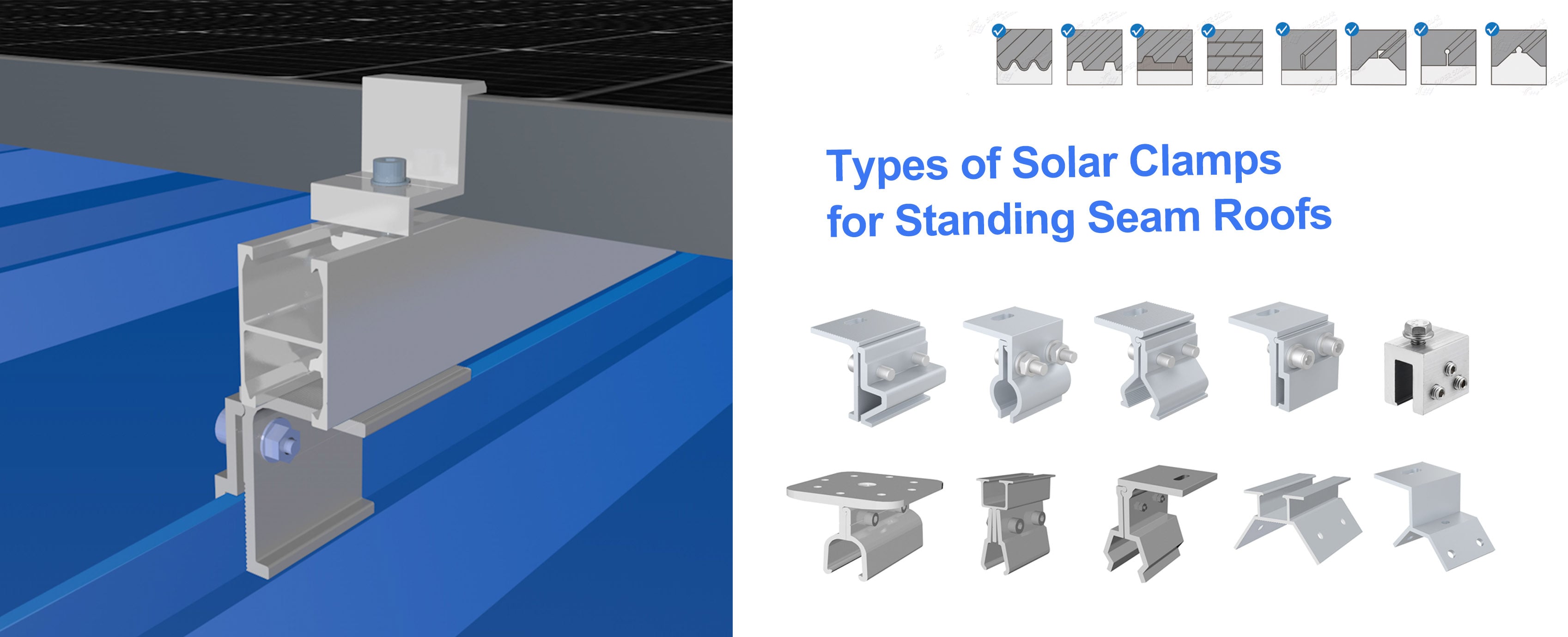
Standing seam solar clamps are not all designed in the same way. Their clamping geometry and connection methods depend on the roof profile and the mounting system.
4.1 Fixed-Profile Standing Seam Clamps
Fixed-profile clamps are designed for a specific seam geometry. Their contact surfaces are shaped to match the target roof profile.
They are suitable when the roof profile has been identified and the clamp dimensions have been verified. Correct profile matching is essential for reliable mechanical attachment.
4.2 Adjustable Standing Seam Clamps
Some clamp designs provide adjustment in their connection or positioning structure. This can help installers accommodate certain installation requirements.
However, an adjustable connection does not mean that one clamp is compatible with every standing seam profile. The actual clamping interface must still match the roof seam.
4.3 Custom Standing Seam Clamps
For non-standard or region-specific roof profiles, a customized clamp may be required.
Custom development can be based on:
- Roof seam cross-section drawings
- Seam width and height measurements
- Metal roof material and thickness
- Required rail connection
- Project wind and snow load conditions
For installers and distributors working with different roofing manufacturers, profile verification before ordering can help reduce compatibility problems during installation.
5. Why Use Non-Penetrating Solar Clamps on Standing Seam Roofs?
One of the main reasons to use standing seam solar clamps is to avoid drilling through the metal roof sheet.
5.1 Avoid Drilling Through the Roof Sheet
Traditional penetrating mounting systems use screws or bolts that pass through the roof sheet and connect to the supporting structure. Standing seam clamps use the raised seam as the attachment point instead.
This avoids creating new penetration points in the roof sheet during the solar mounting installation.
5.2 Help Preserve Roof Waterproofing
Because the clamp does not require a screw penetration through the roof panel, it can help reduce the risk of leakage associated with incorrectly sealed roof penetrations.
However, roof waterproof performance still depends on the original roof construction, correct clamp installation, compatible components, and the condition of the roof. Always check the roof manufacturer's warranty requirements.
5.3 Suitable for Commercial and Industrial Rooftops
Standing seam metal roofs are commonly found on factories, warehouses, logistics centers, and other commercial buildings. A compatible clamp-based mounting system can provide a practical way to install PV modules on these roofs.
5.4 Flexible Integration with Solar Rails
Standing seam clamps can be integrated with compatible aluminum solar rails. This allows the mounting layout to be designed according to module dimensions, roof geometry, and project requirements.
6. How to Choose the Right Standing Seam Solar Clamps
Choosing a standing seam solar clamp should start with roof compatibility, not price or appearance. The following checks are important for installers, EPC contractors, and project developers.
6.1 Identify the Exact Roof Seam Profile
Confirm whether the roof uses a single-lock, double-lock, snap-lock, or another seam design.
Where possible, obtain the roof manufacturer's profile drawing. If drawings are unavailable, provide clear photographs and accurate measurements of the seam.
6.2 Check Seam Dimensions
Measure the seam width, height, and relevant contact surfaces. These dimensions should be compared with the clamp's technical drawing.
A clamp that appears similar to the roof profile may still have an incorrect contact geometry. Poor matching can affect the mechanical connection and may damage the roof seam.
6.3 Confirm Roof Material and Thickness
Metal roof panels may be made from different materials and thicknesses. The roof material, panel thickness, seam construction, and supporting clips should all be considered during engineering evaluation.
Do not assume that a clamp suitable for one metal roof material is automatically suitable for another.
6.4 Evaluate Wind and Snow Loads
Solar panels increase the loads acting on the roof. Wind uplift, downward pressure, snow accumulation, roof height, building location, and edge-zone conditions can all influence the mounting design.
The required clamp quantity and spacing should be determined through project-specific structural calculations. The capacity of the clamp alone does not represent the capacity of the complete roof mounting system.
6.5 Check Material Compatibility and Corrosion Conditions
Standing seam clamps and mounting rails are exposed to outdoor conditions for many years. Material selection should consider corrosion resistance and compatibility between connected metals.
Super Solar's listed standing seam mounting solution uses AL6005-T5 aluminum and SUS304 stainless steel fasteners. Other material or fastener options should be confirmed for the specific project.
6.6 Confirm Rail and Module Compatibility
The clamp must connect properly to the selected mounting rail. The rail profile, fasteners, module orientation, and solar panel clamp dimensions should be checked as one complete system.
For a complete mounting solution, see our aluminum solar mounting rails and solar mid clamps.
Standing Seam Clamp Selection Checklist
- Identify the exact standing seam roof profile.
- Confirm seam width, height, and contact geometry.
- Check roof panel material and thickness.
- Verify clamp compatibility using product drawings or samples.
- Evaluate project wind and snow loads.
- Confirm rail, fastener, and module compatibility.
- Review roof warranty and installation requirements.
7. Installation and Engineering Considerations
Correct installation is essential for the performance of a standing seam solar mounting system. Installers should follow the approved product drawings and installation instructions.
- Inspect the Roof: Check the roof surface, seams, panel condition, and supporting structure before installation.
- Verify Clamp Compatibility: Confirm the clamp model and dimensions against the actual roof profile.
- Follow the Specified Tightening Procedure: Use the torque value and tightening sequence provided for the exact clamp model. Do not apply a generic torque value to different clamp designs.
- Confirm Clamp Spacing: Follow the approved mounting layout and structural calculations.
- Check Rail Connections: Verify that rail joints, fasteners, and module clamps are installed according to the system design.
- Protect the Roof: Avoid excessive force, surface damage, or deformation of the metal seam.
- Complete Installation Checks: Inspect the installed clamps, fasteners, rails, and modules before handover.
For large commercial and industrial rooftop projects, the mounting layout should be reviewed together with the roof structure and local building requirements.
8. Super Solar Standing Seam Solar Mounting Solutions
Super Solar supplies standing seam solar clamps and related mounting components for commercial and industrial metal roof PV projects.
Our standing seam mounting solution is designed around a non-penetrating clamp connection and can be integrated with aluminum mounting rails, module mid clamps, end clamps, and related fasteners.
Product Materials
- Clamp Body: AL6005-T5 aluminum alloy
- Fasteners: SUS304 stainless steel
- Application: Standing seam metal roof mounting
Roof Profile Verification
Compatibility should be confirmed before quotation and production. Super Solar can review roof profile drawings or samples to evaluate the appropriate clamp configuration.
Project Engineering Support
For project-based orders, our team can support:
- Roof profile and clamp compatibility checks
- Solar mounting layout drawings
- Wind and snow load assessment
- Structural calculation support
- Clamp spacing recommendations
- Bill of materials and system component matching
OEM and Customization
For distributors, wholesalers, and mounting system suppliers, Super Solar also supports customized clamp profiles, logo marking, private-label packaging, and project-specific mounting kits.
Learn more about our standing seam solar clamp product or explore our metal roof solar mounting solutions.
9. Frequently Asked Questions
Q1: Do standing seam solar clamps require drilling into the roof?
No. A non-penetrating standing seam clamp attaches to a compatible raised roof seam without drilling through the metal roof sheet. The clamp must be installed according to its approved instructions.
Q2: Are standing seam solar clamps compatible with all metal roofs?
No. They are designed for compatible standing seam profiles. Trapezoidal and corrugated metal roofs usually require different mounting components, such as roof clamps or hanger bolt systems. Always confirm the roof profile before selecting a product.
Q3: Can one standing seam clamp fit both single-lock and double-lock roofs?
Not necessarily. Single-lock and double-lock seams have different geometries. A clamp may fit more than one profile only when its design has been verified for those specific profiles.
Q4: What materials are used for standing seam solar clamps?
Material selection varies by product. Super Solar's listed standing seam mounting solution uses AL6005-T5 aluminum for the clamp structure and SUS304 stainless steel fasteners.
Q5: How many standing seam clamps are needed for each solar panel?
There is no universal quantity. The required number and spacing depend on the roof profile, rail arrangement, module layout, wind and snow loads, and structural calculations.
Q6: Can standing seam clamps be used on large industrial rooftops?
Yes, they can be used in commercial and industrial rooftop PV projects when the roof profile, supporting structure, and mounting system are suitable. Project-specific engineering evaluation is necessary.
Q7: What information is needed to select the correct standing seam clamp?
Useful information includes roof profile drawings or photographs, seam width and height, roof panel material and thickness, project location, roof dimensions, and the planned solar module layout.
Q8: Can Super Solar provide customized standing seam clamps?
Yes. Custom clamp development can be evaluated based on roof profile drawings, physical samples, and project requirements. Contact our team to confirm feasibility and technical details.
10. Request a Standing Seam Solar Clamp Solution
Choosing the right standing seam solar clamp starts with understanding the roof profile and the structural requirements of the project.
Whether you are an installer, EPC contractor, distributor, or solar mounting system supplier, Super Solar can help evaluate roof compatibility and match the required clamps, rails, and mounting components.
Send us your roof profile drawing, project location, and preliminary system requirements. Our team will review the information and help identify a suitable mounting solution.
Contact Super Solar for product specifications, roof profile verification, project design support, and a quotation.
 Hot News