EN
EN

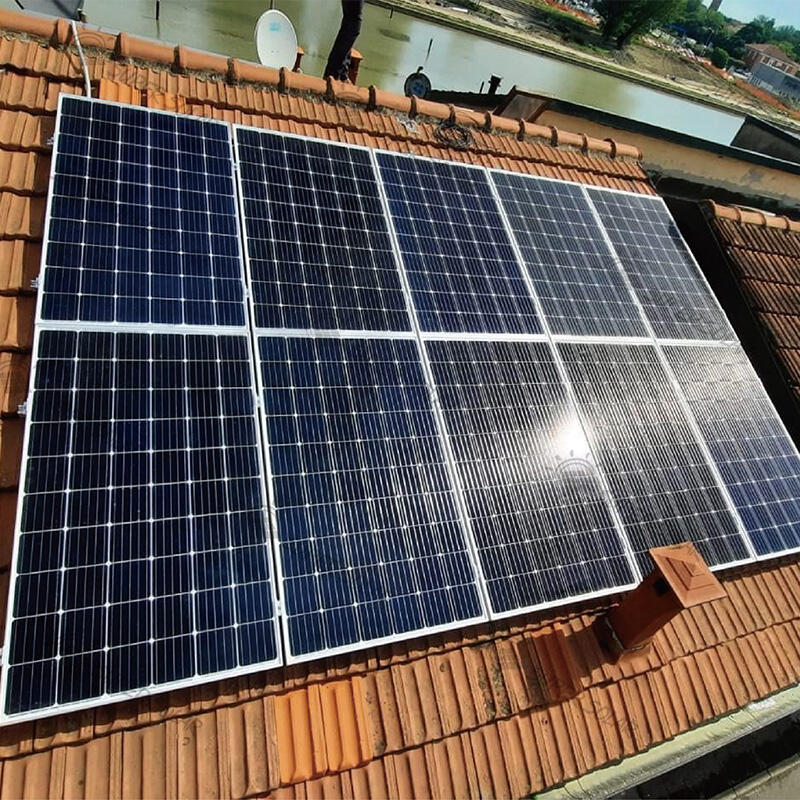
Tile Roof Compatibility as the Core Selection Criterion
For installers and distributors working in residential and small commercial markets, choosing the right tile roof solar mount is rarely about price alone. The primary concern is compatibility: whether the mounting system fits specific tile profiles without damaging the roof structure or compromising waterproofing. In Europe especially, tile roofs vary widely by region, age, and architectural style, making standardized solutions less reliable.

A well-designed tile roof solar mount must adapt to the geometry of the tile rather than forcing the roof to adapt to the hardware. Flat tiles, Roman tiles, and Spanish tiles all present different load paths, clearances, and installation risks. Incorrect mount selection can lead to cracked tiles, water ingress, or long-term structural stress, all of which installers aim to avoid.
From a manufacturer perspective, demonstrating deep understanding of tile diversity and installation constraints is critical. Installers are not looking for basic explanations; they want practical guidance on which mount works with which tile, how adjustable the system is, and whether it can be supplied under OEM branding for local distribution.
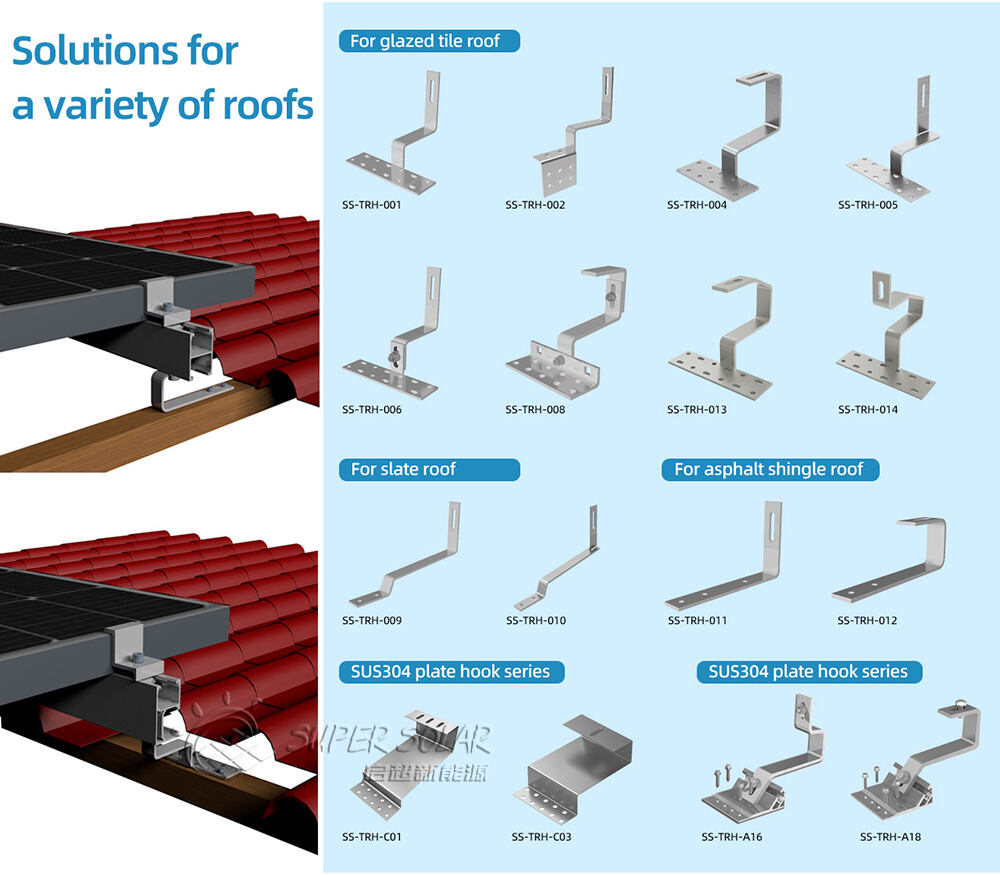
Flat Tile Roof Mounting Considerations
Flat tiles are common across Northern and Central Europe, particularly in modern residential developments. Their relatively uniform profile simplifies some aspects of installation, but they still require precise clearance management to avoid point loading and tile breakage.
Load Transfer and Hook Positioning
With flat tiles, the tile roof solar mount must transfer loads directly to the rafters while minimizing contact pressure on the tile surface. Roof hooks are typically installed beneath the tile, anchored to the rafter, with the hook arm passing through a controlled cutout or clearance gap.
Poorly designed hooks can lift the tile unevenly, creating stress points that lead to cracking over time. High-quality mounts use slim hook profiles and adjustable height settings to maintain the original tile plane after installation. This approach preserves roof aesthetics and reduces the risk of water penetration.
Adjustable Hooks for Installation Flexibility
Even with flat tiles, roof tolerances vary due to batten spacing and construction age. Adjustable hooks allow installers to fine-tune vertical and horizontal positioning without modifying the roof structure. This flexibility is especially valuable when working on retrofit projects where roof dimensions are not perfectly standardized.
A tile roof solar mount system with multi-directional adjustment reduces installation time and error rates. For distributors, this translates into fewer after-sales issues and broader applicability across different roof builds.
Long-Term Roof Integrity
Flat tile roofs rely on consistent overlap and alignment for waterproofing. A mounting system that preserves this alignment ensures that rainwater continues to drain as designed. Installers often prioritize mounts that require minimal tile cutting and maintain full under-tile protection layers.
Roman Tile Roof Mounting Challenges
Roman tiles, also known as profile or interlocking tiles, introduce additional complexity due to their curved geometry. These tiles are widely used in Southern and Western Europe and require specialized mounting solutions.
Accommodating Curved Tile Profiles
A tile roof solar mount for Roman tiles must account for variable tile height and curvature. Standard flat hooks often create uneven contact points, increasing the likelihood of tile damage. Purpose-designed hooks feature offset arms or contoured shapes that bypass the tile crest and anchor securely to the rafter.
Correct clearance is critical. Too little clearance leads to pressure on the tile; too much clearance can compromise structural stability. Adjustable hook systems provide installers with the ability to match the hook position precisely to the tile profile.
Minimizing Tile Modification
Installers generally prefer solutions that avoid extensive tile cutting. Excessive modification increases labor time and the risk of leaks. Advanced hook designs for Roman tiles reduce the need for grinding or reshaping tiles by fitting within existing tile gaps.
From a distribution standpoint, offering a tile roof solar mount that supports Roman tiles with minimal modification significantly increases market acceptance in Mediterranean regions.
Wind and Uplift Resistance
Roman tile roofs are often installed in regions with higher wind exposure. The mounting system must resist uplift forces without transferring excessive stress to the tile itself. Robust hook-to-rafter connections and properly spaced rails play a key role in maintaining system stability under wind loads.
Spanish Tile Roof Mounting Solutions
Spanish tiles, characterized by their pronounced S-shape, are among the most challenging roof types for solar mounting. Their irregular surface and deep curves require highly adaptable mounting systems.
Hook Design for Deep-Curved Tiles
Spanish tiles demand hooks with extended reach and carefully engineered offsets. A tile roof solar mount designed for this application typically includes hooks that bypass the tile entirely, contacting only the structural rafter below.
This design minimizes tile interaction and reduces breakage risk. However, it also places greater importance on precise measurement and adjustment during installation. Systems with wide adjustment ranges are therefore preferred by experienced installers.
Waterproofing and Tile Replacement Strategy
Because Spanish tiles often require localized removal during installation, maintaining waterproofing is a key concern. Installers may replace modified tiles with metal or composite flashing components designed to integrate seamlessly with the remaining roof surface.
Manufacturers that provide compatible flashing accessories alongside the mounting system simplify installation workflows and improve overall roof performance.
Aesthetic Considerations
Spanish tile roofs are often associated with high-end residential properties. Visual impact matters. Low-profile hooks and neatly aligned rail systems help maintain the roof’s original appearance, an important factor for homeowner acceptance.
Adjustable Versus Fixed Roof Hooks
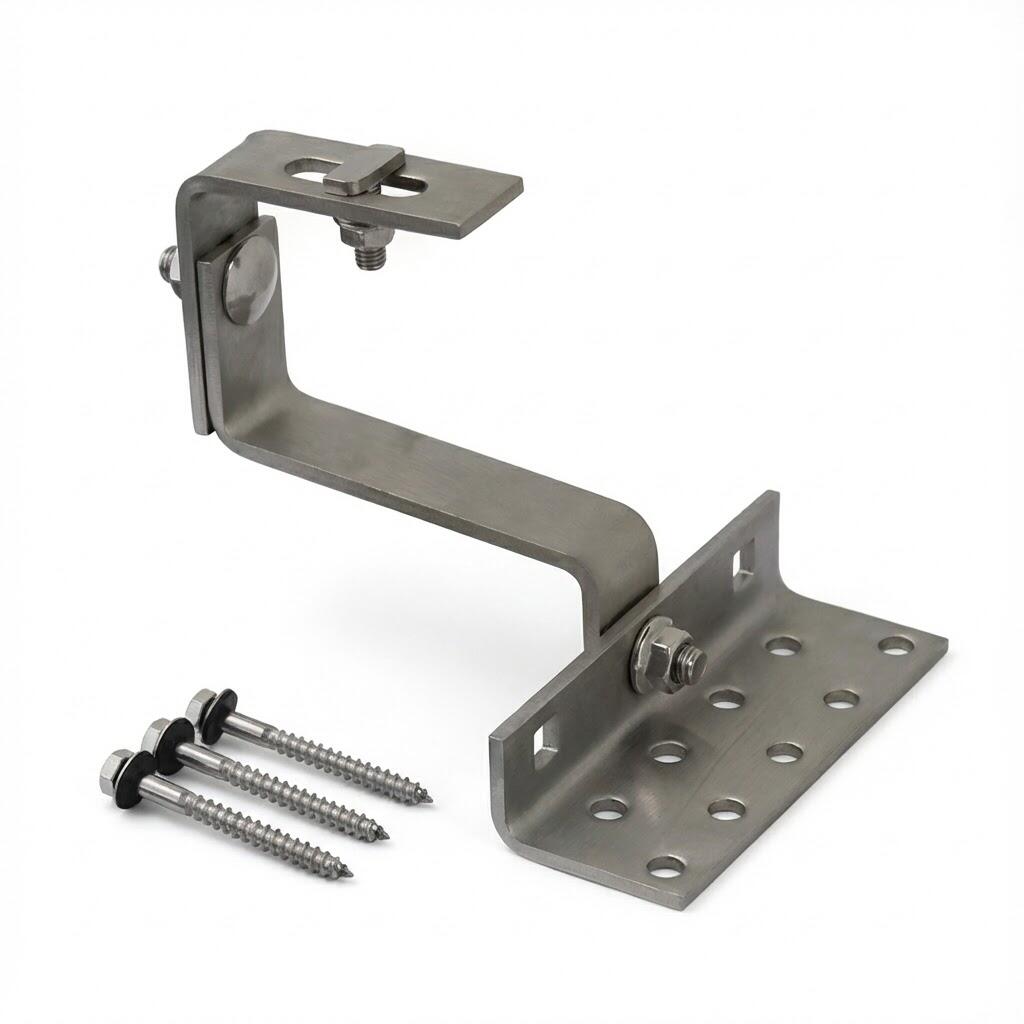
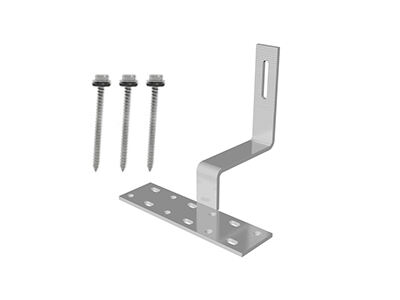
One of the most common decisions installers face is whether to use adjustable or fixed hooks. Each option has distinct advantages depending on project requirements.
Fixed Hooks and Standardized Projects
Fixed hooks offer simplicity and cost efficiency. They work well in new-build projects where roof dimensions are consistent and tile profiles are known in advance. For large-volume installations with uniform specifications, fixed hooks can reduce component complexity.
However, their limited flexibility can become a drawback when encountering unexpected roof variations. Installers must be confident that the hook dimensions match the roof exactly.
Adjustable Hooks for Versatility
Adjustable hooks provide vertical and sometimes horizontal adjustment, allowing installers to adapt to different tile thicknesses, batten heights, and rafter positions. This versatility makes them the preferred choice for retrofit projects and mixed roof types.
A tile roof solar mount system built around adjustable hooks supports a wider range of installations with fewer SKUs. For distributors, this simplifies inventory management while meeting diverse customer needs.
Hook and Rail Combination Systems
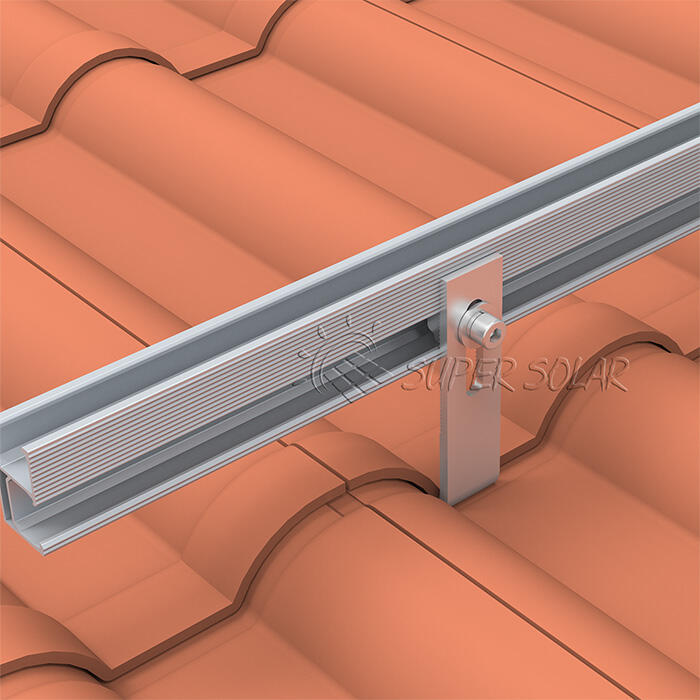
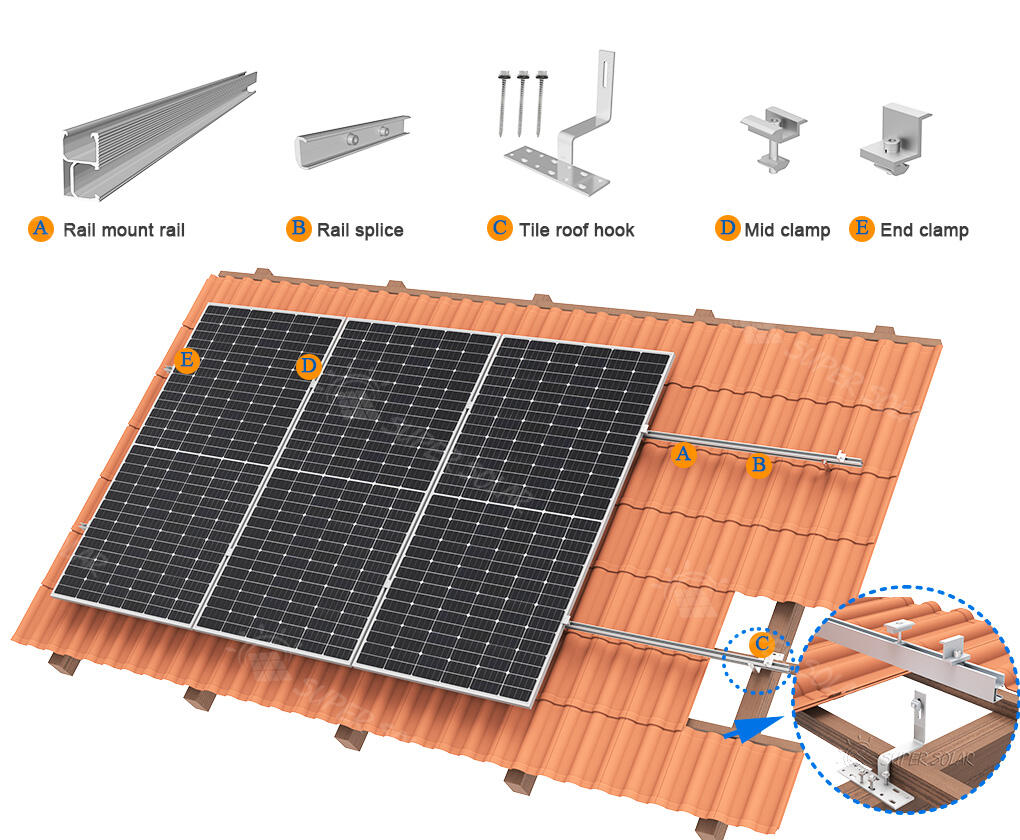
Most tile roof solar mount solutions rely on a hook and rail architecture. This combination balances structural strength with installation efficiency.
Rails distribute loads evenly across multiple hooks, reducing stress on individual attachment points. They also provide flexibility in module positioning, allowing installers to align panels precisely regardless of minor roof irregularities.
Well-designed rail systems support both portrait and landscape module layouts. Compatibility with different hook types enables a single rail platform to serve multiple tile profiles, an important advantage for OEM and private-label offerings.
Common European Tile Roof Installation Issues
European tile roofs present recurring challenges that influence mounting system selection. Aging roof structures, non-standard batten spacing, and regional building practices all affect installation outcomes.
Installers often encounter brittle tiles on older roofs, increasing the need for low-impact mounting solutions. Cold climates introduce freeze-thaw cycles that test waterproofing integrity. In coastal regions, corrosion resistance becomes a priority.
A tile roof solar mount designed with these realities in mind demonstrates long-term reliability. Material selection, coating quality, and fastening methods all contribute to system performance over decades.
OEM and Private Label Considerations
For distributors, OEM support is a key decision factor. The ability to customize packaging, branding, and component combinations allows local companies to build their own market presence without developing products from scratch.
Manufacturers that offer flexible OEM options, consistent quality control, and technical documentation enable distributors to scale confidently. A modular tile roof solar mount system with interchangeable hooks and rails is particularly well suited for private-label strategies.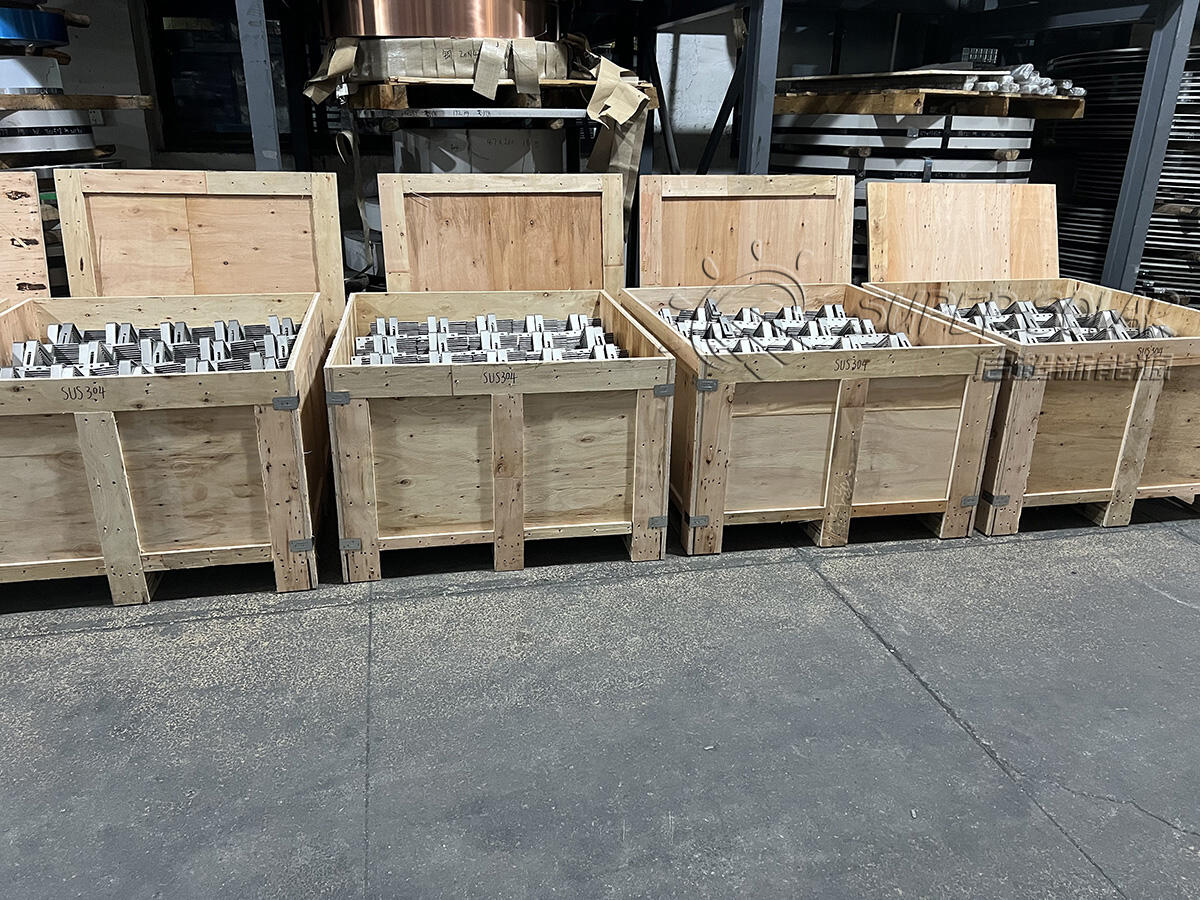
FAQ
Which tile types are compatible with a tile roof solar mount
Most flat, Roman, and Spanish tiles can be supported with the correct hook design and adjustment range. Compatibility depends on tile profile, thickness, and roof structure, making proper selection essential.
Will installing a tile roof solar mount damage the roof
When correctly designed and installed, a tile roof solar mount should not damage the roof. Systems that minimize tile cutting and transfer loads directly to rafters help preserve roof integrity.
Are adjustable hooks necessary for all installations
Adjustable hooks are not mandatory for every project, but they offer greater flexibility and reduce installation risk, especially on retrofit or mixed tile roofs.
Can tile roof solar mount systems be supplied under OEM branding
Yes, many manufacturers support OEM and private-label supply, including customized packaging, labeling, and component configurations tailored to distributor requirements.
Table of Contents
- Tile Roof Compatibility as the Core Selection Criterion
- Flat Tile Roof Mounting Considerations
- Roman Tile Roof Mounting Challenges
- Spanish Tile Roof Mounting Solutions
- Adjustable Versus Fixed Roof Hooks
- Hook and Rail Combination Systems
- Common European Tile Roof Installation Issues
- OEM and Private Label Considerations
- FAQ
- Which tile types are compatible with a tile roof solar mount
- Will installing a tile roof solar mount damage the roof
- Are adjustable hooks necessary for all installations
- Can tile roof solar mount systems be supplied under OEM branding