 EN

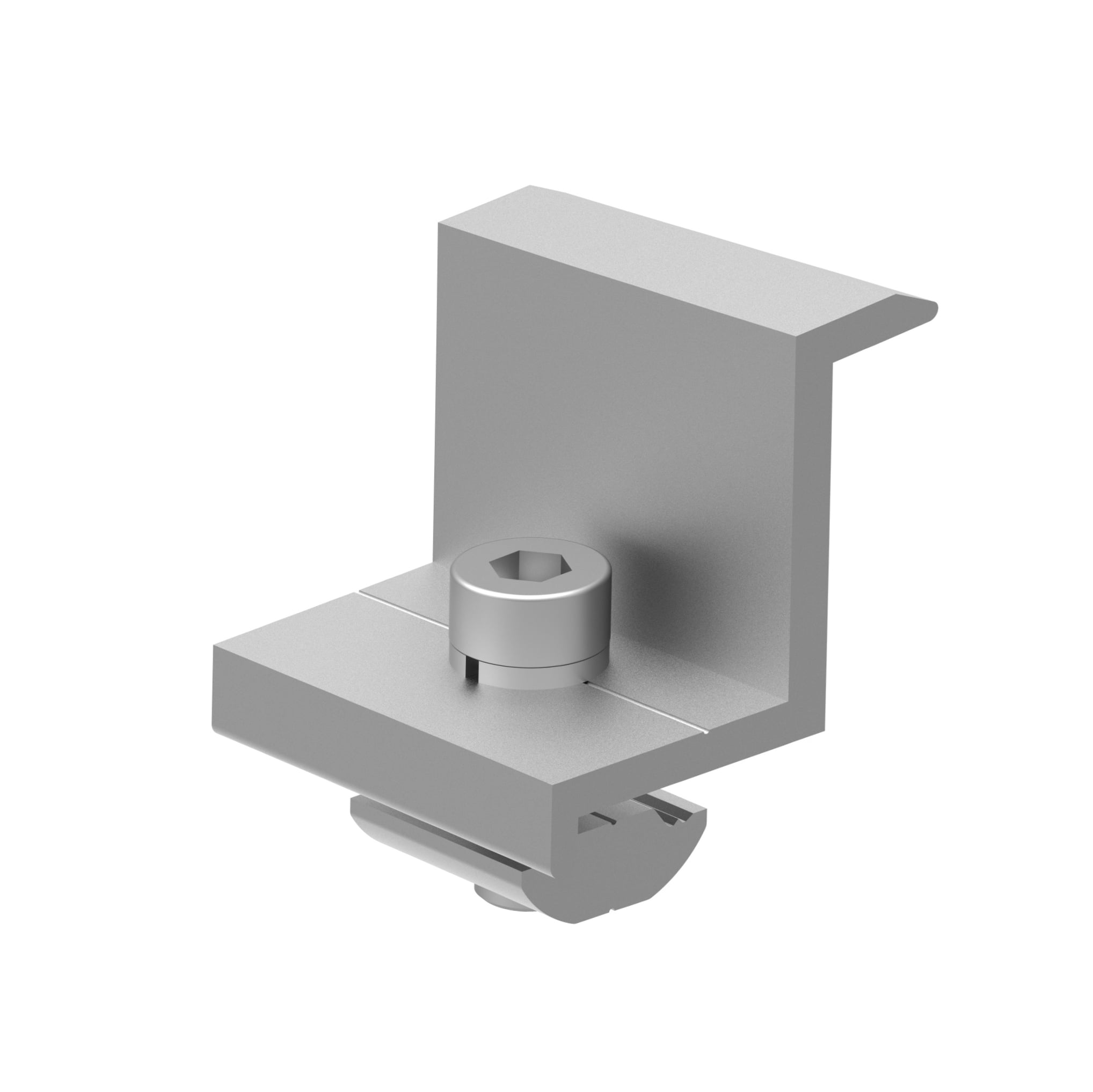

The L-foot and the roof hook look equally simple, both are small pieces of metal with a bend in them, and both are sold as solar mounting brackets. That superficial similarity is exactly why they get confused during procurement, and why so many specification errors originate in a component list rather than in a structural calculation. In reality the two parts belong to different roof families and different load paths. A roof hook exists to reach past a covering to a rafter, and an aluminium l foot for roof solar mount exists to sit on a metal sheet and carry a rail above it. Choosing between them is therefore not a matter of preference. It is decided by the roof covering, the substrate and the fixing method available on that roof, and any specification of an aluminum l foot for roof solar mount that ignores the covering beneath it is incomplete.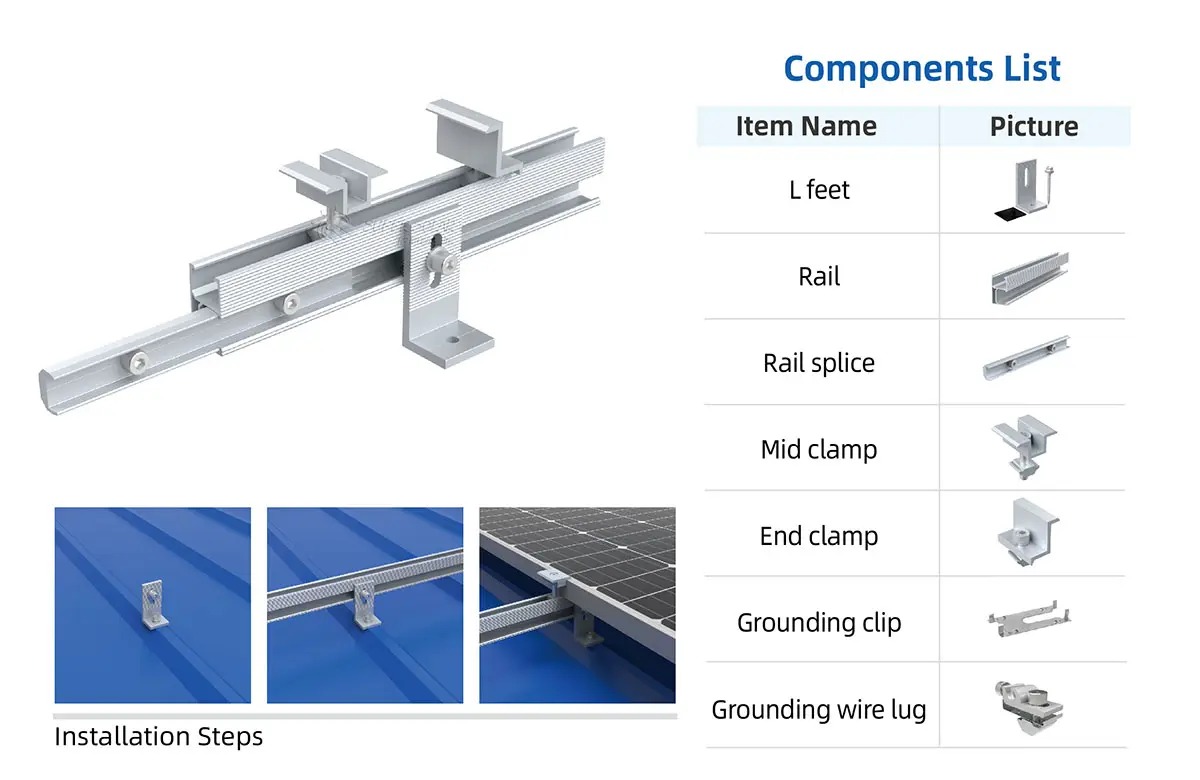
The practical consequence of getting this wrong is expensive. A hook used on a profiled metal sheet has nothing coherent to grip and will distort the sheet. An L-foot used on a tile roof creates a penetrative fixing in a covering that was never designed to be penetrated at that point, and it places load on the tile rather than on the rafter. Both errors surface months later as leaks, loose rails or displaced coverings, and both are avoidable with a short structural review at the specification stage. The sections below separate the roles of the two components, define where each one belongs, and set out the material and load questions that should be answered before an order is placed.
A roof hook is a shaped strap that is fixed to a timber rafter and then rises up and over the tile so a rail can be attached above the covering. Its geometry is driven by the covering: the hook must clear the tile thickness, sit within the tile profile where the covering is curved, and land flat on the rafter with enough length to develop the required fixings. Because tiles are fragile and are not structural, the hook deliberately carries load past them so that the tile experiences no clamping force. Adjustable versions allow vertical and horizontal adjustment to absorb variation in tile thickness and rafter position, which reduces tile cutting and improves alignment across the roof.
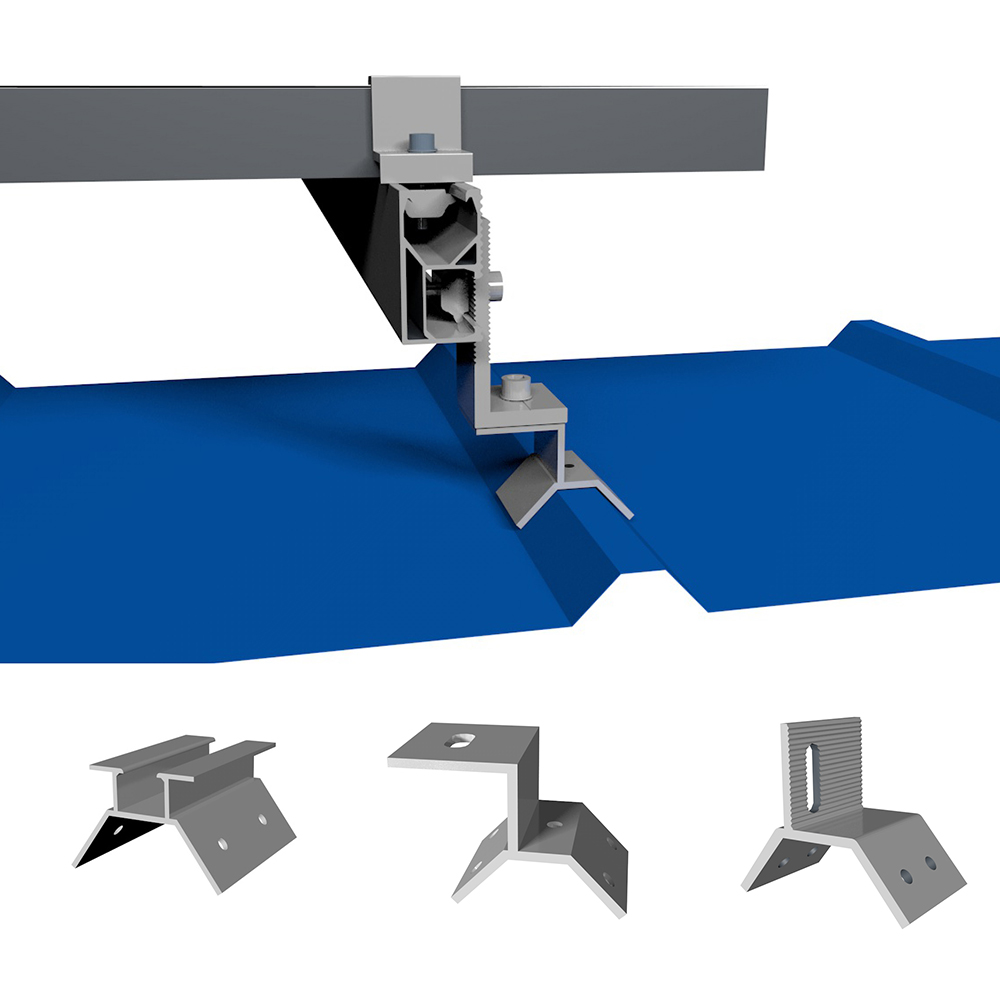
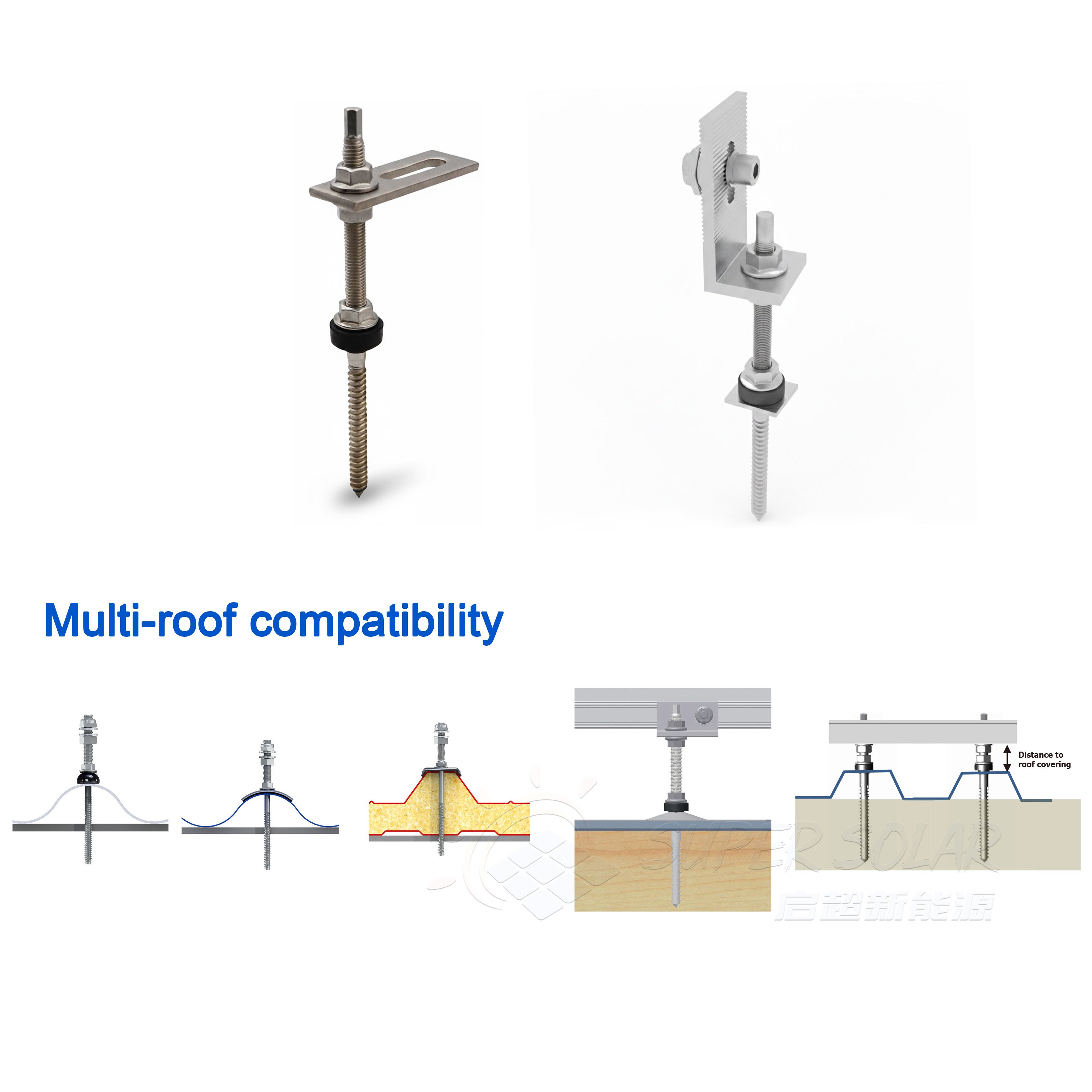
An L-foot is an angled bracket that fixes down onto a metal sheet or its substructure and presents a horizontal face to which a rail is bolted. On trapezoidal and corrugated roofs it is normally fixed with self-tapping screws into the purlin, with a sealing washer or a calotte covering the penetration. The bracket is short and stiff, so its job is to transfer load over a short distance rather than to span a covering. Its height is often specified so that the rail clears the rib upstand, and its hole pattern is designed to accept a rail bolt on one plane and a screw fixing on the other. That short working distance is the defining characteristic of an aluminum l foot for roof solar mount, and it is why the bracket is stiff and compact rather than long and slender.
The decisive difference is the substrate. Hooks rely on a continuous, dimensionally stable timber rafter. L-feet rely on a sheet that is supported by purlins at defined intervals. A tile roof has no sheet and a metal roof has no tiles, so a component that develops its capacity on one has nothing to fasten to on the other. There is also a difference in load direction: hooks in tile roofs typically work with a long lever arm and require a defined embedment into timber, while L-feet work over a short arm and depend on the fastener's engagement in thin sheet or in a structural section below it. Treating them as alternatives on a component list ignores both mechanisms, and the confusion is most expensive when an aluminum l foot for roof solar mount is ordered for a tiled roof simply because the price per piece was lower.
Tile roofs of clay, concrete, flat, Roman, Spanish and curved profiles are hook territory, and slate is a specialised sub-case because the covering splits easily and the fixing pattern is tight. On all of these, load is transferred to the rafter and the covering is reinstated with flashing in the direction of water flow. Adjustable hooks are usually recommended because tile thickness varies and reinstatement is more reliable when the hook can be set to the finished surface rather than packed to it. Where a particular tile profile is unusual, custom hook geometry based on the tile shape and rafter spacing is the normal answer.
Trapezoidal and corrugated profiles are L-foot territory, together with mini rails and direct-fix brackets. The design question is not whether an L-foot fits but where the fixing lands, because the sheet alone has little capacity and the load must reach a purlin or a secondary member. Where the sheet is corrugated fibre cement over timber, hanger bolts with adapter plates are used; where the substructure is steel, fasteners with a hardened drill point are used; and on trapezoidal sheet metal and sandwich panels, roof screws with matching calottes are common. These are different fasteners for the same conceptual job, and the correct one is selected from the substructure.
Standing seam roofs deserve a separate decision. Because the seam is designed to be gripped, non-penetrating clamps are normally the correct attachment, and they are available for vertical, bulb and round seam profiles as well as for system roofs. Using an L-foot here would mean drilling the seam, which compromises the roof's waterproofing design and typically voids its warranty. The existence of this third family is a reminder that the useful question is never which of two brackets is better, but which attachment logic applies to the roof in front of you.
Large buildings frequently combine roof types: a tiled pitched section, a metal low-slope section, a plant area and a parapet line. Each zone should be specified independently, and the transition details are where designs most often become inconsistent. A credible proposal will show hook spacing across the tiled area, L-foot spacing across the sheeted area, and a defined arrangement where the two meet, all reconciled against the same rail layout and the same design loads. Super Solar supplies solar L-foot brackets for metal roofs and solar roof hooks for tile roofs as separate, clearly described families for exactly this reason, and provides free system matching so that the correct component is selected for the covering rather than for the price list.
The L-foot is typically produced in AL6005-T5 aluminium alloy with stainless steel bolts, a combination that keeps the bracket light while giving the threaded connection good strength and corrosion resistance. Roof hooks are more often produced in stainless steel, commonly SUS304 or SUS316, because the hook is a thin section working in tension and bending and it sits in an environment that stays damp for long periods. Rails in either system are usually anodised aluminium, so the assembly as a whole mixes materials by necessity and the fastener selection is what keeps that mixture healthy.
Corrosion performance should be specified against the site rather than against a generic claim. Coastal and high-humidity locations, industrial atmospheres and agricultural buildings exposed to ammonia or fertiliser dust all accelerate degradation, and in those cases a higher grade of stainless steel, a thicker anodised layer or a coated finish is warranted. On metal roofs the bracket also has to be compatible with the sheet coating, so that the two do not react at the contact face. Anodised aluminium with stainless hardware is a well-proven combination for metal roof work, and where the roof sheet is itself coated steel, an isolating interface prevents avoidable galvanic effects.
Both components need a defined capacity, and neither is adequate simply because it is made of a corrosion-resistant material. Uplift governs on exposed roofs and concentrates at edges, corners and ridges, so spacing usually differs between the field and the perimeter. Snow load governs in cold regions and, on steep tile roofs, snow can slide and create localised impact loads. The two anchorages are structurally unlike each other: a hook depends on embedment and withdrawal capacity in timber, an L-foot depends on thread engagement in sheet or section plus the bearing capacity of the sheet. Specifications that quote a single fixing requirement for both are not describing either of them properly.
Metal sheets and long rail runs move with temperature, and the fixing detail should tolerate that movement without fatiguing the fastener or tearing the sealing element. On tile roofs, the concern is moisture rather than thermal cycling: water sits beneath the covering after rain, so the hook and its fixings must tolerate prolonged wetting. These different operating conditions reinforce the same conclusion, that the roof covering, not the bracket catalogue, should drive the specification. On both roof types the durability question is the same in principle and different in detail, which is why a bracket that performs well in a dry inland climate should still be reviewed against the wetting and drying cycles of a coastal site before it is approved.
Send the roof covering type and profile, the supporting structure and its spacing, the covering thickness, the mounted area and its position on the building, the module dimensions and layout, the design wind and snow loads with the governing standard, the required material grade and finish, and any local approval requirement. Add photographs of a representative roof section, including an edge and a ridge, and state whether the roof is new or being refurbished. A supplier working from these inputs can return a specific aluminum l foot for roof solar mount recommendation with a drawing rather than a generic offer.
Hooks require tile handling and careful reinstatement, which is skilled work and can be slow on fragile coverings. L-feet require accurate location over purlins and reliable sealing, which is faster but less forgiving of a misplaced hole. Both need the same discipline about spacing at the roof perimeter. When comparing quotations, compare the whole assembly: hook or foot, rail, splices, clamps, fasteners, sealing and flashing. A cheaper bracket that shifts cost into sealing or into additional connectors is not cheaper in practice. Whichever family is selected, the cost of getting the fixing wrong is far higher than the cost of the bracket, because a reinstated tile or a resealed sheet penetration means a repeat visit to a finished roof.
For a first order, request a sample of the actual bracket and its fixing hardware, plus the material grade, the adjustment range or stand-off height, the maximum fixing spacing against the design load, and the recommended sealing detail. Confirm the packaging specification and the lead time for both standard and custom configurations. Super Solar provides technical drawings, load information and samples for assessment, keeps standard L-foot models available for short-notice shipment while custom configurations follow a longer production cycle, and supports OEM and ODM requests for installers, distributors and wholesalers. That combination is what allows a specification to stay stable from first drawing through to repeat order.
In effect you would then be using the L-foot as a roof hook, and it would be the wrong tool for the job. Once the tile is lifted, the fixing has to reach the rafter and then return above the covering, which is precisely what a hook is shaped to do. An L-foot has neither the reach nor the geometry for that route, and forcing it into the space creates a fixing that cannot be flashed or reinstated correctly. The correct approach on a tiled roof is a hook matched to the tile profile, not a repurposed metal roof bracket.
Neither, in the great majority of cases. Standing seam roofs are normally fitted with non-penetrating seam clamps sized to the seam profile, which are available for vertical, bulb and round seams as well as common system roof profiles. These clamps preserve the roof's waterproofing design and its warranty, and they allow the rail to sit above the seam without any drilling. An aluminum l foot for roof solar mount and a tile roof hook remain the correct answers for profiled sheets and tiled coverings respectively, and mixing the families across roof types is a common and avoidable specification mistake.
It usually does, and the question is whether the roof justifies the difference. If tile thickness is uniform, the rafter grid is regular and the covering is new, a fixed hook can be perfectly adequate and cheaper. If tile thickness varies between pallets, if the roof is older with irregular rafters, or if the array runs around ridges, valleys and penetrations, the adjustable version usually saves more on labour, tile replacement and callbacks than it costs at the point of purchase. On larger roofs the difference is best assessed across the whole mounted area rather than per bracket.
Check that the proposed component matches the roof covering and the substrate, that the material grade and finish suit the site's corrosion exposure, that the fixing spacing is stated against a design load rather than as a default, and that the sealing or flashing detail is drawn for each distinct roof condition. Confirm that rails, splices, clamps and fasteners are included rather than treated as extras. Ask for the material and load documentation you would need for approval, and request a sample before releasing a bulk order so that geometry and finish can be verified physically.
 Hot News
2025-11-03
2025-10-22
2025-01-24
2024-06-12
2024-06-12