 EN



A decade ago, most solar mounting components were sold as part of a project package. Today the mini rail is a retail and wholesale category in its own right, driven by three converging trends. Small rooftop systems on profiled metal sheets have proliferated in markets with abundant sunlight and modest structural demands. Online channels have created demand for compact cartons that can be shipped and stored cheaply. And installers have learned that on the right roof, a shorter rail solution installs faster and uses less material than a full rail grid. For a distributor, an importer or a private-label seller, the result is a component with genuine repeat volume, which changes the sourcing conversation from project supply to product management.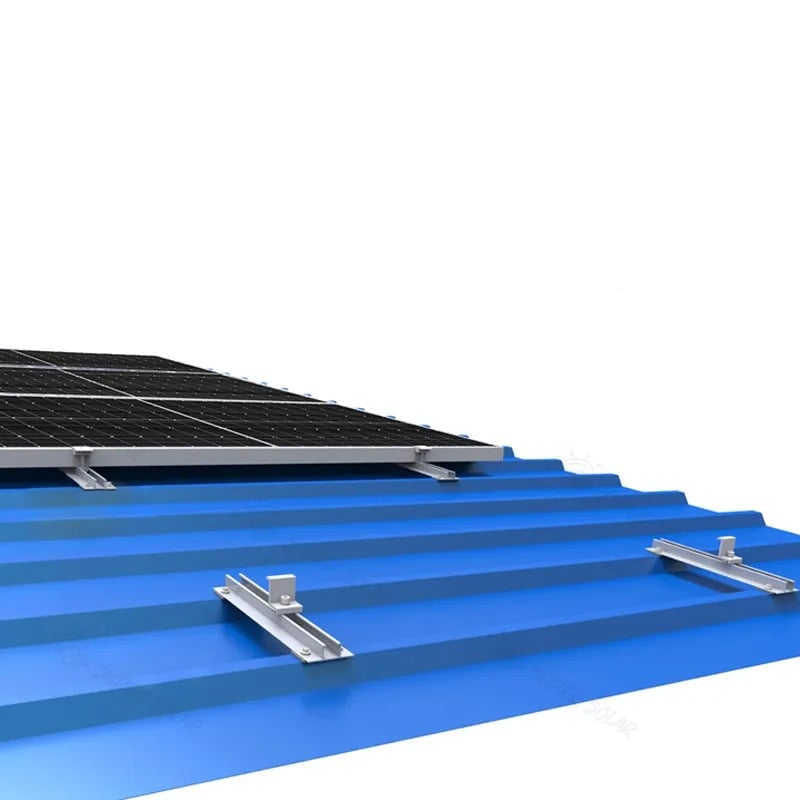
That shift is the reason a wholesale mini rail for sheet metal order should be treated differently from a project quotation. The questions move from "what does this roof need" to "what specification will we stock, in what packaging, at what quality level, and how do we keep it replenished". Get the specification wrong and returns will eat the margin. Get the packaging wrong and freight and handling costs will do the same. This guide sets out the specification, order planning, packaging, quality and commercial checks that a distributor should complete before placing a first wholesale mini rail for sheet metal order in container quantities.
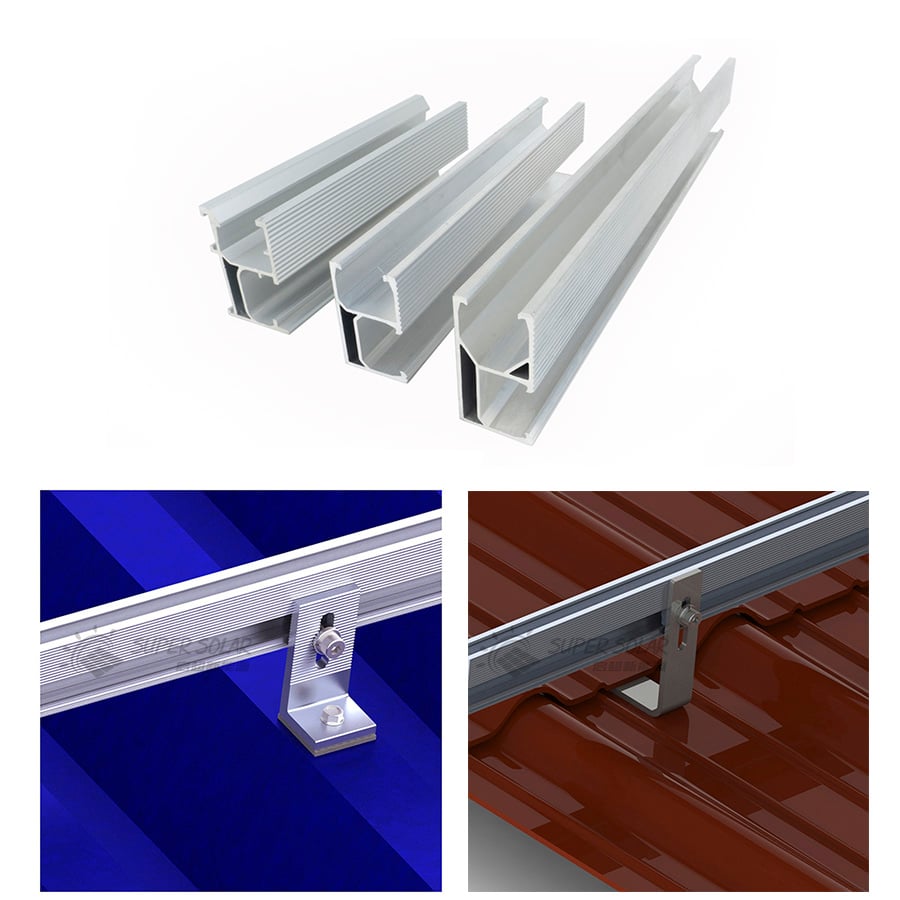
A mini rail is a short aluminium profile with pre-drilled fixing positions that clamps directly to the roof sheet and carries the module. The established material combination is an anodised aluminium alloy for the rail with stainless steel hardware, which keeps weight and corrosion risk low. Anodised aluminium resists atmospheric corrosion well and maintains appearance on visible rooftops, while stainless components protect the fastening interface. Load ratings should be quoted against defined conditions rather than in isolation. A rail system rated for a wind speed in the low forties of metres per second and a snow load of the order of half a kilonewton per square metre is specifying a moderate-exposure rooftop application, and that context belongs on the datasheet so buyers can judge whether it fits their market.
Compatibility is where most wholesale returns originate. Mini rail systems commonly accept framed and frameless modules, but the practical constraint is frame thickness, which varies by manufacturer and generation, and clamp design, which determines the bearing area on the frame. A distributor stocking one SKU to serve several module brands should confirm the supported frame range and the clamp geometry, and should be able to state which module frame thicknesses the retail pack is intended for. Mid clamps, end clamps and any quick-fix variants should be described as a matched set, because mixing clamp generations with an older rail profile is a common source of installation complaints.
Mini rails are designed for trapezoidal and corrugated metal sheet roofs, where the fixing reaches the substructure through the sheet. Compatibility depends on sheet thickness, rib spacing and fastener positioning, and these should be stated as requirements rather than left to the installer's judgement. Equally important is the exclusion list. Mini rails are not the correct product for standing seam roofs, which require non-penetrating seam clamps, and they are not the right answer for high wind or significant snow load conditions, where a full rail or reinforced system is generally required. Publishing those boundaries clearly reduces both technical failures and warranty disputes. Super Solar describes the intended roof types and regional suitability of its mini rail for solar panel systems, including the climates where the product is recommended and where a reinforced alternative should be used instead.
Minimum order quantity varies with supplier, profile and finish, and it is normally driven by what makes an extrusion or a production run economic rather than by an arbitrary rule. Rather than assuming a figure, ask the supplier to state the MOQ per SKU and per finish, whether mixed-model cartons or mixed pallets are possible, and how the MOQ changes for private-label packaging. Confirm as well whether the MOQ applies to the rail alone or to the complete set including clamps, gaskets and screws, because a set-based MOQ produces a very different order profile from a component-based one. Treat any MOQ, packaging option or lead time as something to be confirmed in writing for your order rather than as a general commitment, because a wholesale mini rail for sheet metal programme is priced against the packing configuration as much as against the material itself.
Packaging design has a direct effect on channel economics. A widely used configuration for e-commerce is a retail pack containing a small number of complete sets, with each set comprising the mini rails, the gaskets and the self-drilling screws required for one small installation. Setting six pieces per set and packing twenty or fifty sets per carton gives the seller a unit that is small enough for parcel networks and large enough to be efficient to handle. Above carton level, pallet packing suits container and bulk distribution. The choice between retail packs and bulk cartons should follow the sales channel rather than the factory's default, and it is worth modelling freight and storage before committing to a pack size.
Private-label supply typically covers the printed box, an instruction sheet, a label with the seller's brand, and channel-specific requirements such as barcode or marketplace labels. Distributors should confirm which of these the supplier can produce, who owns the artwork, what the approval cycle looks like, and whether packaging changes affect the MOQ or the lead time. Colour finish is a related decision: anodised aluminium is standard, and custom finishes may be available but usually affect both cost and schedule. For a brand selling through marketplace channels, packaging that survives handling and carries clear labelling reduces returns more effectively than any specification upgrade.
Mini rail demand follows installation seasons, and stock availability in the destination market matters as much as factory lead time. Confirm the standard production lead time, whether any inventory is held in regional warehouses, and how the supplier handles repeat orders that must match an earlier batch. For distributors serving multiple markets, a replenishment plan based on historical sell-through is more useful than a large one-off order, because a stranded pallet of a discontinued clamp generation is difficult to repurpose. For a fast-moving line, a rolling forecast shared with the supplier is more useful than a large speculative order, because it lets production be scheduled against demand instead of against hope.
Good quality control on a mini rail is mostly about consistency of small dimensions. Rail length and hole position determine whether installation is quick or infuriating; gasket dimensions determine whether the seal sits correctly; screw geometry determines whether it drives cleanly into the sheet. Ask how hole positions and profile dimensions are verified, whether checks happen per batch or per order, and what the acceptance criteria are. Surface quality should be inspected for anodising defects, burrs or handling marks that would be visible on a roof. Packaging should be checked for its ability to protect the product through the channel, not only through the factory gate.
Request the quality management certificate, product conformity documentation and available load test reports, and confirm that the certificates apply to the product you are buying rather than to a different range. Traceability matters when a problem appears six months later: batch identification on the carton or the unit allows a complaint to be traced to a specific production run. Where the destination market requires conformity marking, confirm that the documentation set matches the market requirement and remains valid. Where a document is close to expiry, note the renewal date in your file so that a shipment is not held up by a certificate that lapsed between order and dispatch.
Before a full commitment, order samples and physically install them on a representative roof sheet. Sample assessment should cover fit to the rib profile, the quality of the gasket seal, hole alignment, screw driving behaviour and the appearance of the clamp assembly. Where volumes justify it, a pilot container placed through the real channel will reveal packaging weaknesses and product handling issues that a sample carton never shows. Super Solar provides samples for testing and design matching before bulk orders, which is the practical way to verify a specification before it becomes inventory.
Mini rail pricing is driven principally by material content, finish, hardware grade, packaging specification and order volume, so a quotation should be reviewed against those variables rather than against a headline unit price alone. Ask for a cost breakdown that separates the rail, the clamps, the gaskets, the screws and the packaging, so that specification changes can be quoted quickly later. Confirm the incoterm, the packing specification and the pallet dimensions, because all three affect landed cost, and ask for a landed-cost illustration on a wholesale mini rail for sheet metal order at your expected annual volume rather than on a single container.
A wholesale supplier should be able to provide installation instructions, a layout guide and technical support that a distributor can pass on to installers. Clear documentation reduces support load at the distributor level and improves the end customer's installation quality, which in turn reduces returns. Responsiveness matters as much as content: a supplier with a dedicated business-to-business support function can answer technical and commercial queries in the same conversation. Super Solar provides free layout design, complete mounting kits, OEM and custom packaging, and business support channels for wholesalers and retailers, alongside technical assistance for quotation, product selection and installation questions.
Keep the approved specification sheet, the batch records for each shipment, the packaging artwork file, and the record of any approved deviation. For distributors, this internal file becomes the reference that keeps a repeat order identical to the first one, and it is what makes a quality complaint resolvable rather than an argument. Retaining it also shortens the next sourcing cycle, because a proven specification can be re-quoted without repeating the technical evaluation from the beginning. Keeping it in one place also makes handovers easier when the person managing the line changes, because the specification, the approvals and the batch history travel together.
Start with the configuration that serves the most common module frame thickness in your market, matched to the sheet profiles you actually see in installations, with a retail pack size aligned to your sales channel. Confirm the load rating against the wind and snow conditions in your territory rather than against a global figure, and confirm that the compatible clamps and gaskets are supplied as a complete set. Only after that first SKU proves its sell-through rate should a second finish or a second pack size be added to the range.
Ask for the MOQ to be stated explicitly per SKU, per finish and per packaging option, and ask what drives it, because understanding the driver tells you where negotiation is possible. A mixed-carton or mixed-pallet arrangement can sometimes absorb uncertainty, and a pilot order may be possible ahead of a larger commitment. Any figure you receive should be treated as specific to your order and confirmed in writing rather than assumed to apply generally. Where the answer changes with packaging, price both options before deciding. Confirming what the MOQ is based on also tells you how it might change if the specification, the finish or the packaging is adjusted.
No. They are intended for screw-fixed profiled sheets such as trapezoidal and corrugated metal roofs, and their performance depends on the sheet thickness, rib spacing and the ability of the fixing to reach the substructure. Standing seam roofs need non-penetrating seam clamps instead, and higher wind or snow load conditions generally call for a full rail or reinforced system. Selling a mini rail into the wrong roof type is the fastest route to installation failures and warranty costs, so the product boundary should be documented in your catalogue.
Concentrate on the items that cause field problems. Verify hole position and rail length against the approved drawing, check that gaskets match the specified material and dimensions, confirm screw type and coating, and inspect the finish for defects. Confirm the carton or retail pack meets your channel requirements and that batch identification is present. Then compare the new shipment against the retained first-order sample; consistency against an approved reference is the single most effective check a distributor can perform on a wholesale mini rail for sheet metal line.
 Hot News
2025-11-03
2025-10-22
2025-01-24
2024-06-12
2024-06-12